








The current escalation between the United States and Iran is being framed primarily as an energy story. Oil prices, shipping routes and geopolitical risk dominate the headlines. That is understandable. The Strait of Hormuz remains one of the most critical arteries of global energy flow and any disruption there has immediate consequences for crude markets and fuel pricing.
But for the US aluminium industry, particularly the recycling segment, the more relevant question is not simply how high oil prices might go. It is how sustained instability in the Middle East reshapes the economics of energy, logistics, material flows and ultimately, the cost structure of producing aluminium domestically.
Recycling’s structural advantage, without full insulation
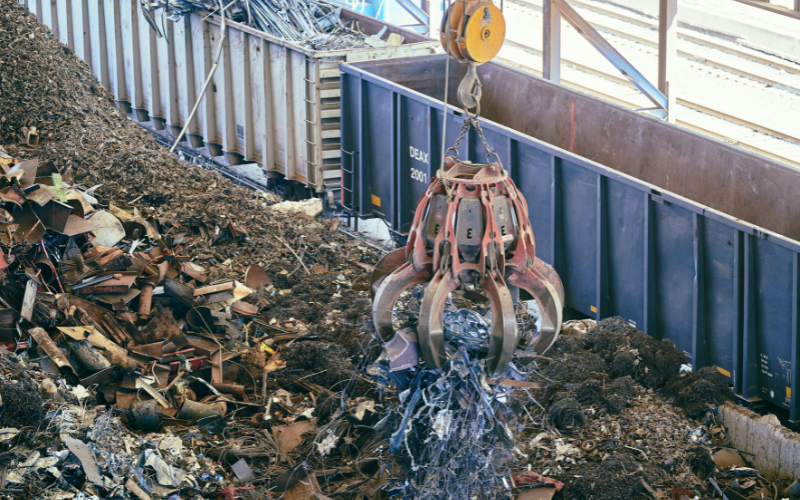
At first glance, aluminium recycling in the US appears structurally advantaged in this type of environment. Secondary aluminium production requires significantly less energy than primary smelting. It is less exposed to global bauxite supply chains. It relies heavily on domestic scrap. In a world where energy becomes more expensive or volatile, that profile should, in theory, strengthen.
But structural advantage does not mean insulation.
Recycling operates within the same industrial ecosystem as every other manufacturing activity. Scrap must be collected, transported, processed and melted. Each of those steps carries an energy component. Diesel moves material. Electricity powers processing lines. Gas fuels furnaces. Even in a secondary-dominant system, energy is never fully removed from the equation; it is simply redistributed.
That redistribution is where the current geopolitical environment begins to matter.
Energy volatility: The first transmission channel
Energy is the first and most immediate transmission channel. When tensions in the Middle East rise, oil markets react quickly, even before physical supply is disrupted. Volatility alone is enough to move pricing. For recyclers, the implications are direct. Higher diesel costs increase the expense of scrap collection and transportation. Yard-to-yard transfers become more expensive. Regional arbitrage opportunities narrow or disappear altogether. Margins compress not because demand weakens, but because the cost of moving metal increases.
This is a subtle but important shift. The recycling sector is often evaluated based on access to scrap. But in periods of energy stress, access is not the constraint, but economics is. Material may still be available, but not all of it remains economically recoverable once logistics costs rise.
Primary aluminium pricing and the scrap competition effect
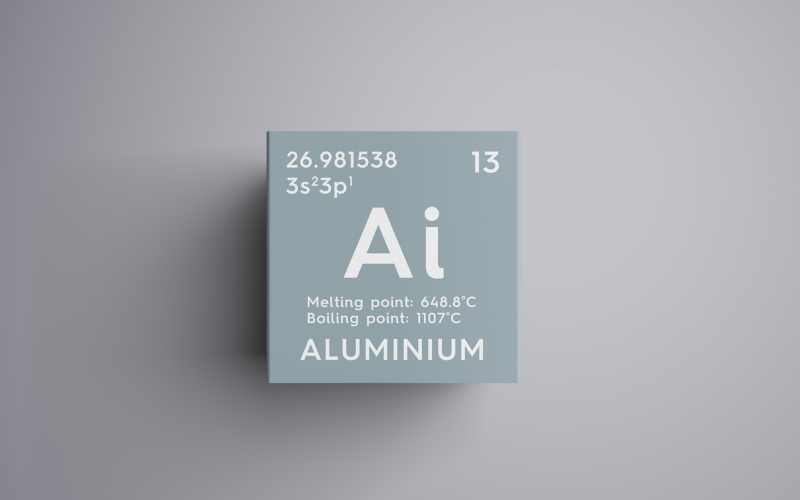
The second transmission channel is aluminium pricing itself.
The Middle East is not only a centre of oil production; it is also a significant contributor to global aluminium supply. Any disruption, whether through direct operational impact, shipping constraints, or risk premiums, feeds into global aluminium pricing. As primary metal becomes more expensive or less predictable, the relative attractiveness of secondary aluminium increases.
This dynamic creates an opportunity for US recyclers. Higher primary prices typically widen the incentive to recover scrap and increase the competitiveness of recycled units. Secondary producers can position themselves not only as a lower-carbon alternative, but also as a cost-stabilising option in volatile markets.
However, that opportunity comes with its own pressure.
As primary prices rise, competition for clean, high-quality scrap intensifies. Domestic processors, exporters and international buyers all respond to the same signals. Scrap that was previously abundant becomes contested. Spreads tighten. Quality differentials become more critical. The system does not simply become more profitable; it becomes more competitive.
Scrap as strategy: From commodity to industrial security

This is particularly relevant in the United States, where aluminium recycling is already a cornerstone of the industry.
The majority of aluminium consumed domestically contains a significant share of recycled content. At the same time, large volumes of US scrap continue to be exported. This creates a structural tension: A country that relies heavily on recycled aluminium still allows a meaningful portion of its feedstock to leave its borders.
In a stable global environment, that dynamic can be managed through price signals. In a volatile geopolitical environment, it becomes more strategic. Scrap is no longer just a commodity; it has become a form of industrial security.
Logistics disruption and the rise of regional ecosystems
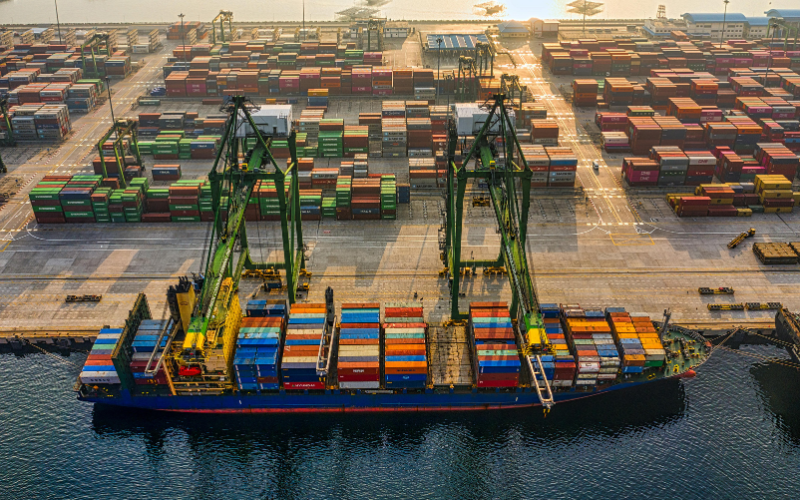
The third transmission channel is logistics and global trade flow.
Geopolitical instability in the Middle East does not need to directly interrupt the US aluminium shipments to have an impact. It only needs to disrupt global shipping patterns. When risk increases in key maritime routes, freight rates adjust. Insurance costs rise. Transit times become less predictable.
For the US recyclers and downstream producers, this introduces an additional layer of complexity. Export markets become less reliable. Import substitution becomes more attractive. Domestic supply chains gain relative importance, not because they are more efficient, but because they are more controllable.
In this context, proximity becomes a competitive advantage.
A recycler operating within a regional network, supplying nearby foundries or rolling mills, is less exposed to global shipping disruptions than one relying on long-distance trade. The value of local ecosystems, scrap collection, processing, melting and consumption within a defined geography becomes more evident as external volatility increases.
Policy vs geopolitics: A shift in industrial pressure

There is also a broader strategic dimension that should not be overlooked.
For years, aluminium has been part of policy discussions centred on tariffs, trade enforcement, and national security. These tools have shaped market behaviour, influenced pricing, and supported domestic capacity in various ways. But they are, by nature, policy instruments. They can change. They can be challenged. They can evolve with political cycles.
Geopolitical conflicts introduce a different kind of pressure. They do not depend on legislation or court rulings. They operate through markets, energy, freight and risk.
In that sense, the current US-Iran tension serves as a reminder that industrial competitiveness cannot rely on any single external condition, whether it is trade protection or stable global logistics. It must be built on structural factors that endure under different scenarios.
Operational efficiency as the ultimate hedge
For aluminium recycling, those factors are increasingly clear.
Energy efficiency is one of them. Secondary aluminium requires a fraction of the energy needed for primary production. In a volatile energy environment, that is not just an environmental advantage; it is an economic one.
But efficiency is not only about the inherent process. It is also about execution.
How efficiently is metal melted?
How much energy is required per ton?
How much metal is lost to oxidation?
How stable is the process cycle?
These are not abstract technical questions. They are directly tied to cost per ton, particularly when energy becomes more expensive.
Another structural factor is scrap recovery.
The United States generates significant volumes of aluminium scrap, yet recovery rates, especially in consumer streams like beverage cans, remain below potential. Every unit of scrap that is not collected, sorted, or processed represents lost material that must be replaced with higher-cost alternatives.
In a stable market, this inefficiency is often absorbed. In a volatile one, it becomes more visible.
Improving scrap collection, reducing contamination and increasing processing efficiency are not simply operational improvements. They are strategic responses to global uncertainty.
The final factor is process integration.
The more fragmented a system is, with multiple handling points, inconsistent quality and variable process conditions, the more exposed it becomes to cost volatility. Each inefficiency compounds the impact of external shocks.
An integrated approach, from scrap preparation to melting, holding and delivery, reduces variability. It improves control. It stabilises output.
And in an environment shaped by geopolitical tension, stability becomes a competitive advantage in itself.
From short-term opportunity to long-term signal

It is important, however, not to oversimplify the impact of the current conflict.
Higher aluminium prices and increased demand for secondary material do not guarantee improved profitability across the recycling sector. If energy costs rise too quickly, or if downstream demand weakens due to broader economic uncertainty, the net effect can be mixed.
This is why the current moment should not be interpreted as a temporary opportunity, but as a structural signal.
The signal is this: The global system is becoming more volatile, not less.
Energy markets are more sensitive to geopolitical events. Supply chains are more exposed to disruption. Policy environments are more fluid.
In that context, the industries that perform best are not those that react fastest, but those that are built to operate efficiently under a wide range of conditions.
Conclusion: Resilience built inside the system
For the US aluminium recycling, the implications are clear.
First, treat domestic scrap as a strategic asset, not just a tradable commodity. Second, invest in process efficiency, particularly in melting and energy utilisation. Third, strengthen regional supply chains to reduce dependence on long-distance logistics. Fourth, prioritise quality and consistency in scrap processing. Fifth, align operations with the growing demand for lower-carbon, more stable material supply.
The US-Iran conflict may or may not escalate further. Oil prices may rise, stabilise, or fall. Shipping routes may adapt. Markets will adjust, as they always do.
But the underlying lesson will remain.
The true resilience of the aluminium industry does not come from external conditions, whether they are favourable or adverse. It comes from internal capability.
In recycling, that capability is already partially in place. Lower energy intensity, flexible capacity and proximity to scrap supply provide a strong foundation.
The question is whether the industry will build on that foundation.
Because in a world where geopolitical shocks can quickly translate into higher costs, tighter supply and greater uncertainty, the most reliable advantage is not temporary insulation from volatility.
It is the ability to operate efficiently within it.
And in aluminium, that efficiency begins where it always has, inside the furnace.

 Voyagerman Technology


