










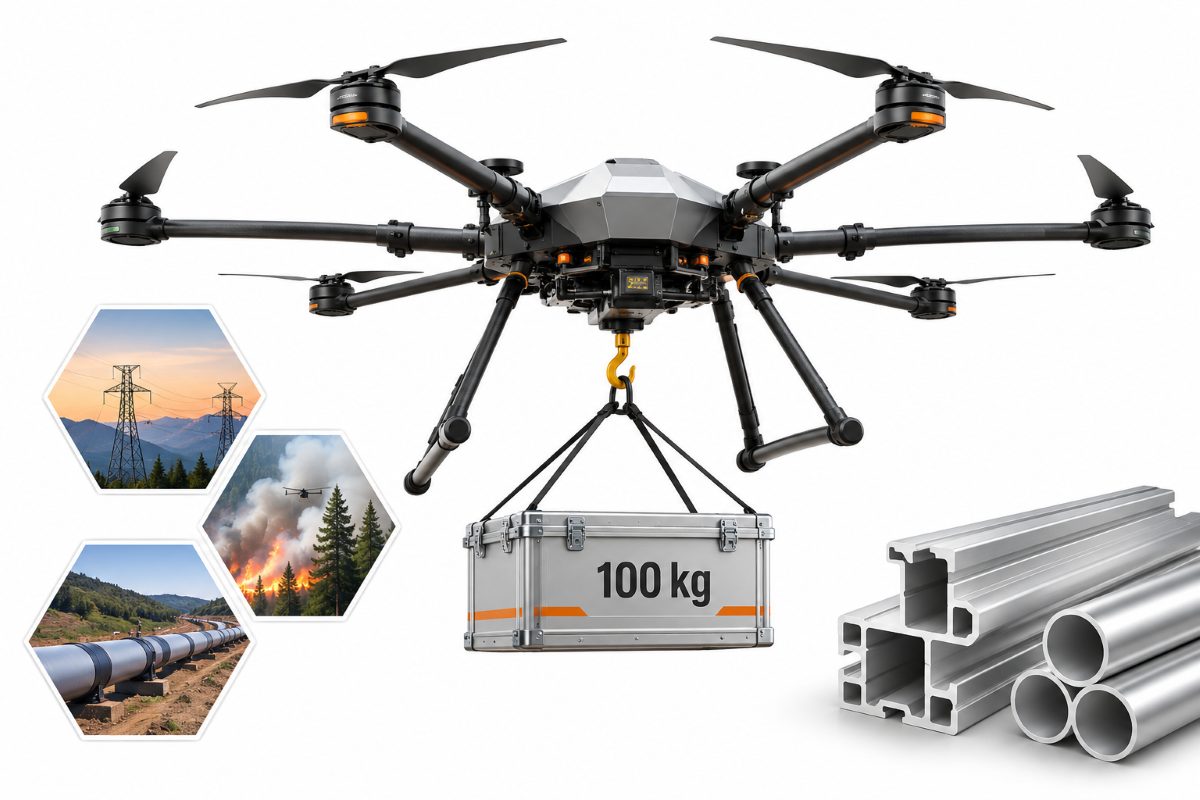

The next phase of industrial drone development is taking new turns beyond its conventional limits by including aluminium. In any manufacturing process, selection of the right material is vital and it is the same for the industrial drone development process as well. Owing to this, Drone Volt, a public company that specialises in professional civilian unmanned aerial vehicles (UAVs), embedded artificial intelligence and sustainable electric drone solutions, has unveiled Hercules 100.
Hercules 100, a heavy-lift cargo and logistics octocopter designed to transport payloads of up to 100 kg, offers an interesting example of this transition, placing aluminium alongside carbon fibre in the construction of a heavy-lift drone. What does it mean for the aluminium industry? This development reflects a specialised application where lightweight structural materials are being incorporated into advanced industrial equipment.
Aluminium x carbon fibre: Shaping the next-gen cargo drones
On 9 October 2026, at the UAV Show in Bordeaux, the Hercules 100 was first introduced, which represented Drone Volt’s move from the 25-kilogramme payload category to a 100-kilogramme platform. The foldable octocopter has a maximum take-off weight of 197 kg and weighs 52 kg without batteries, increasing to 97 kg with its battery pack.
Where does aluminium fit in this? The core of the drone’s structural design consists of both aluminium and carbon chassis, with a wheelbase of 3,300 mm. This material combination forms the foundation of an aircraft engineered to accommodate substantial payload capacity while maintaining a practical transport configuration.
Upon folding, the drone measures 1,660 × 1,060 × 720 mm and can fit inside a pickup truck. This is why the design demonstrates how material selection and structural configuration work together in developing specialised aerial equipment.
Taking industrial cargo capabilities to the next level with aluminium
The objective behind the development of the Hercules 100 is for effective use in industrial logistics, civil protection, firefighting and defence. Its eight-rotor configuration provides motor redundancy, supported by triple-redundant flight controls, RTK GPS navigation, obstacle-avoidance radar and terrain-following capabilities.
Two high-voltage solid-state batteries enable flights of up to 30 minutes with a 100 kg payload. The aircraft has a maximum mission speed of 36 km/h and a control range of 5–10 km, although actual endurance depends on payload and operating conditions. An optional tethered ground station can provide unlimited endurance.
Its equipment options include an automated winch rated for up to 80 kg, a certified hook with a 30-metre sling and a remotely triggered dropper. These capabilities point towards potential applications in moving equipment and cargo, supporting emergency response and accessing locations where conventional transport may face operational constraints.
For aluminium manufacturers and component suppliers, the development is worth monitoring because it illustrates the metal’s presence in an evolving category of industrial mobility equipment.
Aluminium’s place in drone manufacturing
The growing technical ambition behind cargo drones places structural materials within a wider conversation about industrial equipment design. Aluminium’s inclusion in the Hercules 100 chassis highlights its relevance to applications where weight, structural configuration and payload requirements must be considered together.
For aluminium extruders, component manufacturers and downstream suppliers, such specialised equipment represents an application area to watch. However, the extent of future opportunities will depend on how drone manufacturers scale production, refine their engineering requirements and expand commercial deployment.
Commercial readiness remains the next milestone
Despite its technical capabilities, the Hercules 100 is not yet at the stage of unrestricted commercial operation. Drone Volt is developing its concepts of operations and assessing them through the SORA methodology before obtaining the necessary operational authorisations. The company has not announced pricing or delivery dates.
For the aluminium industry, the Hercules 100 offers a timely example of how the metal is finding applications beyond established transport and infrastructure segments. As heavy-lift drone technology advances, aluminium’s role in specialised lightweight structures deserves closer attention from manufacturers looking to understand emerging end-use opportunities.
Source: Drone Volt’s Hercules 100 lifts 100kg: How aluminium shapes the heavy-lift drone