




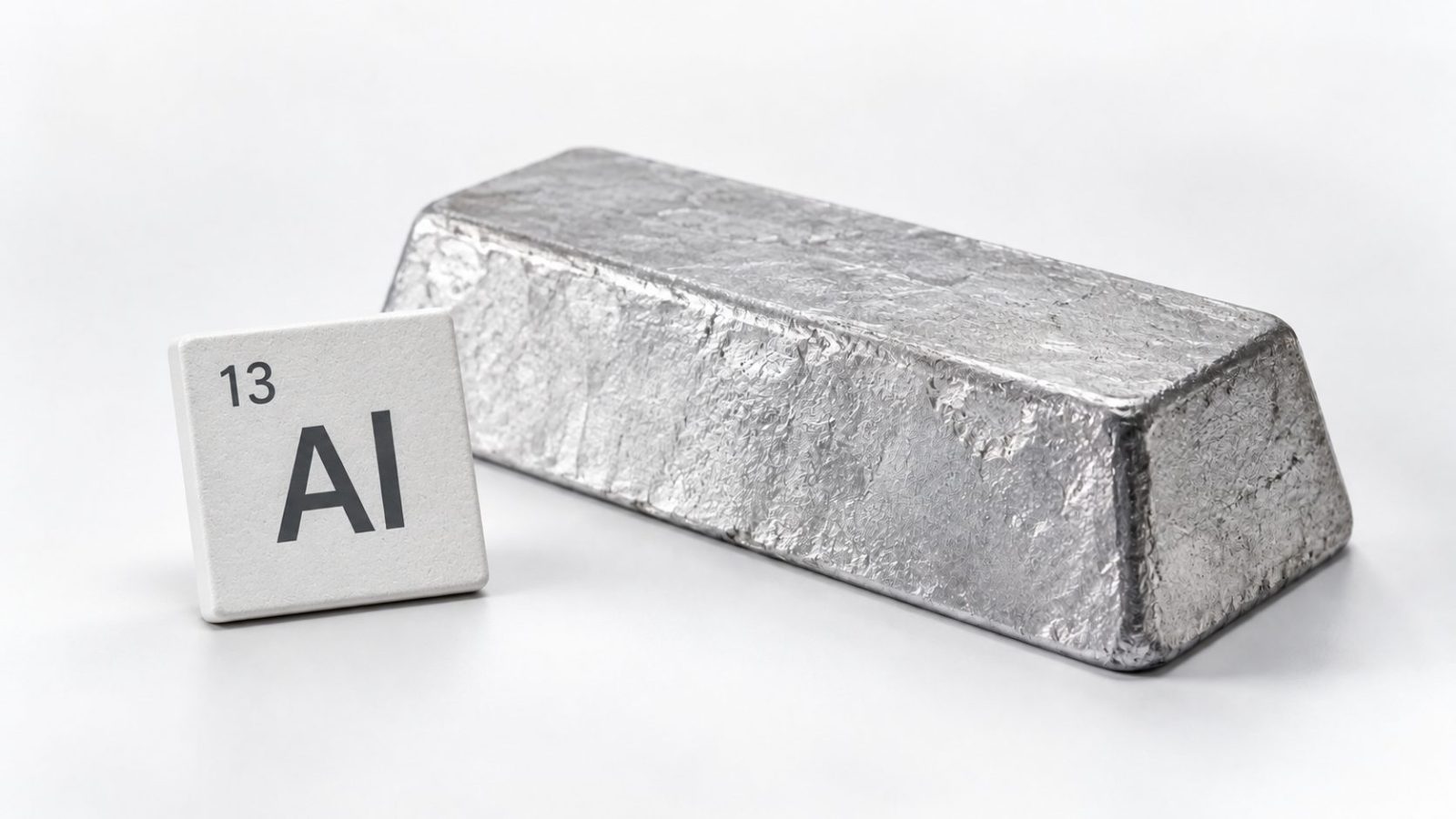
For a metal used in everything from aircraft and beverage cans to power lines and construction, aluminium has a surprisingly unsettled name. In the United States, it is almost always “aluminum”. In Britain and many other countries, it is “aluminium”. Both spellings have a place in the element’s history and the story begins with a chemist who could not quite settle on one.
Sir Humphry Davy’s changing name
In the early 19th century, British chemist Sir Humphry Davy was investigating alumina, the oxide now known as aluminium oxide. He believed it contained a previously unknown metal and tried to isolate it, though he did not succeed. In 1808, Davy proposed “alumium” for the metal. He later used “aluminum”, the shorter spelling that would become standard in American English.
The story did not stop there. The form “aluminium” also emerged in the early 19th-century naming debate and gained ground among British and European chemists. Rather than a neat, one-way change from “alumium” to “aluminium”, the record shows competing forms: alumium, aluminum and aluminium. The familiar transatlantic spelling split took shape over time.
The root of all three forms points back to alum and alumina. “Alum” was a familiar mineral salt, while alumina was the name used for its oxide. Davy’s proposed element name grew from that scientific vocabulary. The suffix was the point of disagreement: should the new metal end in “-ium”, like several other element names, or “-um”?

Image: Sir Humphry Davy’s oil painting
Why the United States says “aluminum”
There was no single moment when every American switched spellings. “Aluminum” appeared in American dictionaries and technical writing during the 19th century, and its use spread as the metal became more familiar. The spelling became firmly established in the United States through science, manufacturing and everyday usage. The American Chemical Society adopted “aluminum” as its preferred spelling in the 1920s.
Industrial history helped make the word visible. Before economical production, aluminum was rare and expensive. That changed after Charles Martin Hall in the United States and Paul Héroult in France independently developed an electrolytic process in 1886. The Hall-Héroult process made large-scale production possible, helping turn aluminum from a costly curiosity into a widely used industrial metal. As U.S. production and public familiarity grew, “aluminum” became the everyday American spelling.
This is why the spelling is more than a matter of dropping one letter. In the United States, “aluminum” is the standard form in dictionaries, media and industry. In British English and much international usage, “aluminium” is standard. The chemical symbol is Al in either case, and the material itself is the same element: atomic number 13.
Aluminum or aluminium: Which spelling is correct?
The short answer depends on the audience. Use “aluminum” for U.S. readers and “aluminium” for British English or an international audience that follows that convention. Neither spelling describes a different grade, alloy or product. A U.S. buyer asking for aluminum sheet and an international supplier quoting aluminium sheet are talking about the same base metal; specifications such as alloy, temper, thickness and finish define the product.
For companies communicating across markets, consistency matters. Use the spelling preferred by the customer, publication, or search market and keep it consistent across product pages, technical documents, and marketing materials. A U.S.-focused article may naturally use “aluminum” in its title and keywords, while a global industry platform may retain “aluminium” in its house style and explain the U.S. variant once.
A name that crossed the Atlantic
The next time someone asks whether the metal is aluminum or aluminium, the honest answer is that both spellings carry history. Davy’s first suggestion was “alumium”; “aluminum” followed, while “aluminium” gained international traction. The United States settled on the shorter form, while many other English-speaking markets kept the extra “i”.
The metal’s name travelled through scientific debate, dictionaries and industrial growth before becoming the regional spelling choice readers know today. So, from alumium to aluminum to aluminium, the journey was less a spelling mistake than a long-running argument over how to name a new metal and the Atlantic still marks the divide.