








The automotive industry has relied on aluminium casting for decades to manufacture engine blocks, cylinder heads and structural components at scale. Its ability to deliver lightweight, durable and cost-effective parts has made it the backbone of modern vehicle production.
However, evolving vehicle architectures, shorter development cycles and growing demand for design flexibility are pushing manufacturers to explore alternatives that can overcome the limitations of conventional casting.
A recent collaboration between Nikon SLM Solutions and Bosch Industry Consulting demonstrates how metal additive manufacturing is beginning to address these challenges. The partners successfully produced a fully functional one-piece aluminium V8 engine block using laser powder bed fusion (LPBF), eliminating the need for conventional tooling and multi-part assembly.
While the project is not intended to replace casting for mass production, it highlights how additive manufacturing can complement traditional processes for high-value, complex applications. More importantly, it signals a shift in how aluminium components may be designed, manufactured and supplied in the years ahead.
Why traditional casting faces new challenges
Aluminium casting remains the most economical solution for producing millions of identical components. Its maturity, scalability and established supply chains continue to make it indispensable for automotive manufacturing.
Yet several industry trends are exposing its limitations.
Modern vehicles increasingly demand components with intricate internal geometries, integrated cooling channels and optimised weight distribution. At the same time, OEMs are under pressure to shorten product development cycles and introduce new models more rapidly.
Conventional casting often requires dedicated tooling, mould design and multiple manufacturing stages before production begins. Any design modification typically involves additional tooling costs and longer lead times, making rapid iteration both expensive and time-consuming.
For prototype development, performance vehicles and specialised applications, these constraints are becoming increasingly significant.
Metal additive manufacturing changes the design equation
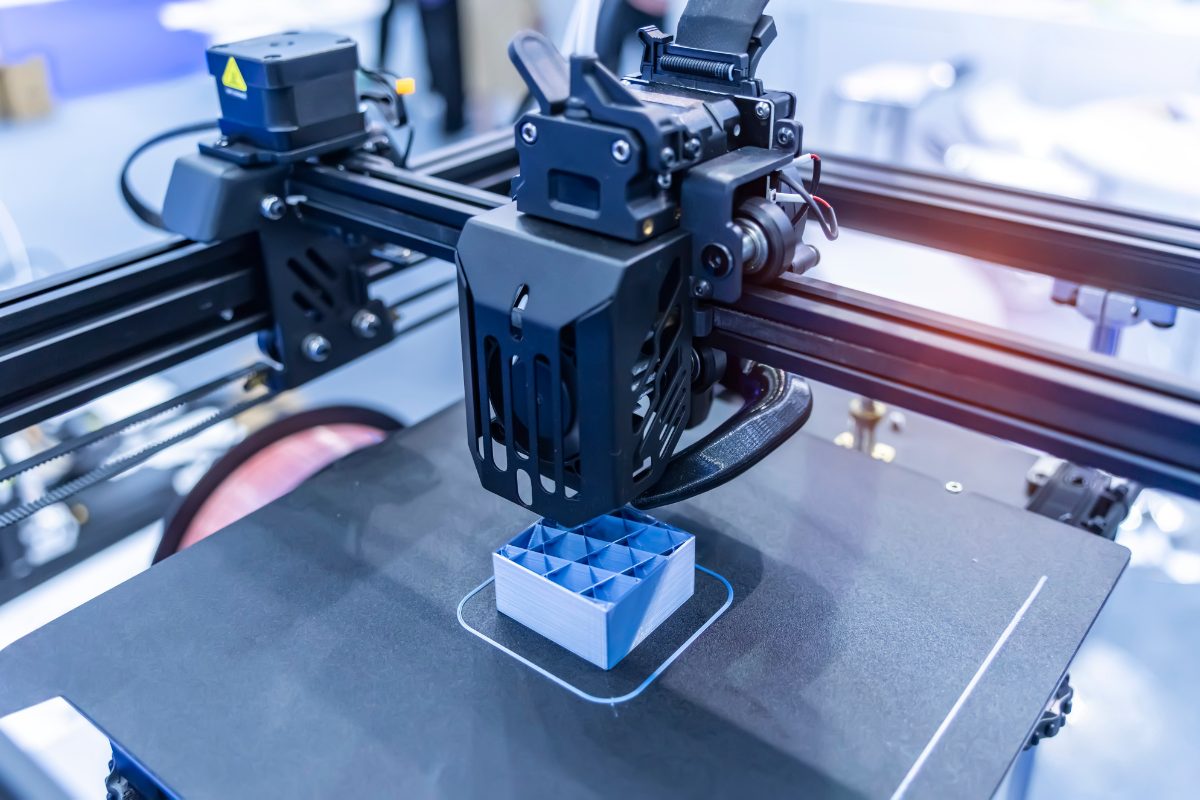
Unlike conventional casting, metal additive manufacturing builds components layer by layer directly from a digital model. This removes the dependency on moulds while allowing engineers to create geometries that would be difficult or impossible to manufacture using traditional processes.
In the Bosch-Nikon project, the complete aluminium V8 engine block was produced as a single integrated component using AlSi10Mg alloy on Nikon’s NXG XII 600 LPBF system.
By consolidating multiple parts into one structure, the approach reduces assembly complexity while enabling greater design freedom. Engineers can optimise material placement, incorporate internal cooling passages and develop lightweight structures without being constrained by conventional manufacturing requirements.
For industries where performance, speed and engineering flexibility outweigh production volume, these capabilities represent a significant competitive advantage.
Why aluminium remains central to the transition
The success of metal additive manufacturing depends not only on the printing technology but also on material performance.
Aluminium continues to offer several advantages that make it particularly well suited for advanced manufacturing applications.
Its lightweight properties support ongoing vehicle lightweighting initiatives, helping improve fuel efficiency and extend electric vehicle range.
Excellent thermal conductivity makes aluminium suitable for engine components requiring efficient heat management, while its strength-to-weight ratio supports structural performance without unnecessary mass.
When combined with additive manufacturing, these material characteristics enable engineers to optimise both component performance and manufacturing efficiency simultaneously.
Business implications across the aluminium value chain
The significance of this development extends far beyond automotive OEMs. For aluminium producers, additive manufacturing presents an opportunity to expand into specialised aluminium powder markets alongside traditional cast alloys.
Foundries may increasingly position themselves as providers of hybrid manufacturing solutions, combining casting expertise with additive manufacturing capabilities for prototype development and low-volume production.
Automotive suppliers can accelerate product development, reduce tooling investment and respond more quickly to changing customer requirements, particularly in premium, motorsport and emerging mobility segments.
Equipment manufacturers and technology providers also stand to benefit as demand grows for metal powder production, process optimisation, simulation software and post-processing solutions.
Rather than disrupting the existing value chain, additive manufacturing is creating new opportunities across it.
Where casting and 3D printing can coexist
Despite growing interest in additive manufacturing, aluminium casting is unlikely to lose its dominant position in high-volume automotive production.
The economics remain firmly in favour of casting for large production runs, where tooling costs can be distributed across millions of components.
Instead, additive manufacturing is expected to strengthen applications where complexity, customisation and rapid development are more valuable than production scale.
Potential use cases include:
- Performance and motorsport components
- Premium and luxury vehicle platforms
- Prototype and validation programmes
- Low-volume speciality vehicles
- Complex structural and thermal management components
- Emerging hydrogen and electric vehicle applications
This complementary relationship allows manufacturers to select the most appropriate production method based on performance, volume and commercial requirements rather than relying on a single manufacturing approach.
Looking ahead
The Bosch-Nikon collaboration demonstrates that metal additive manufacturing is progressing from experimental projects towards practical industrial applications.
As automotive manufacturers continue to prioritise lightweighting, shorter product development cycles and greater design flexibility, additive manufacturing is likely to become an increasingly valuable complement to traditional aluminium processing technologies.
For companies operating across the aluminium value chain, the question is no longer whether additive manufacturing will influence the industry. The more important consideration is identifying where it creates the greatest value and how existing capabilities can evolve to support this transition.
The future of aluminium manufacturing is unlikely to be defined by one process replacing another. Instead, it will be shaped by the ability to combine established manufacturing expertise with emerging technologies to deliver stronger performance, faster innovation and greater competitiveness.
Source: 3D printing to replace casting? Nikon SLM, Bosch unveil one-piece aluminium V8 engine block

 Voyagerman Technology


