




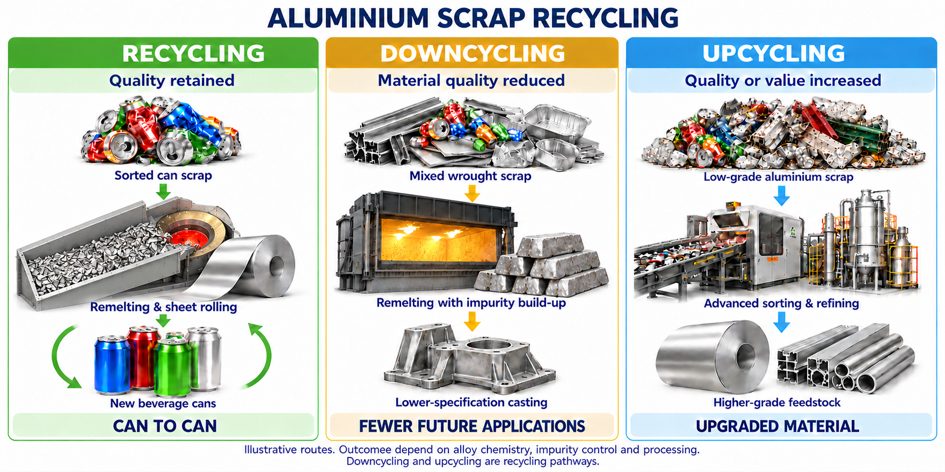
Introduction
Downcycling happens when scrap of mixed or unknown composition is melted together. The melt then contains elements that cannot be refined out economically, mainly iron, silicon, copper, zinc and excess magnesium. Once that happens, the metal can only go into cast alloys (A380 and ADC12 type) or be diluted with primary metal.
Preventing downcycling is therefore mostly about controlling what enters the furnace. Refining the melt afterwards does very little. The figure that ties all of this together is the molten metal cost: the cost of one tonne of liquid metal that meets the target specification, including the value of alloying elements recovered from the scrap. Because liquid metal equals purchased scrap multiplied by metal yield, every scrap price must be read through its yield.
In this revision, the cost is no longer measured in money alone: it also includes carbon emissions and the quality of the working environment, occupational health and safety. This note covers how a diverse scrap stream is turned into a standard raw material: how it is upgraded, decoated, routed and melted in the right furnace.
The core challenge: From diverse scrap to a standard raw material
A secondary plant works with a far more varied input than a primary smelter. The Aluminum Association lists more than 530 registered active alloy compositions and these alloys reach scrap yards inside thousands of different products: cans, profiles, car bodies, wheels, engine blocks, cables, foil, radiators and turnings, each with its own coatings, attachments and contamination. The trading system compresses this into a limited number of grades: the Scrap Specifications Circular of the Recycled Materials Association (formerly the Institute of Scrap Recycling Industries) defines 48 aluminium grades plus Zorba and the European standard EN 13920 defines 15 scrap categories. In practice, each grade still varies widely by supplier, so a plant typically prices 15 to 30 distinct scrap streams to make only 3 to 8 target alloys.
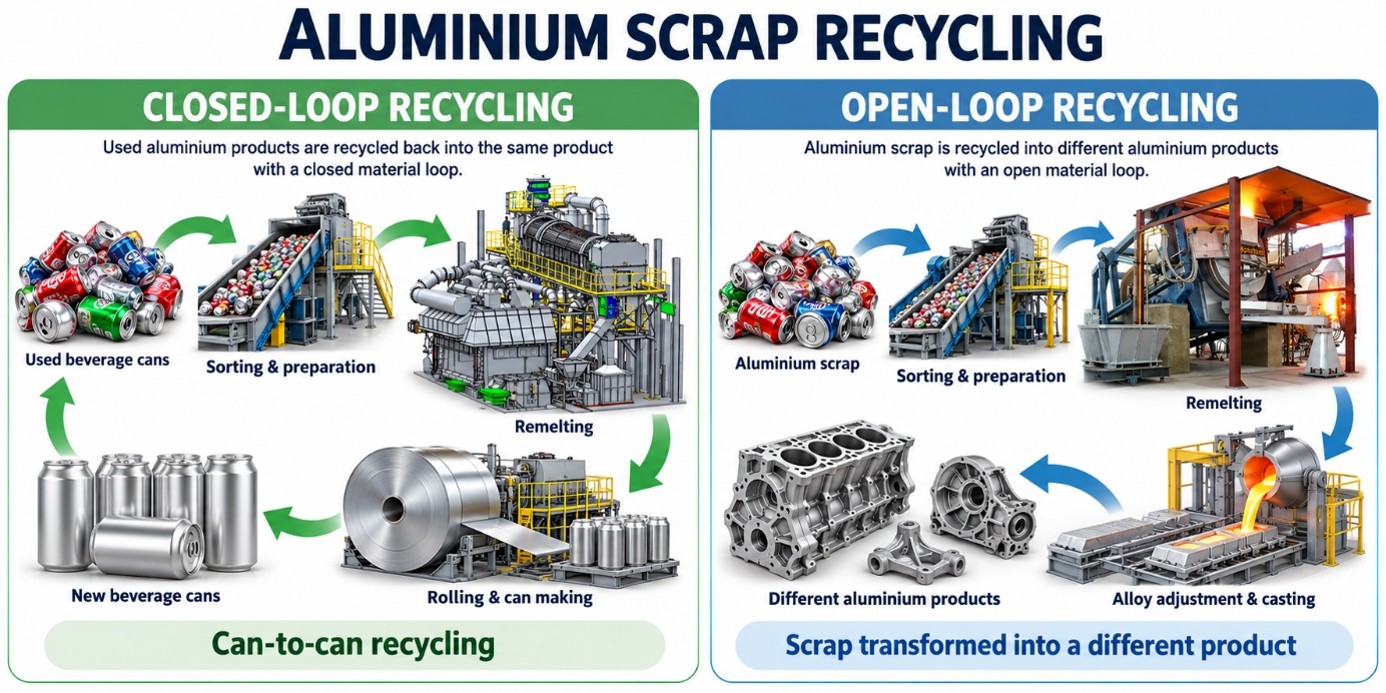
Figure 2: Closed-loop and open-loop recycling of aluminium scrap
(Source: This is an AI-generated image for referential purposes only)
The core idea is to turn that diversity into a standardised raw material: each incoming lot is analysed, processed and assigned to one of a small number of internal standard feedstock classes with known chemistry, metal yield and organic content. The recipe then blends these standard feedstocks to hit the target alloy at the lowest total molten metal cost, and each blend is melted in the furnace suited to it. The furnace and the recipe see 8 to 10 well-defined feedstocks, not 50 grades from dozens of suppliers.
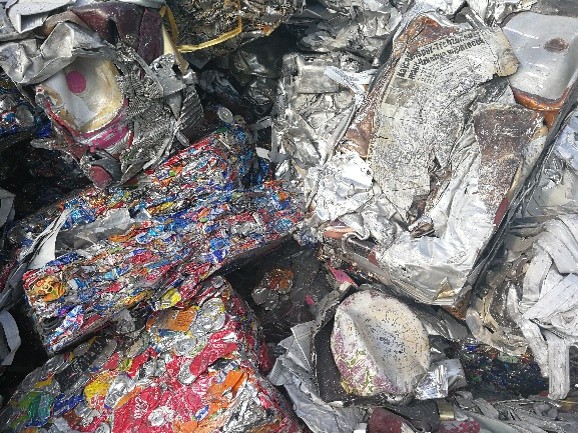
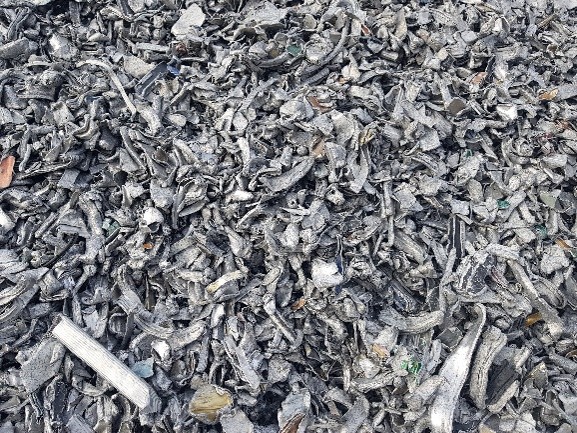
Figure 3: Mixed scrap and shredded T&T and profile
| Level | Typical number | Source or remark |
| Products containing aluminium | Thousands | Packaging, building, transport, electrical, consumer goods |
| Registered alloy compositions | More than 530 | Aluminum Association (wrought and cast alloys) |
| Traded scrap grades | 48 plus Zorba (REMAS); 15 categories (EN 13920) | Scrap Specifications REMAS; EN 13920 |
| Scrap streams priced by one plant | 15 to 30 | Grade × supplier × bale specification × coating |
| Internal standard feedstock classes | 8 to 10 | Defined by chemistry band, metal yield, organic content class and physical form |
| Target alloys produced | 3 to 8 | Set by the product portfolio of the plant |
Table 1: From product diversity to target alloys (as an example)
Automation, artificial intelligence and machine learning along the chain
Standardising a scrap stream this varied by hand does not scale. A plant handling 30 streams, nine feedstock classes and several target alloys makes thousands of small decisions a day: how to grade a truck, where to route a lot, which blend to charge, when to skim. Automation and machine learning turn these from operator judgement into measured, repeatable decisions. The aim is not to replace metallurgical knowledge but to give it data at every step. The table below shows each stage of the chain from scrap to target alloy and where each technology fits.
| Stage | What happens and output | Automation and sensors | Artificial intelligence and machine learning application | Benefit | Maturity |
| 1. Purchase and receiving | Buy on grade specification and metal content; weigh as received, measure moisture. Output: lots with identity and weight | Weighbridge integration, truck cameras, moisture sensors (near-infrared, microwave) | Computer vision grading of loads; supplier risk scoring from lot history; price and price-spread forecasting | Fewer grading disputes; purchasing on true metal content | Commercial or emerging |
| 2. Characterisation | Chemistry, test-melt yield, organic content by loss on ignition. Output: lot data in the scrap database | Automated sampling, laser-induced breakdown spectroscopy on the conveyor, robotic spectrometer cells | Models that predict lot chemistry and yield from spectroscopy data and supplier history, with uncertainty bands | Lot data in minutes rather than days; fewer test melts | Commercial |
| 3. Standardisation and upgrading | Shredding, magnetic and eddy current separation, sensor-based sorting, decoating, baling or briquetting. Output: standard feedstock classes | Sorting lines using X-ray transmission, laser-induced breakdown spectroscopy, X-ray fluorescence, colour and three-dimensional cameras; robotic pickers | Deep-learning image classification of scrap pieces; sensor fusion for alloy-level sorting | Higher share of scrap upgraded to wrought classes | Commercial (X-ray and laser sorting); emerging (vision, robotics) |
| 4. Recipe preparation | Charge optimisation on total molten metal cost within chemistry, organic and eligibility limits. Output: charge recipe per heat | Automatic link from the scrap database to the optimiser and furnace scheduling | Robust or chance-constrained optimisation using predicted chemistry and alloying element recovery distributions | Narrower safety margins, lower primary dilution, fewer heats outside specification | Commercial (linear programming); emerging (machine-learning guided) |
| 5. Melting | Furnace matched to the feedstock class. Output: liquid metal near target chemistry | Bath temperature and level sensors, off-gas analysis, automated burner and stirring control | Software sensors for bath temperature and melt state; prediction of melt loss and energy per charge; optimal charge sequencing | Lower melt loss and energy; higher metal yield | Emerging |
| 6. Treatment and casting | Check sample, trimming, degassing, filtration, casting. Output: slab, billet or foundry ingot | Online spectrometry, automated alloy dosing, inline degassing and filtration control | Trim recommendation from the check sample; defect prediction for cast products | Chemistry right first time; fewer rejects | Commercial or emerging |
| 7. Feedback | Heat identity links lots, recipe, process and product data. Output: updated database and class definitions | Manufacturing execution system with heat identity, digital twin of the line | Continuous retraining of chemistry, yield and property models; anomaly detection on the mass balance | Models improve with every heat; losses traced to their cause | Emerging |
Table 2: The chain from scrap to target alloy, with automation, artificial intelligence and machine learning at each stage
(Maturity is indicative: “commercial” means widely installed in aluminium recycling; “emerging” means in pilot or early industrial use.)
From deterministic recipes to recipes that know their uncertainty
The most direct gain from machine learning is in the recipe. Today’s charge optimisation uses one average chemistry per scrap input and protects itself with a fixed safety margin, for example aiming at 0.70 % iron for a 0.80 % limit. That margin is paid for in primary dilution and in cheap scrap left unused. When machine learning models give each lot a predicted chemistry with a confidence band, the optimiser can be set to meet the limit with a chosen probability (for example 95%) instead of with a fixed margin. Well-characterised lots then need less margin, uncertain lots more and the overall blend can carry more low-cost scrap without more heats outside specification.
The same applies to the recovery of alloying elements. The magnesium, manganese, copper and silicon in the scrap do not all reach the liquid metal: Magnesium in particular is partly oxidised during decoating and melting and the loss depends on the feedstock class, its surface-to-volume ratio, the decoating temperature, the furnace type, the bath temperature and the time to submerge the charge. A fixed recovery factor either overestimates the magnesium that arrives, which forces later additions, or underestimates it, which overshoots the target and may push the melt towards demagging. Models that predict the recovery of each element for each feedstock class and furnace condition let the recipe count on the alloying elements that will really be in the melt. This lowers alloy additions, avoids overshooting magnesium and turns recovered alloying elements into a reliable part of the molten metal cost calculation.
Data backbone
None of these applications works without a single, traceable data flow. Figure 4 shows the loop: every lot and every heat carries an identity, every measurement is stored against it, and the results of each heat are compared with the predictions and fed back into the models.
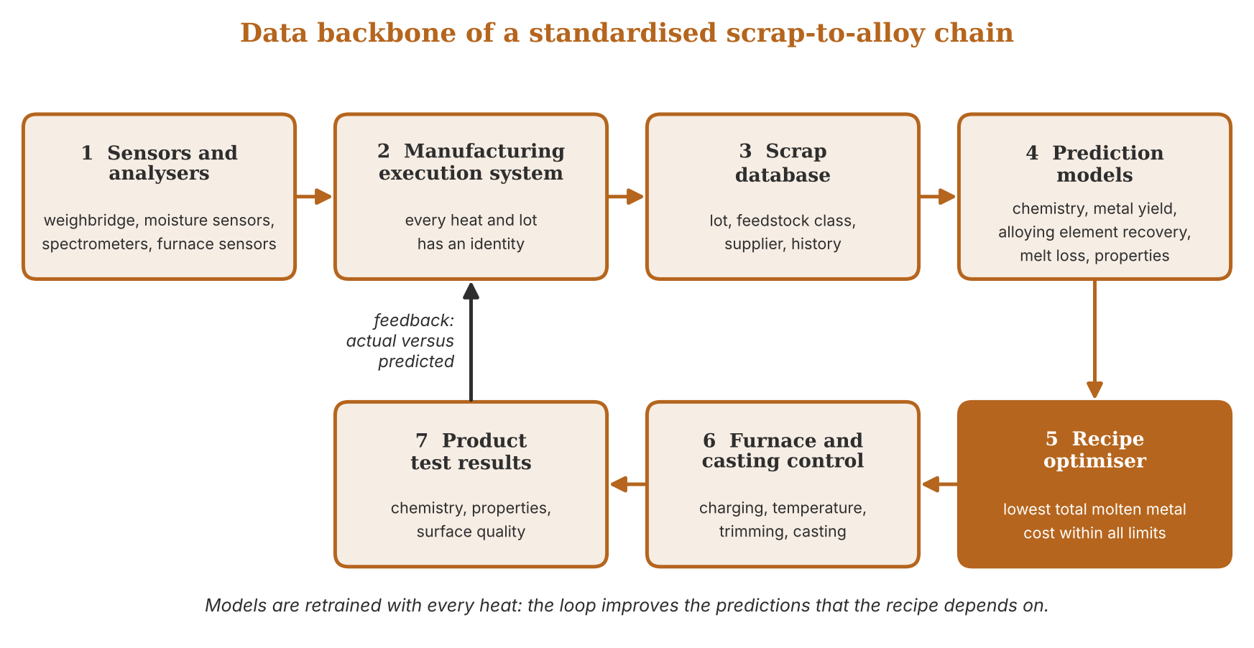
Figure 4: Data backbone: from sensors to recipe to product, and back
Data quality matters more than the choice of algorithm: consistent weighing, sampling and lot identities are the first investment.
Cautions
- Garbage in, garbage out. If the scrap has not been sufficiently upgraded (beneficiated), neither a model nor a furnace can turn it into good metal. Models trained on poorly weighed or mislabelled lots learn the errors. Data discipline comes before artificial intelligence. The same principle applies to the metal itself: melting furnaces are not magic. A furnace has no effect, or only a limited effect, on the chemical composition of the liquid metal. Iron, silicon, copper and zinc that enter with the charge leave with the metal; only magnesium, hydrogen and inclusions can be reduced and only at a cost. The chemistry of the product is decided at the scrap yard, the sorting line and the recipe, not in the furnace.
- Keep the metallurgist in the loop. Machine learning recommendations should be explainable (which inputs drove them) and approved by operators until the model has a proven record on that product.
- Models drift. Scrap markets and suppliers change. Track the prediction error per heat and retrain when it rises.
- Hard limits stay hard. Safety rules (wet scrap, closed containers, explosive items), permit limits and customer specifications are constraints the optimiser may never trade off.
Building the data foundation into the plant design from day one costs little and is far cheaper than retrofitting it later. It is also what makes the later machine learning phases possible.
1. Remove coatings before melting: Thermal decoating
Thermal decoating is the step that decides whether coated scrap stays in the wrought loop. Used beverage cans carry lacquers and inks, building sheet and profiles carry paint and foil carries laminates and lacquer: typically 1 to 8 % of the weight and much more for laminated packaging. If these organics are burned on the surface of the melt, they oxidise the thin metal, raise dross formation and flux consumption and drive the operation toward salt-furnace routes whose output usually ends up as cast alloy. If they are removed before melting, the same scrap can be charged into a side-well or twin-chamber furnace and returned to sheet or extrusion alloys.
- How it works. Shredded scrap is heated to up to 530 °C in a rotary kiln or on a belt, in a controlled low-oxygen atmosphere. The coatings decompose (pyrolysis) into combustible gases instead of burning on the metal. The gases are burned in an afterburner or thermal oxidiser and their heat is returned to the kiln, so the coatings partly fuel their own removal.
- Control parameters. Temperature, oxygen level, residence time and feed size must be kept within narrow limits. Too cold leaves carbon residue on the scrap; too hot or with too much oxygen oxidises the thin metal and burns magnesium from 5xxx can ends, which is metal yield and alloying value lost before the furnace.
- Metal yield and alloy value. Removing coatings before melting raises metal yield, reduces dross and flux and protects the magnesium and manganese the scrap carries into the melt.
- Energy and emissions. The calorific value of the coatings is recovered instead of wasted and the off-gas is treated in one controlled system (afterburner, rapid quench, sorbent injection, bag filter), which keeps dioxin and furan emissions within permit limits.
- Safety. Decoating also dries the scrap. Moisture and trapped liquids are the main cause of molten metal explosions at charging, so a decoater is a safety device as well as a metallurgical one.
Integration with melting. The strongest configuration feeds hot, dry, decoated scrap directly into a side-well furnace with a pump or vortex system that submerges it immediately. Figure 5 shows such a combination.
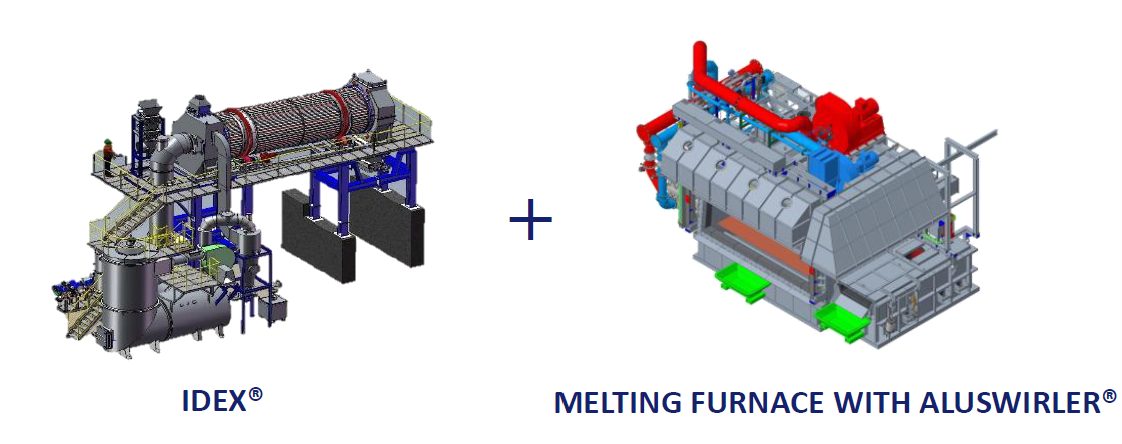
Figure 5: IDEX® decoater and side-well melting furnace
(source: INSERTEC)
2. Match each furnace to the scrap quality it handles
- Wrought-grade streams go to twin-chamber furnaces (thin-gauge scrap) or side-well (vortex) reverberatory furnaces (used beverage cans especially) with low or no salt. These are the right melters for used beverage cans and thin-gauge scrap.
- Rotary salt furnaces and tilting rotary furnaces are for dross, low-grade and heavily contaminated scrap. Accept that this output is meant for cast alloys.
- In a mixed-scrap plant of 20,000 to 50,000 tonnes per year, run two separate lines: A wrought line producing billet or slab and a cast line producing foundry ingot. Never blend them to balance capacity.
3. Plan charges by chemistry, not by tonnage
- Analyse incoming lots (spectrometer on remelted samples, or laser-induced breakdown spectroscopy) and build a scrap database.
- Use charge optimisation (linear programming) to choose the scrap blend that hits the target alloy with the least primary dilution and the lowest total cost. This alone often moves a large share of scrap from cast into wrought output.
- Melt treatment can only fix part of the chemistry. Manganese, magnesium and copper can be added. Magnesium can be reduced by chlorination or aluminium fluoride (demagging), but demagging should be avoided: it destroys magnesium that is expensive in money, carbon and health and safety terms. Iron, silicon and zinc effectively cannot be removed. Recognise these limits so you know which scrap must never enter the wrought line.
4. Choose products and alloys that tolerate recycled input
- Target wrought products that tolerate recycled chemistry: 3104 can body, 3xxx and 5xxx building sheet and 6060 and 6063 billet, which are relatively forgiving.
- Consider recycling-friendly or “crossover” alloy specifications with wider iron and copper windows, agreed with customers. This is an increasingly common route in electric vehicle and building products.
5. For the can-to-can hub specifically
Used beverage cans are the best closed loop available, but only if the collected cans are clean. Body stock (3104) and end stock (5182) melted together produce a melt with too much magnesium for body stock. Correct this by blending in the right body-to-end ratio and by adding primary metal or body scrap, rather than by demagging.
6. Make recycled content pay
Traceable, alloy-specific recycled content (Aluminium Stewardship Initiative chain of custody, environmental product declarations) earns a premium. The European Union Carbon Border Adjustment Mechanism also favours low-carbon secondary metal. This turns the extra cost of sorting and segregation into a revenue argument in the business plan, rather than leaving it as overhead.
Conclusion
Decision matrix: Scrap grade to product
The matrix below summarises how each scrap grade should be routed to keep as much metal as possible in wrought applications. The organic content column links each grade to the organic content classes (class 0 to 3) used when the charge recipe is prepared.
| Scrap grade | Typical organic content (class) | Pre-treatment and sorting | Furnace | Target product |
| Clean process scrap (1xxx, 6xxx, 3xxx and 5xxx) | Below 1% (class 0) | Grade segregation, magnetic separation | Side-well or twin-chamber | 6060 and 6063 billet, sheet slab |
| Used beverage cans (clean bales) | 1–3% lacquer (class 1) | Shredding, magnetic and eddy current separation, decoating | Side-well vortex or twin-chamber | 3104 can body and 5182 end stock |
| Mixed post-consumer wrought scrap (Twitch, shredder scrap, Vesper) | 1–5%, variable (class 1–2) | X-ray transmission and laser spectroscopy alloy sorting, hot crush | Side-well vortex or twin-chamber (sorted fractions) | Wrought slab or billet with tolerant specifications |
| Painted or coated profiles and sheet | 2–5% paint (class 1–2) | Thermal decoating | Side-well vortex or twin-chamber | Wrought (6xxx and 3xxx) |
| Cast scrap (wheels, castings) | Below 2% oils (class 0–1) | Segregation, magnetic separation | Reverberatory or rotary | Cast alloy ingot (closed cast loop) |
| Dross, skimmings, heavily contaminated scrap | Oxides, salts, above 10% organics (class 3) | Crushing, screening | Rotary salt furnace or tilting rotary furnace | Foundry ingot (A380 and ADC12 type) |
Table 3: Decision matrix: scrap grade to product
(Indicative routing; final allocation depends on lot analysis and charge op)