





Good casting does not start at the mould. It starts in the melt.
If the molten aluminium is not clean, the final product will show it. You may get porosity, oxide films, poor surface finish, weak mechanical strength or high rejection rates.
This is why aluminium foundry consumables matter.
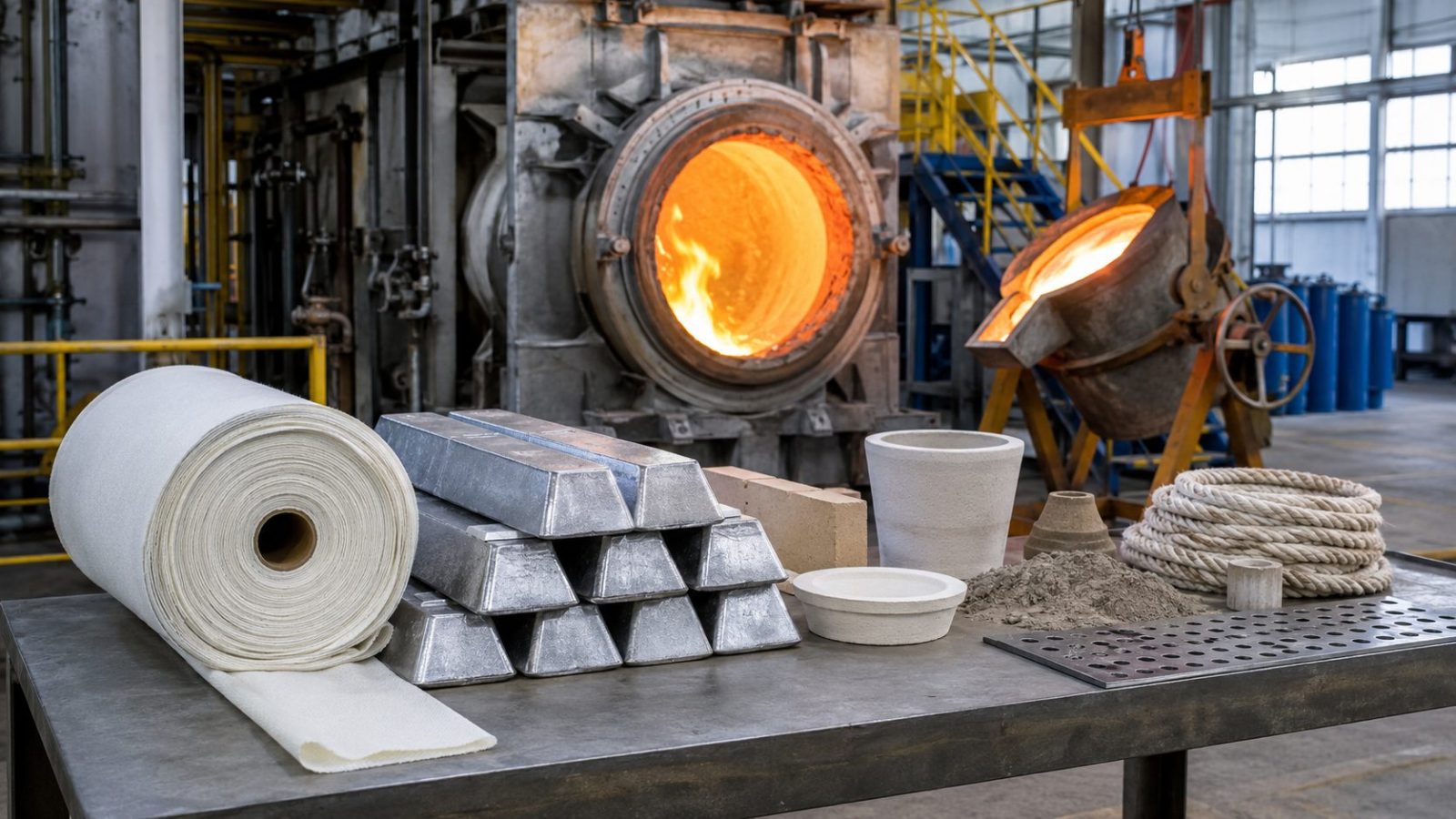
Cover fluxes, aluminium degassing tablets, filter cloth, grain refiners and aluminium alloy ingots are not side items. They control melt quality, metal loss and casting consistency.
For buyers, the hard part is not just finding a supplier. The hard part is knowing what to ask before placing an order.
This guide explains the main aluminium casthouse consumables and how to choose them.
Why melt-treatment consumables matter
Molten aluminium reacts fast with air, moisture and furnace conditions. During melting, holding and pouring, the metal can pick up gases and non-metallic inclusions.
That creates problems such as:
- Pinholes in castings
- Oxide inclusions
- Higher dross formation
- Poor surface finish
- Weak casting strength
- Poor machinability
- Unstable alloy chemistry
- More scrap and rework
A good melt-treatment system helps control these risks. The right aluminium foundry consumables can help improve:
- Metal cleanliness
- Yield
- Casting quality
- Alloy consistency
- Furnace efficiency
- Process repeatability
But one product cannot solve every issue. Cover flux, degassing tablets, filter cloth and grain refiners each do a different job.
1. Cover fluxes
A cover flux is a chemical used on the surface of molten aluminium. It helps protect the melt from oxidation, reduces dross formation and supports cleaner metal handling during melting or holding.
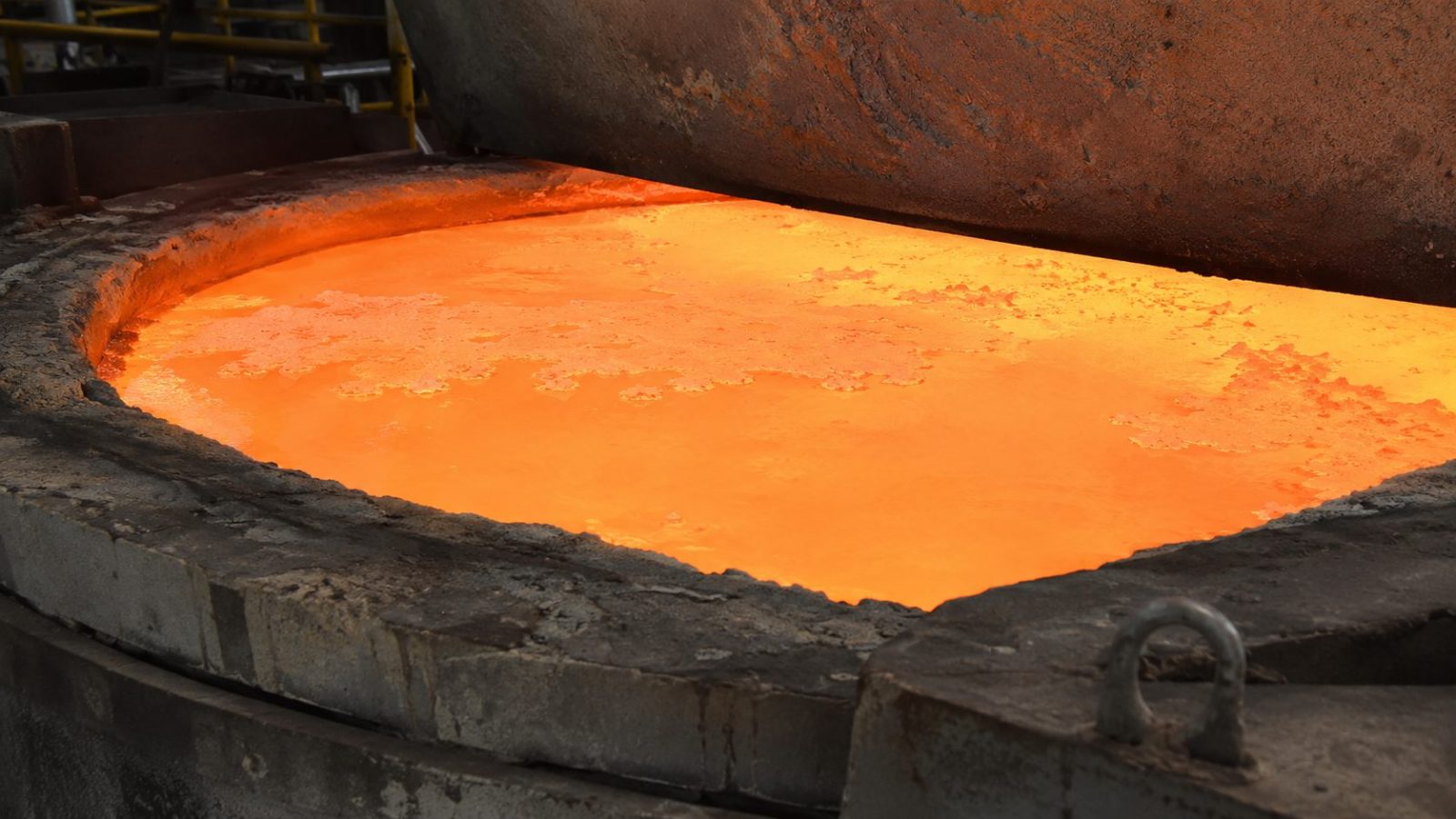
Image used for representative purposes
Cover fluxes are used in:
- Melting furnaces
- Holding furnaces
- Re-melting units
- Recycling plants
- Foundries
- Die casting units
- Aluminium extrusion billet casting units
Buyers looking for aluminium cover flux should check the furnace type, alloy grade and dross control requirement before enquiry.
Main functions of cover flux
- Protects molten aluminium from oxidation
- Helps reduce metal loss
- Helps separate dross from the melt
- Supports cleaner metal handling
- Helps maintain alloy chemistry during holding
Common selection points
Before buying cover fluxes, check:
- Furnace type
- Melting temperature
- Alloy family
- Scrap quality
- Dross level
- Application method
- Slag separation need
- Fume and safety requirements
- Packing size and storage condition
Do not buy only on price per kg. That is a weak way to judge flux.
A cheaper flux may create more dross or poor separation. That means more metal loss. The real cost is not the flux price. The real cost is metal recovery.
2. Degassing tablets
Hydrogen is a common problem in molten aluminium.
When hydrogen stays in the melt, it can form pores as the metal solidifies. These pores reduce casting quality. In many cases, they lead to rejection.
Degassing tablets are aluminium foundry consumables used to remove dissolved hydrogen and impurities from molten aluminium. They help reduce porosity, improve metal cleanliness and support better casting quality.
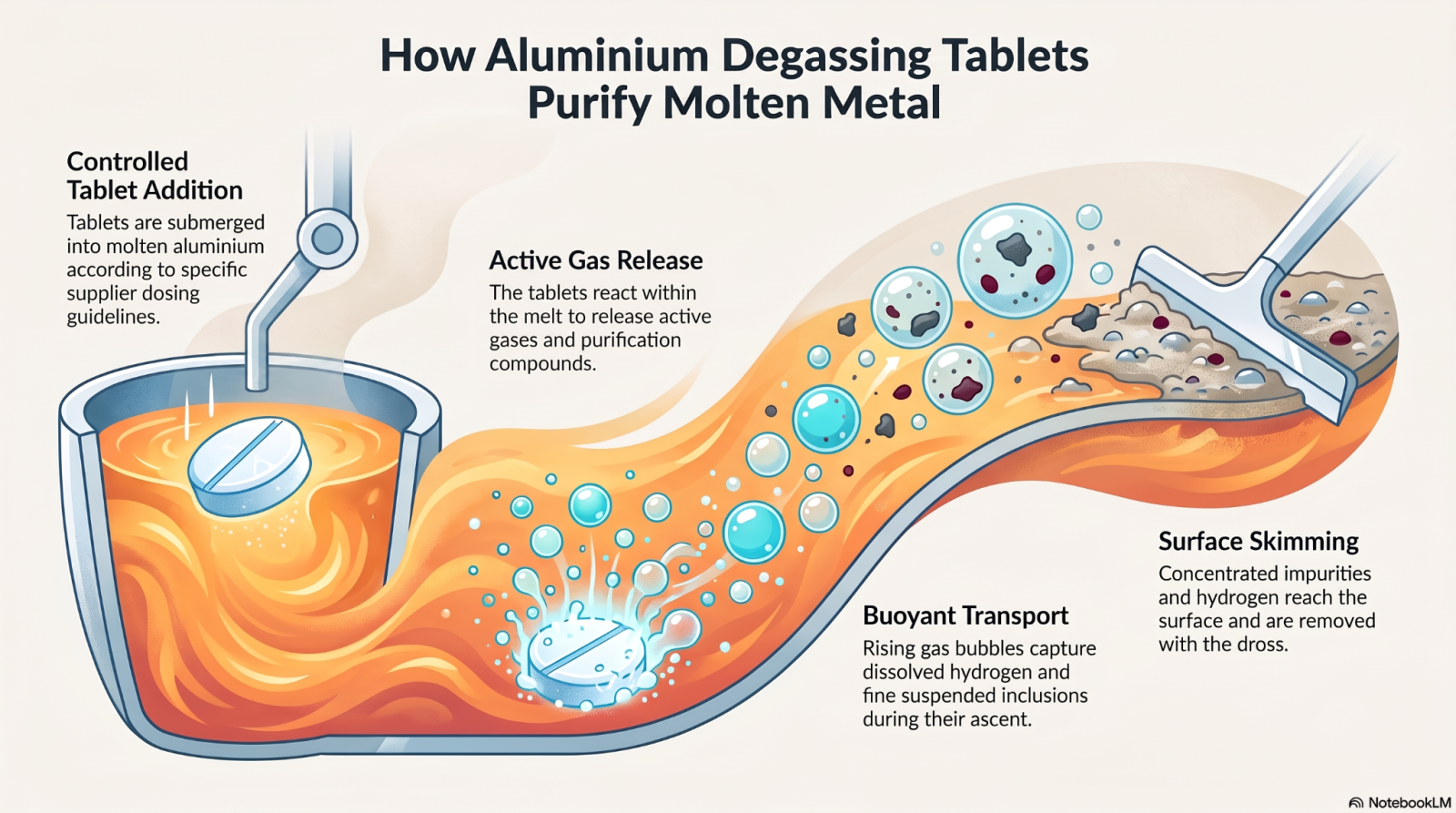
Image used for representative purposes
They are used in:
- Foundries
- Die casting units
- Aluminium extrusion units
- Ingot casting
- Recycling and remelt units
For buyers comparing aluminium degassing tablets, the key point is dosing control. Too little may not treat the melt well. Too much may cause waste or process issues.
How aluminium degassing tablets work
Degassing tablets are added to molten aluminium as per the supplier’s dosing guide. Once added, they react in the melt and release active gases or compounds that help remove dissolved hydrogen and suspended impurities.
The gas bubbles rise through the melt and carry hydrogen and fine inclusions towards the surface. These can then be skimmed off with dross.
What buyers should check
Ask the supplier for:
- Recommended dose per tonne of melt
- Suitable melt temperature
- Tablet size and weight
- Holding time after addition
- Stirring requirement
- Safety data sheet
- Fume control guidance
- Storage condition
- Shelf life
- Suitable alloy grades
Do not guess the dosing rate. That is how plants waste material and still get poor results.
3. Filter cloth
Even after fluxing and degassing, some inclusions may remain in the melt.
Filter cloth is a type of aluminium foundry consumable that helps trap these inclusions before the metal reaches the mould, billet casting table or ingot casting line.
A good aluminium filter cloth helps improve metal cleanliness during pouring.
It is used for:
- Molten aluminium filtration
- Foundry casting
- Extrusion billet casting
- Ingot casting
- Die casting feed systems
- Non-ferrous metal filtration
What filter cloth removes
Filter cloth can help trap:
- Oxide films
- Dross particles
- Slag particles
- Non-metallic inclusions
- Coarse contaminants
How to choose filter cloth
The right filter cloth depends on the job.
Check these points:
- Mesh size
- Metal temperature
- Pouring rate
- Metal flow rate
- Alloy type
- Cloth thickness
- Thermal shock resistance
- Strength during pouring
- Compatibility with launder or mould setup
Mesh grade and flow rate
The right mesh depends on the flow rate, casting method and cleanliness target. Fine mesh may trap more inclusions. But it can also slow down metal flow. And on the contrary, coarser mesh allows faster flow. But it may allow smaller particles to pass.
So the buyer needs to balance two things:
- Filtration level
- Pouring speed
If the casting line is fast, do not select a very fine cloth without checking flow rate. It can choke the system.
4. Grain refiners
Large grains can cause poor surface finish, weak mechanical properties and uneven structure. Fine grains help improve casting quality.
An aluminium grain refiner is used to make the grain structure of aluminium finer and more uniform. This can improve surface finish, strength and casting consistency.
Many aluminium grain refiners use titanium and boron. These help form fine grain nuclei in the melt. When the metal solidifies, the grains become smaller and more uniform.
Buyers can review aluminium grain refiner options when the casting process needs better structure, surface finish or mechanical performance.
Where grain refiners are used
- Aluminium extrusion billets
- Die casting alloys
- Foundry castings
- Structural parts
- Electrical profiles
- Architectural profiles
- Remelt and recycling units
When to add grain refiner
Grain refiner is usually added after melting and before casting. It needs enough time to dissolve and spread through the melt. But it should not be held too long, as the effect can fade in some melt conditions.
Ask the supplier for:
- Addition rate
- Best addition temperature
- Contact time
- Fade time
- Stirring method
- Suitable alloy range
- Form supplied, such as rod, tablet or ingot
- Storage and handling guide
Do not treat grain refiner like a normal additive. If the timing is wrong, the result will be weak.
5. Aluminium alloy ingots
Aluminium alloy ingots are used as feedstock for casting, remelting and alloy correction.
The right grade depends on the end use.
For example, die casting needs good fluidity and castability. Extrusion needs billet quality and stable chemistry. Foundry casting may need strength, machinability or corrosion resistance.
Key points to share in an enquiry
Buyers sourcing aluminium alloy ingot should not ask only for “aluminium ingot”. That is too vague. You need to share the grade, use and tolerance.
- Required alloy grade
- Application
- Monthly quantity
- Ingot size
- Chemical composition limits
- Impurity limits
- Required certificate
- Packing type
- Delivery location
- Trial order quantity
- Payment terms
- Delivery timeline
Casting vs extrusion: what’s the difference?
For die casting, buyers often focus on castability, silicon content, iron control and mechanical performance.
For extrusion, buyers focus more on billet quality, alloy chemistry and downstream extrusion behaviour.
For foundry casting, the choice depends on the part, mould type and end-use condition.
Comparison table for aluminium foundry consumables
| Product | Key function | Main selection variable | Buyer’s risk if chosen wrong |
| Cover flux | Protects molten aluminium from oxidation and helps reduce dross | Furnace type, alloy, dross level and application method | Higher metal loss, oxide pickup and poor melt cleanliness |
| Aluminium degassing tablets | Help remove dissolved hydrogen from molten aluminium | Dose rate, melt temperature, tablet type and holding time | Porosity, gas holes and weak castings |
| Filter cloth | Traps inclusions during pouring or casting | Mesh size, temperature rating and flow rate | Blocked flow, poor filtration or inclusion defects |
| Aluminium grain refiner | Helps create fine and uniform grain structure | Addition rate, timing, alloy range and fade time | Coarse grain, poor surface finish and weak structure |
| Aluminium alloy ingot | Feedstock or alloying material for casting and extrusion | Grade, chemistry, impurity control and end use | Wrong chemistry, poor casting result and rejected batches |
A note for aluminium foundry consumables buyers
For buyers comparing aluminium casthouse consumables, our marketplace lists products such as cover fluxes, aluminium degassing tablets, filter cloth, aluminium grain refiner and aluminium alloy ingot for foundry, remelt, extrusion and casting use.
Buyers can also view the company profile and send an RFQ based on grade, process need, quantity and delivery location.


 Voyagerman Technology


