您想继续阅读英文文章还
是切换到中文?
是切换到中文?

THINK ALUMINIUM THINK AL CIRCLE

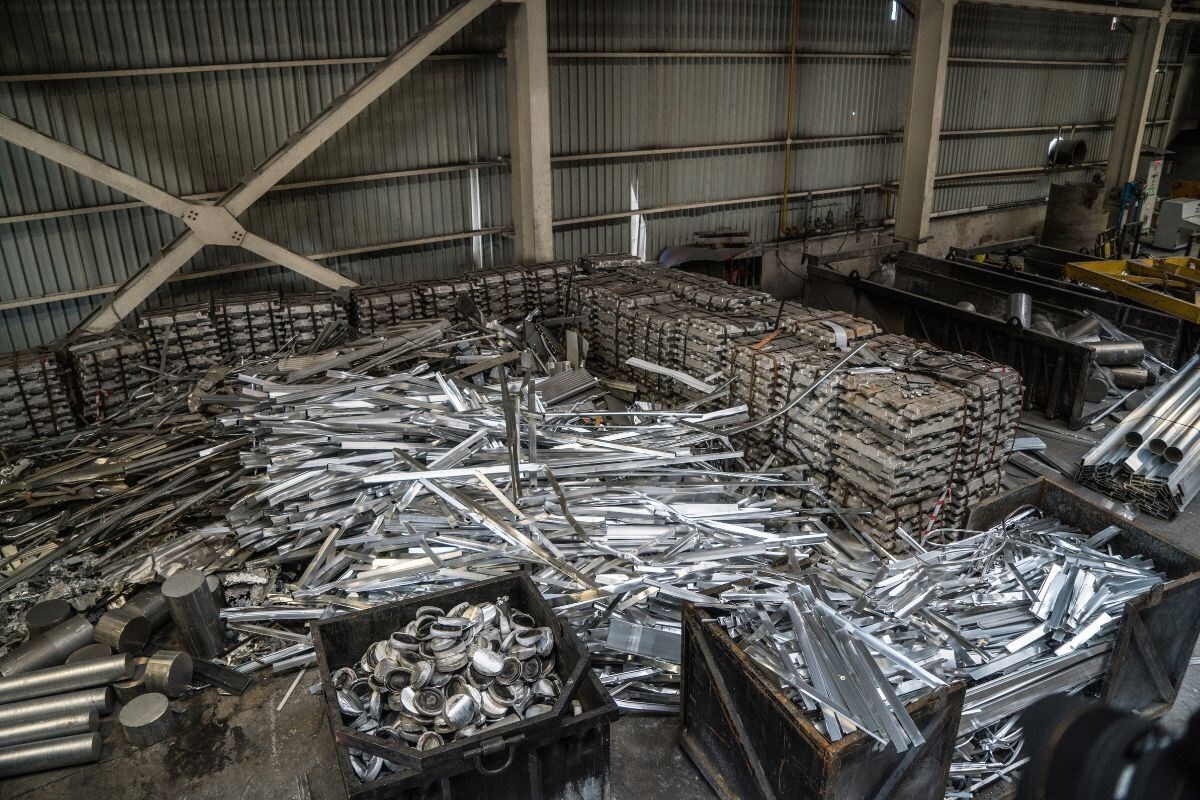
Stock image for referential purposes only
This week, imported aluminium scrap prices in China continued to pull back slightly. SMM data showed that the price of imported shredded zorba at Ningbo port was revised down from RMB 21,920 per tonne to RMB 21,820 per tonne, while at Tianjin port it dropped from RMB 21,970 per tonne to RMB 21,770 per tonne, with the decline narrowing W-o-W.
{alcircleadd}An SMM survey learned that, with overseas aluminium scrap and ADC12 offers continuing to pull back, orders for imported aluminium scrap and cast aluminium alloys from Southeast Asia to the Guangdong region have recently increased compared to the prior period, and the import window has improved further.
However, new transactions remained concentrated mainly on certain lower-priced resources and long-term cooperative clients, leaving spot market trading activity still limited. Industry sources indicated that if prices outside China continue to correct, import profits are expected to recover further, and imports may gradually rebound in H2.
The Southeast Asian aluminium scrap market diverged, with demand still dictating market trends
This week, the overall performance of the Southeast Asian aluminium scrap market diverged.
In the Malaysian market, tense scrap prices held steady at USD 2,500-2,700 per tonne; talon prices rebounded slightly to MYR 13,000-14,500 per tonne, reflecting relatively tight supply for certain high-grade wire and cable scrap; UBC prices pulled back slightly to MYR 9,250-10,000 per tonne.
In contrast, the Thai market remained under pressure, with talon prices adjusted to THB 104,000-110,000 per tonne and UBC prices further pulling back to THB 76,000-82,000 per tonne, as overall demand remained sluggish.
An SMM survey showed that most downstream enterprises are still purchasing only based on rigid demand, with market transactions staying sluggish. Although supply is relatively tight for some high-quality aluminium scrap, the slow recovery in end-use consumption left overall prices lacking sustained upward momentum, causing market trading logic to return to supply-demand fundamentals.
ADC12 offers continued to probe lower, with market transactions remaining sluggish
The Southeast Asian ADC12 market continued to be in the doldrums this week.
Malaysia's domestic trade ADC12 price held steady at MYR 12.85per kg, while FOB offers were revised down from USD 3,135 per tonne to USD 3,120 per tonne. Thailand's domestic trade price remained at THB 104.5 per kg, while FOB offers pulled back from USD 3,130 per tonne to USD 3,100 per tonne. Although offers continued to decline, the improvement in actual market transactions was limited.
An SMM survey learned that mainstream ADC12 offers in Southeast Asia have now dropped to around USD 3,050 per tonne, with actual transaction prices typically needing to be USD 50-60 per tonne lower than offers. Some traders noted that new orders in the market are currently scarce, with enterprises still mainly executing earlier high-priced orders. Against the backdrop of the traditional off-season, transactions slowed down notably.
Meanwhile, the converted export price of China's die-cast aluminium alloy has approached USD 3,000 per tonne, further compressing the room for Southeast Asian ADC12 export offers. Some enterprises reported that export business back to China is still dominated by long-term orders. Although recent import orders have seen an increase, new spot transactions remain limited.
Hot topics
This week, the focus of the overseas aluminium scrap and secondary aluminium market remained on the pace of demand recovery, changes in the import window, and global aluminium scrap resource policy. As overseas ADC12 and aluminium scrap offers continue to pull back, the market is widely monitoring the improvement in China's import profits.
Some Southeast Asian resources have already started flowing back to China, but new transactions are still dominated by long-term orders, with spot demand recovery remaining limited. At the same time, the terminal automotive and die-casting industries are still in the traditional off-season, with downstream procurement maintained on a rigid demand basis and enterprises generally focusing on controlling inventory and reducing procurement costs.
On the policy front, measures such as the EU's proposed 15 per cent export tax on aluminium scrap and the US tightening aluminium scrap resource management continue to draw market attention. Industry participants believe that if officially implemented, these policies will further impact global aluminium scrap trade flows and the supply landscape for high-grade aluminium scrap. Overall, current market focus is gradually shifting from supply disruptions to demand recovery and changes in trade flows.
SMM Outlook
SMM believes the overseas secondary aluminium market will remain in the doldrums and consolidate on a subdued note in the near term. The market is still characterised by a weak supply-demand situation, with downstream consumption recovering slowly and enterprises purchasing mainly on rigid demand.
Aluminium scrap and ADC12 prices are expected to remain under pressure. However, with overseas prices continuing to pull back, China's import window has already shown signs of improvement compared to the prior period. If import profits recover further, the volume of Southeast Asian resources flowing to China is expected to increase in H2.
Going forward, the market still needs to focus on LME aluminium price trends, changes in China's import profits, progress on resource protection policies in Europe and the US, and demand recovery in the terminal automotive and die-casting industries. These factors will remain key variables influencing the trend of the overseas secondary aluminium market and global aluminium scrap trade flows in H2.
Note: This article has been issued by SMM and has been published by AL Circle with its original information without any modifications or edits to the core subject/data.
Responses