Southeast Asia's secondary aluminium industry is trapped in "margin squeeze": raw material surge forces ADC12 plant cuts, industry may enter "lunar new Year mode" early
Since the fourth quarter of 2025, the international aluminium market has experienced a significant unilateral upward trend. Driven by supply-side sentiment stemming from the official implementation of the EU's Carbon Border Adjustment Mechanism (CBAM), combined with the absence of a price correction during the traditional year-end off-season and global holiday disruptions, LME aluminium prices have demonstrated strong resilience and sustained momentum.
According to SMM monitoring data, the LME aluminium cash settlement price soared from 2,683.5 USD per tonne on October 1, 2025, to 3,180 USD per tonne on January 9, 2026. In just one quarter, the price rose by 496.5 USD per tonne, a cumulative increase of 18.5 per cent. The market generally predicts that this strong trend is unlikely to reverse in the short term and will likely persist until after the 2026 Lunar New Year (late February to mid-March 2026).
Scrap Prices Surge, Regional Raw Material Costs Hit Highs
Driven by the strong London aluminium price, the Southeast Asian aluminium scrap market responded quickly, showing a fierce "catch-up" trend. SMM market research covering the period from October 1, 2025, to January 2026 highlights significant price increases for major scrap varieties in Malaysia and Thailand:
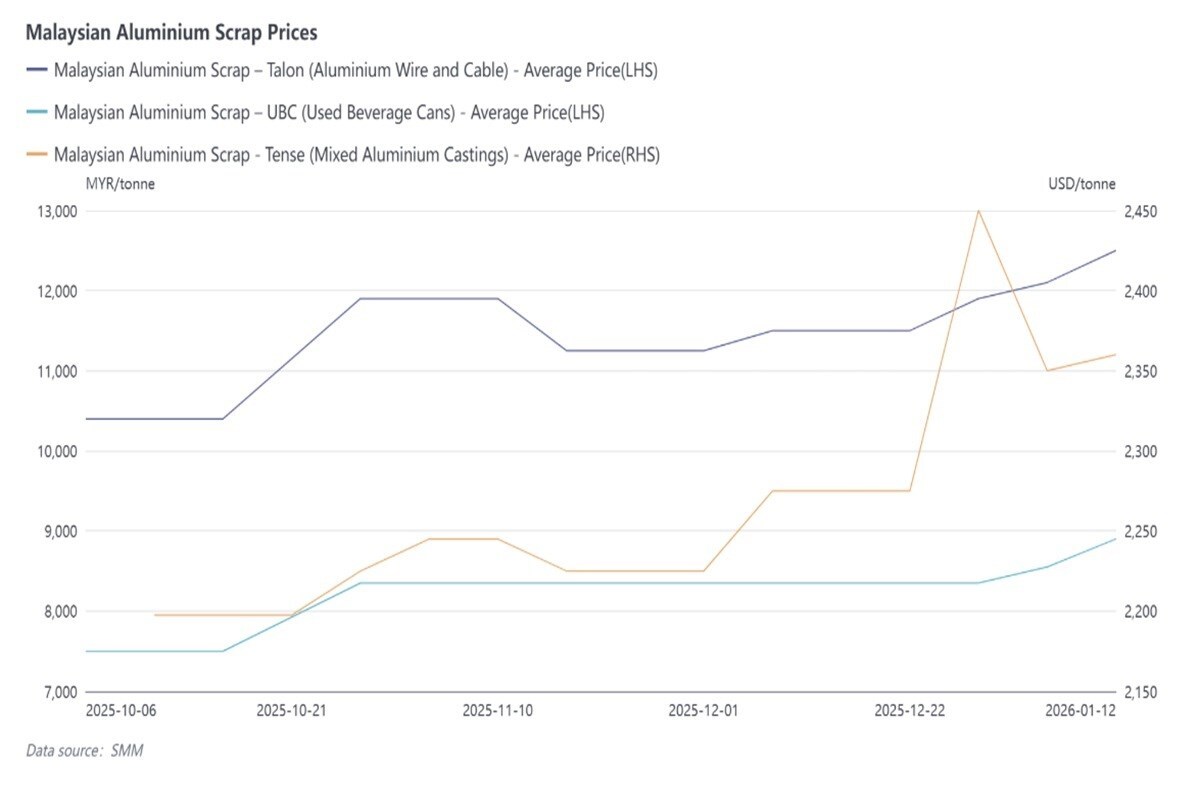
In the Malaysian market, Tense (Mixed aluminium Castings) prices shifted up to 2,207.5 – 2,360 USD per tonne (+6.9 per cent). More strikingly, Talon (Clean aluminium Wire), a high-quality raw material, surged to 10,400 – 12,500 MYR per tonne, a massive increase of 20.2 per cent. UBC (Used Beverage Cans) also recorded an 18.7 per cent growth, reaching 7,500 – 8,900 MYR per tonne.
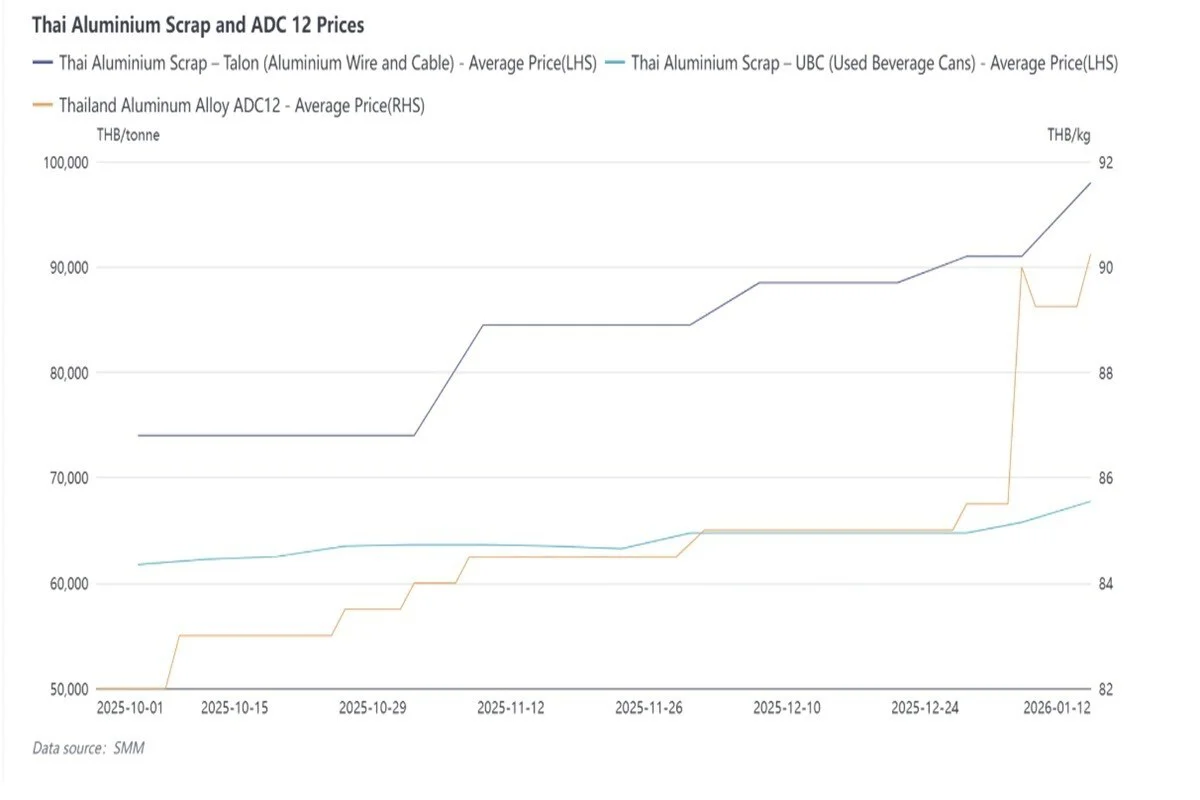
The uptrend in the Thai market was even more aggressive. Talon wire prices skyrocketed from 74,000 THB per tonne to 98,000 THB per tonne, a staggering 32.4 per cent increase. UBC rose by 11.1 per cent, with quotes reaching 67,750 THB per tonne.
Finished Product Gains Lag Behind Materials; ADC12 Enterprises Face Severe Profit Squeeze
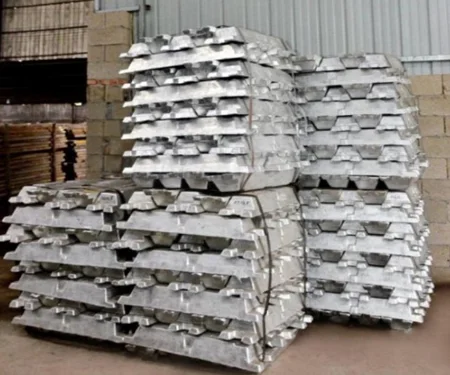
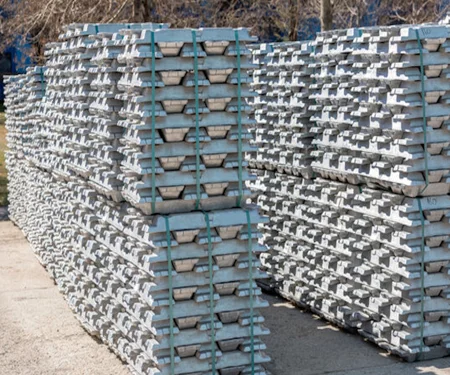
However, the price transmission mechanism along the industry chain has faced significant blockages. SMM research found that while raw materials surged (with wire varieties up over 20 per cent-30 per cent), the price increase for finished ADC12 secondary aluminium alloy ingots was comparatively meagre. Malaysian ADC12 prices rose only 7.1 per cent (to 2,850 USD per tonne), and Thai ADC12 rose only 8.4 per cent (to 90,000 THB per tonne).
This massive mismatch between raw material and finished product price increases has plunged Southeast Asian secondary aluminium plants into a severe "scissors gap" dilemma. On one hand, ADC12 smelters heavily dependent on scrap face historically high costs; on the other, downstream die-casting and automotive parts enterprises show low acceptance of high-priced alloy ingots. Procurement willingness has dropped to a freezing point ahead of the Spring Festival, making it impossible to effectively pass on the high costs.
Production Cuts and Early Holidays Become Consensus
With profit margins compressed to the limit or even suffering from cost inversion, risk avoidance has become the primary strategy. SMM's latest survey reveals that multiple ADC12 producers in Malaysia and Thailand have adjusted their operating plans. Facing shrinking profits and sharply contracting downstream orders, most companies have decided against maintaining full output, planning to implement production cuts in January 2026 or directly start the Lunar New Year holiday early.
Currently, the Southeast Asian secondary aluminium industry has effectively entered a "dormant period" ahead of schedule. Most manufacturers indicate that decisions regarding resumption or expansion of production will be postponed until after the Lunar New Year, pending the trend of LME aluminium prices and the recovery of downstream demand.
Note: This article has been issued by SMM and has been published by AL Circle with its original information without any modifications or edits to the core subject/data.

Aluminium alloy futures fluctuate at highs, and short-term macro tailwinds boost the market
Next articleSHFE aluminium night session breaks through 25,000, aluminium prices maintain high levels
Grow with
AL Circle