您想继续阅读英文文章还
是切换到中文?
是切换到中文?

THINK ALUMINIUM THINK AL CIRCLE

Futures: Yesterday, the SHFE aluminium night session closed at RMB 24,225 per tonne, up 1.06 per cent. Prices fluctuated upward above all key moving averages (MA5 24,221, MA10 24,126.5), with short-term moving averages beginning to diverge upward, indicating a significant technical strengthening. The MACD lines were above the zero axis (DIF 3.6179, DEA 3.3802), and the histogram turned positive (0.4753), though its limited length suggests that bullish momentum is recovering but has not yet entered a strong state. The core trading range for SHFE aluminium is suggested at RMB 23,750-24,250 per tonne. LME aluminium night session closed at USD 3,165.5per tonne, up 1.12 per cent. Prices held up well above all short-term moving averages (MA5 3,165.5, MA60 3,164.62). The MACD lines were near the zero axis (DIF 0.2227, DEA 0.0910), and the histogram turned positive (0.2633), indicating bearish momentum is weakening, with signs of a short-term shift to bullishness. The core trading range for LME aluminium is suggested at USD 3,140-3,200per tonne.
{alcircleadd}Macro front: According to preliminary calculations by the National Bureau of Statistics (NBS), China's GDP grew 5 per cent y-o-y in 2025, reaching RMB 140.19 trillion, with Q4 growth at 4.5 per cent. Value-added industrial output from large enterprises increased 5.9 per cent y-o-y, and the manufacturing sector remained the world's largest. (Bullish★)The EU will hold an emergency summit on January 22 to discuss issues, including US President Trump's announcement of imposing additional tariffs on European countries opposing the US acquisition of Greenland, and to assess potential countermeasures by the EU. Previous reports indicated the EU is preparing to impose retaliatory tariffs on US goods valued at 93 billion euros. (Bearish★)
Fundamentals: Supply side, newly commissioned aluminium projects in China and Indonesia continued ramping up production, with the daily average production further increasing. Demand side, last week's downstream weekly operating rates overall remained relatively weak, but operating rates for primary alloy and aluminium plate per sheet, strip and foil saw a slight rebound. Some primary alloy enterprises began year-end stockpiling, providing rigid support for demand. For plate per sheet, strip and foil, downstream can stock and food packaging are in the peak consumption season, initiating pre-holiday stockpiling. However, high prices continued to suppress demand, and amid the traditional off-season, the proportion of liquid aluminium in aluminium production continued its downward trend this week, down 0.21 percentage points M-o-M, with fundamental performance still showing no significant improvement.
Primary aluminium market: In the early session, the SHFE aluminium 2602 contract traded with volatility, with the price centre lower than the previous trading day. Influenced by the decline in aluminium prices, overall downstream purchasing sentiment recovered somewhat. Mainstream transaction prices were mainly concentrated at a premium of RMB 10 per tonne to RMB 30 per tonne. This Monday, the East China market selling sentiment index was 2.84, up 0.23 w-o-w; the buying sentiment index was 2.71, up 0.16 w-o-w. SMM A00 aluminium closed at RMB 23,870 per tonne, down RMB 160 per tonne from the previous trading day, at a discount of RMB 160 per tonne against the 2602 contract, up RMB 20 per tonne from the previous trading day.
Trading activity in the central China market continued to recover this Monday. Although downstream plants mainly purchased based on rigid demand with slight restocking, large traders actively purchased, leading to faster circulation of spot cargo. Holders held prices firm and were reluctant to sell, pushing market prices higher. Ultimately, actual transaction prices in the central China market rose throughout the day, ranging from a discount of RMB 10 to a premium of RMB 20 against the central China price. The selling sentiment index in the central China market was 2.67 this Monday, flat w-o-w; the buying sentiment index was 2.27, up 0.03 w-o-w. SMM central China price closed at RMB 23,740 per tonne, down RMB 140 per tonne from the previous trading day, at a discount of RMB 290 per tonne against the 2602 contract, up 40 per tonne from the previous trading day. The Henan-Shanghai price spread was -RMB 130 per tonne, narrowing by RMB 20 per tonne from the previous trading day.
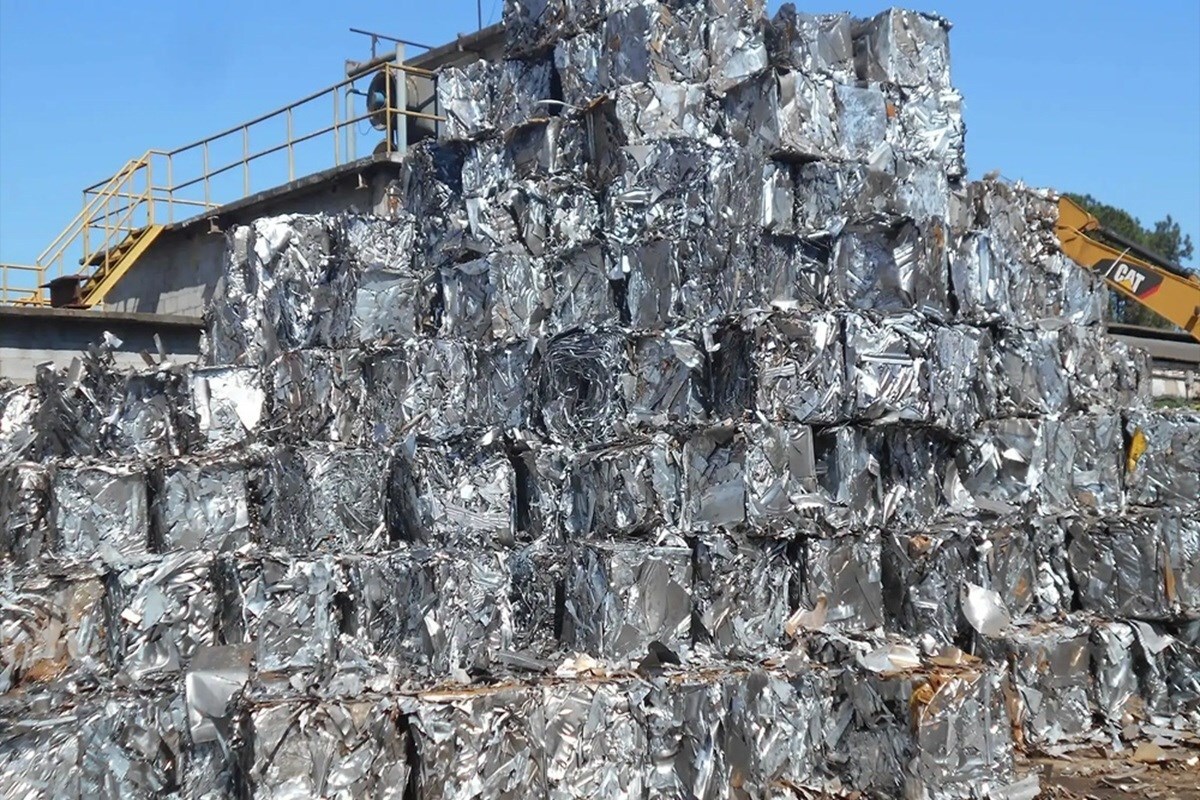
Aluminium scrap: Spot primary aluminium prices pulled back this Monday compared to the previous trading day, with SMM A00 spot aluminium closing at RMB 23,870 per tonne. The aluminium scrap market followed the decline in primary aluminium prices. This Monday, baled UBC was mainly offered at RMB 17,200-17,700 per tonne (ex-tax), while shredded aluminium tensile scrap (priced based on aluminium content) was mainly offered at RMB 19,100-19,600 per tonne (ex-tax). Prices in Shanghai, Zhejiang, Jiangsu, Tianjin, Shandong, and other regions fell by RMB 100-200 per tonne this Monday. Regarding the price difference between A00 aluminium and aluminium scrap, the price difference between A00 aluminium and mixed aluminium extrusion scrap free of paint in Foshan was RMB 3,583 per tonne on January 8, and the price difference between A00 aluminium and shredded aluminium tensile scrap was RMB 2,454 per tonne. Against the backdrop of high aluminium prices forcing scrap prices to follow, a situation of "nominal prices with no actual transactions" has emerged, dampening downstream buying sentiment, leading to purchasing as needed.
On the other hand, the National Committee for Disaster Prevention, Mitigation, and Relief decided to initiate a Level IV emergency response for low-temperature, rain, snow, and freezing disasters in four provinces—Anhui, Henan, Hunan, and Guizhou—starting at 18:00 on January 18. Scrap utilisation enterprises in the relevant provinces and cities are experiencing some impact on the efficiency of aluminium scrap collection and delivery due to the rain and snow. The aluminium scrap market is expected to hover at highs this week. Shredded aluminium tensile scrap (priced based on aluminium content) is forecast to trade mainly within the range of RMB 19,600-20,100 per tonne (ex-tax) next week. High primary aluminium prices will provide bottom support for scrap, but the ongoing losses are intensifying, forcing downstream enterprises to further expand production cuts and suspensions, while weak stocking demand limits the upside. The overall tug-of-war between sellers and buyers continues, requiring close monitoring of primary aluminium trends, the pace of downstream shutdowns, and pre-holiday transaction conditions, while remaining vigilant against the risk of a pullback from highs.
Secondary aluminium alloy: Futures side, the aluminium alloy 2603 contract opened at RMB 22,750 per tonne this Monday, with the futures price generally fluctuating around the RMB 22,800 per tonne level intraday. It hit a high of RMB 22,920 per tonne and a low of RMB 22,730 per tonne, ultimately closing at RMB 22,890 per tonne, up RMB 155 per tonne or 0.68 per cent from the previous close. Bears mainly reduced their positions, as bearish forces retreated from previous levels, further supporting the bullish structure. However, risks of weakening upward momentum due to declining open interest warrant caution. In the spot market, aluminium prices continued to correct on Monday, with the A00 price falling another RMB 160 per tonne to RMB 23,870 per tonne, while the SMM ADC12 price held steady at RMB 23,900 per tonne.
The secondary aluminium market was supported by firm costs, low inventory, and bullish expectations, leading most producers to maintain stable offers and adopt a wait-and-see approach. On the demand side, wait-and-see sentiment intensified due to falling aluminium prices. Although some die-casting enterprises restocked due to rigid production needs, marginally boosting inquiry and purchase willingness, actual transactions remained sluggish amid losses downstream. Some enterprises have already reduced or halted production, and pre-holiday stockpiling was weak. In the short term, secondary aluminium alloy prices are expected to hover at highs. On one hand, cost support has weakened somewhat, coupled with dual pressures from the off-season and losses, leading to sluggish market activity. On the other hand, uncertainties in regional tax policies and supply tightness due to environmental protection-driven production restrictions, along with macro tailwinds, continue to provide solid bottom support for prices. In the import market, overseas ADC12 offers remain firm, holding steady at USD 2,860–2,890per tonne, with import arbitrage profits near RMB 300 per tonne.
Aluminium market summary: On the macro front, China's 2025 GDP grew 5 per cent y-o-y and industrial value-added above designated size showed steady growth, providing macroeconomic underpinning for aluminium's end-use demand from both economic aggregate and industrial activity perspectives, constituting medium and long-term bullish support. However, risks from Europe-US trade frictions continue to escalate, with the EU emergency summit evaluating countermeasures likely to intensify global trade tensions, negatively impacting aluminium demand expectations from risk sentiment and end-use product trade flow perspectives.
Supply side, new aluminium capacity domestically and overseas continues to ramp up, with daily average production steadily increasing. Demand side shows structural divergence: primary alloy and aluminium plate per sheet, strip and foil industries saw operating rates rebound slightly due to year-end stockpiling and peak consumption season support, providing some rigid demand. However, high-price suppression and off-season effects persist, and the proportion of liquid aluminium declined M-o-M, indicating insufficient momentum for a broader recovery in end-use consumption, with no significant improvement overall. Overall, rising macro trade friction risks will suppress market sentiment, while fundamentals appear bearish amid clear supply increases, only partial demand recovery, and continuing inventory accumulation trends. However, bullish sentiment toward aluminium futures prices among investors has not completely cooled, and aluminium prices are expected to maintain high fluctuations.
Note: This article has been issued by SMM and has been published by AL Circle with its original information without any modifications or edits to the core subject/data.

Responses