您想继续阅读英文文章还
是切换到中文?
是切换到中文?

THINK ALUMINIUM THINK AL CIRCLE

In a significant step towards a cleaner, greener future, the Heavy Water Board (HWB), in collaboration with Bhabha Atomic Research Centre (BARC), has started construction of a demonstration plant for the recovery of valuable metals from the spent liquor of an alumina refinery based on the Ion-Exchange (IX) process. This pioneering project, located at the NALCO, Damanjodi, Odisha, marks a crucial milestone in India’s efforts to transition towards self-reliance in semiconductors.
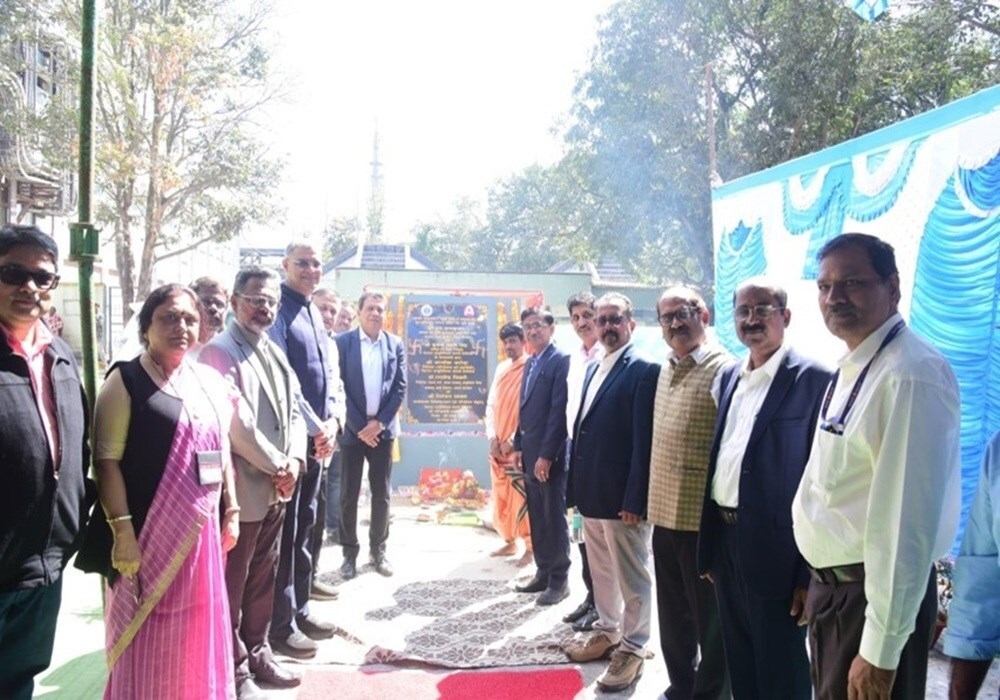
The ground-breaking ceremony was held on 20th November 2025, at NALCO refinery in Damanjodi, Odisha, by Shri S. Satyakumar, Chairman & Chief Executive, Heavy Water Board (HWB) and Shri Brijendra Pratap Singh, Chairman and Managing Director, NALCO. The Occasion was graced by prominent figures, including Dr Raghvendra Tiwari, Director, Material Group, BARC, Shri. Jagdish Arora, Director (P&T), NALCO, along with other esteemed dignitaries from BARC, HWB and NALCO.
The Chairman & Chief Executive, Heavy Water Board, Shri S. Satyakumar, expressed that this first-of-its-kind facility demonstrates the potential of the indigenously developed special resin and solvent in recovering Metal-G from the spent liquor. By recovery of Metal-G from the spent liquor of NALCO, we will be reducing dependency on imports to cater for our country's semiconductor requirements.
Also Read: Nalco maps green alumina path by 2030, but coal expansion on cards too
Metal-G, with its very low melting point and very high boiling point, has applications in electronics for high-speed semiconductor and integrated circuits (ICs) for space and defence applications. This pilot plant offers a breakthrough by providing an environmentally friendly, scalable solution for Metal-G production, which aligns with the national vision of Atmanirbhar Bharat
With this ambitious demonstration plant, India joins the ranks of nations at the forefront of Metal-G production.
Explore- Most accurate data to drive business decisions with 50+ reports across the value chain
Note: This article has been issued by Department of Atomic Energy and has been published by AL Circle with its original information without any modifications or edits to the core subject/data.

Responses