您想继续阅读英文文章还
是切换到中文?
是切换到中文?

THINK ALUMINIUM THINK AL CIRCLE

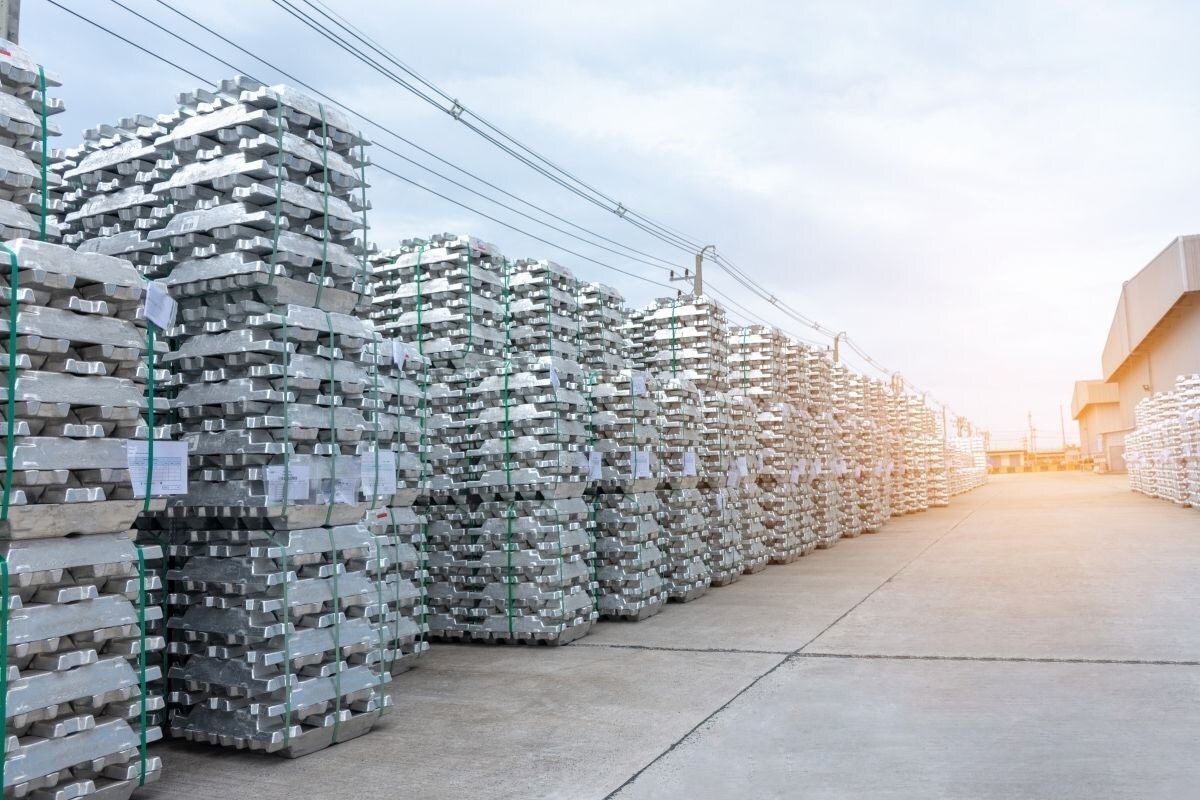
Stock image for referential purposes only
Futures: The most-traded SHFE aluminium 2608 contract closed at RMB 23,165 per tonne, down 45 yuan or 0.19 per cent from yesterday’s settlement price. It opened at RMB 23,350 per tonne intraday and fluctuated in the range of RMB 23,165–23,380 per tonne. The price was trading above the MA5 (23,107.00) and MA10 (22,967.50) but below the MA30 (23,493.83) and MA60 (24,101.25).
{alcircleadd}The short- and medium-term moving averages are in a bearish alignment and gradually pressing down, presenting a pronounced overall structure of consolidating on a subdued note, with the moving averages above forming layers of resistance and pressure. The MACD’s DIF (-256.1830) remains above the DEA (-340.0955), and the MACD histogram stands at 167.8250, indicating that bearish momentum has eased. The recommended core trading range for SHFE aluminium is RMB 22,800–23,400 per tonne.
The LME aluminium 3M contract closed at USD 3,177 per tonne, up 0.32 per cent. The price was trading above the MA5 (3,171.20) and MA10 (3,144.40) but below the MA30 (3,294.12) and MA60 (3,446.86). The short- and medium-term moving averages are in a bearish alignment and gradually pressing down, presenting a pronounced overall structure of consolidating on a subdued note, with the moving averages above forming clear resistance.
The MACD’s DIF (-77.4920) remains above the DEA (-95.2152), and the MACD histogram is at 35.4463, indicating that bearish M-o-M momentum has eased and the downside momentum has slowed. The recommended core trading range for LME aluminium is USD 3,100–3,200 per tonne. The MACD’s DIF (-102.06) has crossed above the DEA (-109.89), forming a golden cross, and the histogram has turned from green to red. Bearish M-o-M momentum has converged, bullish momentum has officially kicked in, and a short-term rebound trend has been established.
Macro front: On July 14, the US military continued strikes against multiple locations in Iran, while Iran continued to target US military bases. US President Trump stated that trade and investment deals between Gulf nations and the US will replace the 20 per cent fee on cargo passing through the Strait of Hormuz. The US will impose a “full blockade” on Iran, with the Strait of Hormuz open to all vessels except Iranian ones.
Iran’s military stated it will make no concessions on the Strait of Hormuz issue. Iran’s parliament proposed a bill on the security of the Strait of Hormuz. The US Central Command said the US military resumed the maritime blockade of vessels entering and exiting Iranian ports and coastal areas at 4:00 p.m. EDT on July 14. US June inflation surprised to the downside.
Data from the Bureau of Labor Statistics showed that US June CPI rose 3.5 per cent Y-o-Y, and core CPI rose 2.6 per cent Y-o-Y, both markedly lower than the previous readings and below market expectations. US June CPI fell 0.4 per cent M-o-M, the first M-o-M decline in six years, and the drop was far larger than the market expectation of 0.1 per cent. After the data release, traders pushed back their bets on a Fed rate hike to October. Warsh Kevin attended his first semi-annual congressional hearing as Fed Chairman.
Warsh demonstrated a tough 'hawkish' stance, stating he has 'zero tolerance' for the persistently high inflation that has lasted five years, and explicitly rebuffed market views that the fight against inflation was 'mission accomplished' due to the M-o-M decline in June CPI. Facing pressure from the Trump administration to cut interest rates, Warsh refused to provide forward guidance, emphasising that the Fed would adhere to independent decision-making based on economic data.
Fundamentals: In markets outside China, geopolitical tensions continued to escalate, the management issue of the Strait of Hormuz remained unresolved, making it difficult for cargo navigation to fully recover in the near term, and the geopolitical risk premium persisted. The US June CPI fell 0.4 per cent M-o-M, the first monthly decline in six years and significantly larger than market expectations of a 0.1 per cent drop.
The Fed delayed its rate hike, but its hawkish stance remained firm, and it is expected to maintain the tightening trend. In the Chinese market, exports of unwrought aluminium and aluminium extrusions continued their brisk trend in June, reaching 711,000 tonnes, surpassing the 700,000 tonnes mark for the first time. This was up 12.5 per cent M-o-M from 632,000 tonnes and up 45.4 per cent Y-o-Y from 489,000 tonnes.
Primary aluminium market: The SHFE aluminium 2606 contract traded with a higher centre in early trading compared with the same period the previous trading day. Affected by higher aluminium prices, buying sentiment in the market was weak today, with just-in-time procurement dominating. Transactions were concluded at discounts of RMB 10-20 per tonne against the SHFE aluminium August contract. The east China market's selling sentiment index stood at 3.08 today, flat M-o-M; the buying sentiment index was 3.16, also flat M-o-M.
The off-season in July coupled with high temperatures kept operating rates at downstream processing enterprises in the central China market low, and buying sentiment remained subdued. However, with relatively large premiums/discounts, traders were motivated to hedge and push discounts wider to earn spreads, leading to higher buying interest.
Suppliers also showed a notable willingness to sell at firm prices, driving market discounts higher. Ultimately, actual transaction prices in the central China market centred around discounts of RMB 130-170 per tonne against the SHFE aluminium August contract. Today, the central China market’s selling sentiment index was 2.81, down 0.02 M-o-M; the buying sentiment index was 2.23, up 0.01 M-o-M.
Aluminium scrap: SMM A00 spot aluminium closed at RMB 23,270 per tonne today, up RMB 270 per tonne from the previous trading day. The aluminium scrap market generally followed the rise by RMB 150-200 per tonne. Supply-side constraints continued to intensify, and the impact of the reverse-invoicing policy deepened further.
Reports emerged in Shandong that reverse invoicing would be suspended from July, while production cuts and shutdowns among small and medium-sized scrap utilisation enterprises in Anhui, Jiangxi, Hubei, and other regions spread, further increasing the scarcity of compliant and invoiced aluminium scrap. Import side, the scarcity of high-quality overseas supplies caused by the earlier price spread inversion between Chinese and overseas markets, combined with a 1-3 month shipping lag, kept port arrivals at low levels in June-August. Meanwhile, the UAE's scrap aluminium export ban and the EU's tariff hike policy further tightened overseas scrap aluminium supply.
This week, the aluminium scrap market is expected to continue a narrow sideways pattern defined by demand suppression and cost support. The mainstream trading range for shredded aluminium tense scrap (priced based on aluminium content) is expected around RMB 19,900-20,500 per tonne. The pullback in spot primary aluminium prices limited the room for further narrowing of the price difference between A00 aluminium and aluminium scrap.
The economic advantage of aluminium scrap over primary aluminium is unlikely to disappear in the short term, and demand-side price support for aluminium scrap remains. If aluminium prices continue to decline further, the substitution effect of primary aluminium for scrap will accelerate.
Secondary aluminium alloy: Spot market: Pricing sentiment in the ADC12 market was divided today. Rising costs prompted some enterprises to attempt price hikes, while others still opted to keep their quotes stable for the time being. The atmosphere of the traditional consumption off-season is deepening, downstream orders and transactions remained weak, and price increases face some resistance.
Against the backdrop of insufficient demand support, enterprises generally focused on market watching and stable-price shipments. In the short term, ADC12 spot prices are expected to continue showing a pattern of coexisting cost support and demand suppression, mainly moving sideways in a narrow range.
Aluminium market summary: Recurring geopolitical conflicts in the Middle East kept risk premiums in place, and coupled with the M-o-M decline in US CPI for June, delayed expectations for US Fed interest rate hikes supported aluminium prices to hold up well. However, the continuous launch of overseas aluminium capacity will continue to weigh on the upside room of aluminium prices, with significant pressure limiting any further upside. Overall, in the short term, aluminium prices will maintain a pattern of consolidating on a strong note while encountering resistance.
Note: This article has been issued by SMM and has been published by AL Circle with its original information without any modifications or edits to the core subject/data.
Responses


A proud
ASI member
AL Circle Private Limited | CIN: U72200WB2017PTC221175
Registered Office: Ecospace Business Park, Block 3A, Unit 401A, New Town, Rajarhat, Kolkata, WB 700160
Corporate Office: Ecospace Business Park, Block 3A, Unit 401A, New Town, Rajarhat, Kolkata, WB 700160
© 2026 AL Circle. All rights reserved. AL Circle is not responsible for content from external sources.