您想继续阅读英文文章还
是切换到中文?
是切换到中文?

THINK ALUMINIUM THINK AL CIRCLE

Over the next five years, the domestic aluminium billet market will exhibit a pattern of "dual growth in supply and demand but persistent surplus, optimisation of capacity structure, and intensified demand divergence." The industry is shifting from scale expansion to quality improvement.
{alcircleadd}I. Supply Side: Structural Optimisation Dominates, Overall Growth Slows Down
Divergent production structure: The production of primary aluminium billets has seen rapid growth for consecutive years, while the supply of remelt billets continues to shrink. This trend stems from the cost and energy consumption advantages of primary aluminium billets being located near aluminium smelters, aligning with the industry's direction of cost reduction and efficiency improvement, as well as the guidance of the liquid aluminium alloying policy.
Reshaping of capacity landscape: Cut-throat competition is intensifying, with homogenised outdated capacity exiting the market at an accelerated pace. New capacity expansion is limited and mostly focused on high-value-added industrial billets. A total of 3.31 million tonnes of new aluminium billet capacity (including primary aluminium billets and remelt billets) is expected to be commissioned domestically in 2025-2026, but the growth rate has significantly slowed down.
Mild total growth: The total aluminium billet supply is projected to be 20.43 million tonnes in 2025, basically flat Y-o-Y; it is expected to approach 21 million tonnes in 2026, up only 2.5 per cent Y-o-Y, reflecting the offsetting effect of optimised new capacity and the phase-out of outdated capacity.
II. Demand Side: Traditional Drag Coexists with Slowing Emerging Demand, Increased External Purchase Ratio Becomes Key Support
Traditional demand under pressure: Architectural extrusions account for nearly half of aluminium extrusion production, but due to the adjustment in the real estate sector, demand lacks clear growth expectations, becoming a core factor constraining overall demand.
Shift in emerging demand growth: Although sectors like NEV and ESS have growth potential, they have transitioned from a period of rapid growth to stable growth, with demand growth gradually slowing down. Coupled with some enterprises building factories overseas, this further compresses domestic demand increments.
Key support: Rising External Purchase Ratio: To reduce costs and improve efficiency, downstream extrusion enterprises are increasingly purchasing aluminium billets externally. This trend is expected to support healthy growth in domestic aluminium billet consumption.
III. Supply-Demand Balance: Surplus Persists for Five Years, Industry Urgently Needs Confidence Boost
Continued surplus pattern: Despite dual growth in supply and demand, the mismatch is expected to keep the domestic aluminium billet surplus at double-digit levels for five consecutive years from 2025 to 2029. The surplus cycle from 2024 to 2028 is directly related to the commissioning of substantial new capacity.
Operating rate fluctuates with the cycle: The operating rate is highly correlated with the supply-demand balance. During the shortage in 2023, the average annual operating rate exceeded 60 per cent. It pulled back to below 60 per cent during the surplus in 2024, and fell to around 55 per cent in 2025 due to poor processing fee performance.
External risks increase uncertainty: The threat of tariff wars could impact import and export trade, further exacerbating domestic oversupply pressure. The industry urgently needs a confidence boost.
IV. Industry Outlook and Recommendations
Over the next five years, the aluminium billet industry will enter a period of structural adjustment. Enterprises are advised to:
Optimise capacity structure: Increase focus on high-value-added products like industrial billets to avoid homogenised competition.
Monitor external purchase trends: The downstream shift towards industrial extrusions and the rising external purchase ratio present market opportunities for specialised industrial billet producers.
Hedge against price risks: Utilise futures tools to hedge against fluctuations in aluminium prices and processing fees.
Explore global opportunities: Follow downstream capacity going global to expand into overseas markets.
Note: This article has been issued by SMM and has been published by AL Circle with its original information without any modifications or edits to the core subject/data.
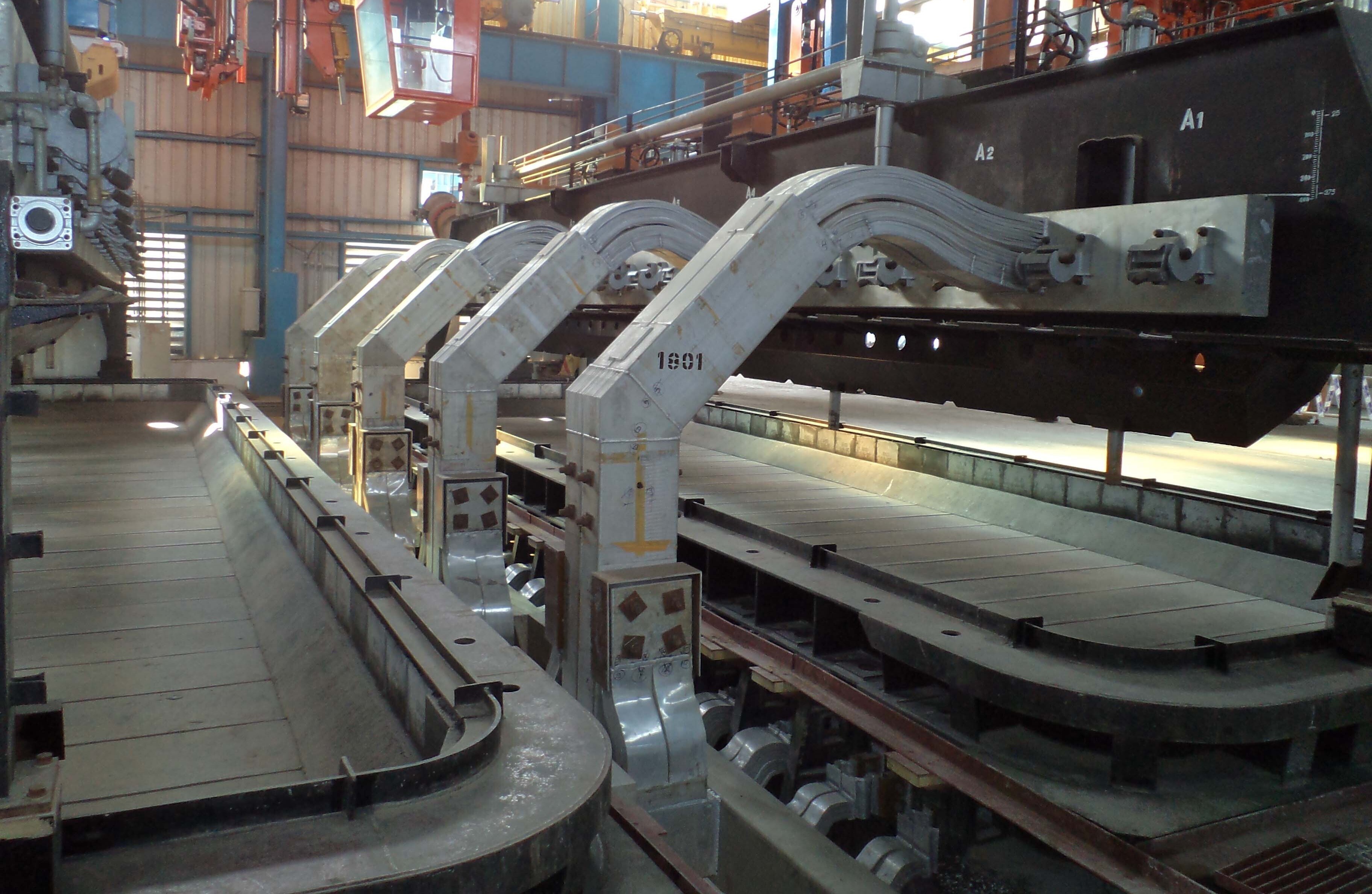
Image source: https://www.indfab.in/
Responses


A proud
ASI member
AL Circle Private Limited | CIN: U72200WB2017PTC221175
Registered Office: Ecospace Business Park, Block 3A, Unit 401A, New Town, Rajarhat, Kolkata, WB 700160
Corporate Office: Ecospace Business Park, Block 3A, Unit 401A, New Town, Rajarhat, Kolkata, WB 700160
© 2026 AL Circle. All rights reserved. AL Circle is not responsible for content from external sources.