您想继续阅读英文文章还
是切换到中文?
是切换到中文?

THINK ALUMINIUM THINK AL CIRCLE

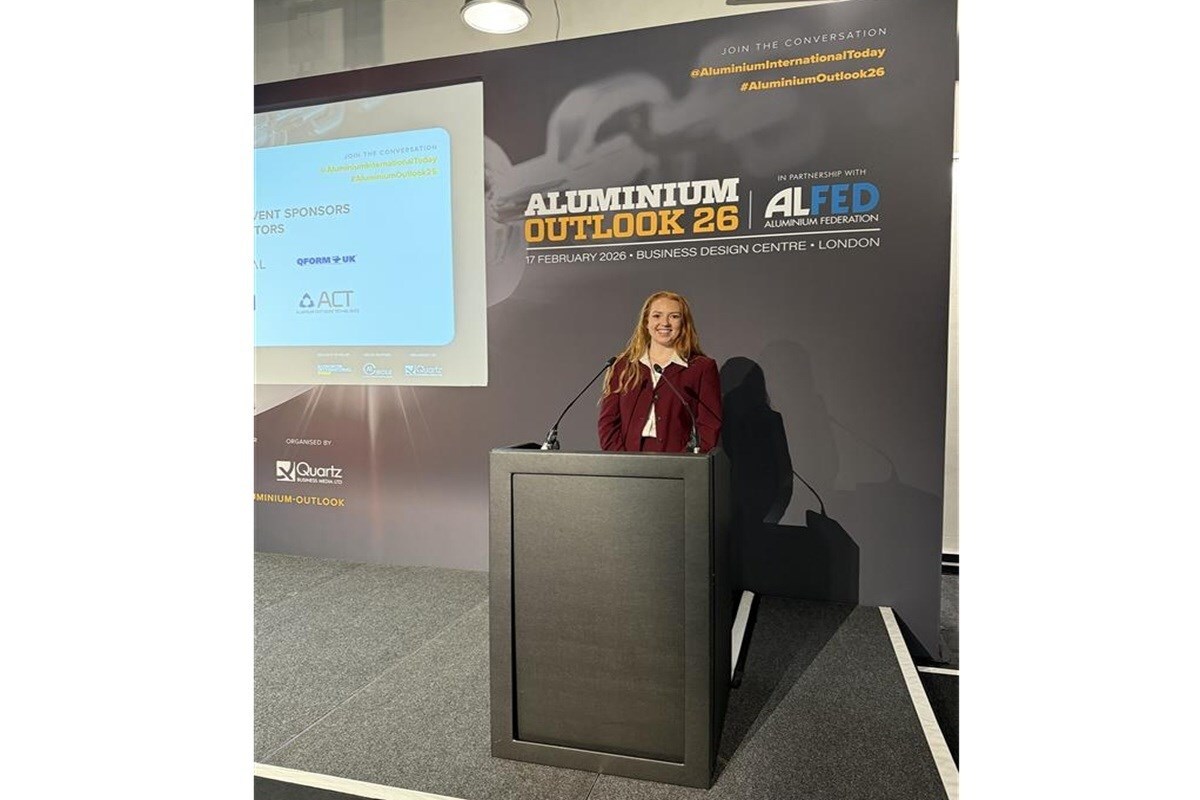
On Tuesday, 17 February 2026, the Aluminium Federation (ALFED) opened the AIT Outlook 2026 conference hosted by Aluminium International Today in London with a clear message: so-called “scrap” aluminium must be recognised as a strategic industrial resource central to UK growth, circularity and supply chain resilience.
{alcircleadd}To know more about the global primary aluminium industry 2026 outlook, book the report “Global ALuminium Industry Outlook 2026".
Rachel Wiffen, ALFED Industry & Skills Development Manager, delivered a keynote address on The UK’s Secondary Aluminium Story, challenging the language and perception surrounding aluminium scrap and emphasising its true value as a recycled, infinitely reusable material.
“Secondary aluminium is not waste,” Wiffen told delegates. “It is a circular, recycled aluminium product containing embedded energy, carbon and economic value. The terminology matters because policy perception follows language.”
Wiffen outlined how both pre-consumer (post-industrial) and post-consumer aluminium form essential feedstock for UK remelters and manufacturers. With secondary aluminium requiring up to 95 per cent less energy than primary production, domestic scrap availability directly supports the UK’s net zero ambitions, industrial competitiveness and critical material security.
Her presentation explored rising global demand for recycled aluminium, driven by sustainability targets, carbon border mechanisms and evolving trade patterns. Recent US tariff decisions have increased the attractiveness of secondary aluminium exports, contributing to shifting scrap flows and heightened volatility in the UK market.
Also Read: Kaiser Aluminum shares double in a year, setting a new all-time high
HMRC trade data shows the UK exported over 623,000 tonnes of secondary aluminium (HS 7602) in 2025, compared with just under 90,000 tonnes imported, confirming the UK’s position as a significant net exporter. Exports to the United States have risen sharply in recent years, underlining how policy decisions in one market can rapidly reshape global trade flows.
Wiffen emphasised that while open markets remain important, scrap volatility presents a structural industrial risk. Domestic remelters face periods where exporting material is more profitable than processing it, particularly given ongoing energy cost pressures. This dynamic risks undermining long-term UK processing capability and weakening industrial resilience across automotive, construction, packaging and advanced manufacturing supply chains.
ALFED is therefore calling for secondary aluminium to be properly recognised within UK industrial and critical minerals policy. The Federation has formally requested representation at the Department for Business and Trade’s planned Scrap Roundtable to ensure aluminium-specific challenges are understood.
ALFED is not advocating blunt export restrictions. Instead, it supports proportionate, targeted measures that improve domestic circularity, enhance data visibility and strengthen long-term competitiveness. This includes consideration of greater trade code granularity where appropriate, alongside mechanisms that protect high-value circular streams, while maintaining open markets.
A key theme of Wiffen’s address was the need for stronger evidence. Through its Recycling Sector Group, ALFED is working with recyclers, remelters and manufacturers to build a clearer aggregated picture of UK material flows, processing capacity and export dynamics. This industry-led data initiative aims to provide the Government with a more accurate understanding of where secondary aluminium is generated, how it moves through the system and where policy could support greater resilience.
“Aluminium has been recognised by NATO and the UK Government as strategically important,” Wiffen concluded. “If we are serious about critical material security, circular growth and industrial resilience, secondary aluminium must be treated accordingly. The story is still being written, and we want Government and industry to shape the next chapter together.”
ALFED will continue engaging with DBT officials in the lead-up to the Scrap Roundtable and will publish further insights from its Recycling Sector Group in the coming months.
Don’t miss out- Buyers are looking for your products on our B2B platform
Note: This article has been issued by ALFED and has been published by AL Circle with its original information without any modifications or edits to the core subject/data.

Responses


A proud
ASI member
AL Circle Private Limited | CIN: U72200WB2017PTC221175
Registered Office: Ecospace Business Park, Block 3A, Unit 401A, New Town, Rajarhat, Kolkata, WB 700160
Corporate Office: Ecospace Business Park, Block 3A, Unit 401A, New Town, Rajarhat, Kolkata, WB 700160
© 2026 AL Circle. All rights reserved. AL Circle is not responsible for content from external sources.