World’s largest aluminium catamaran in discussion to switch from LNG to battery-electric system
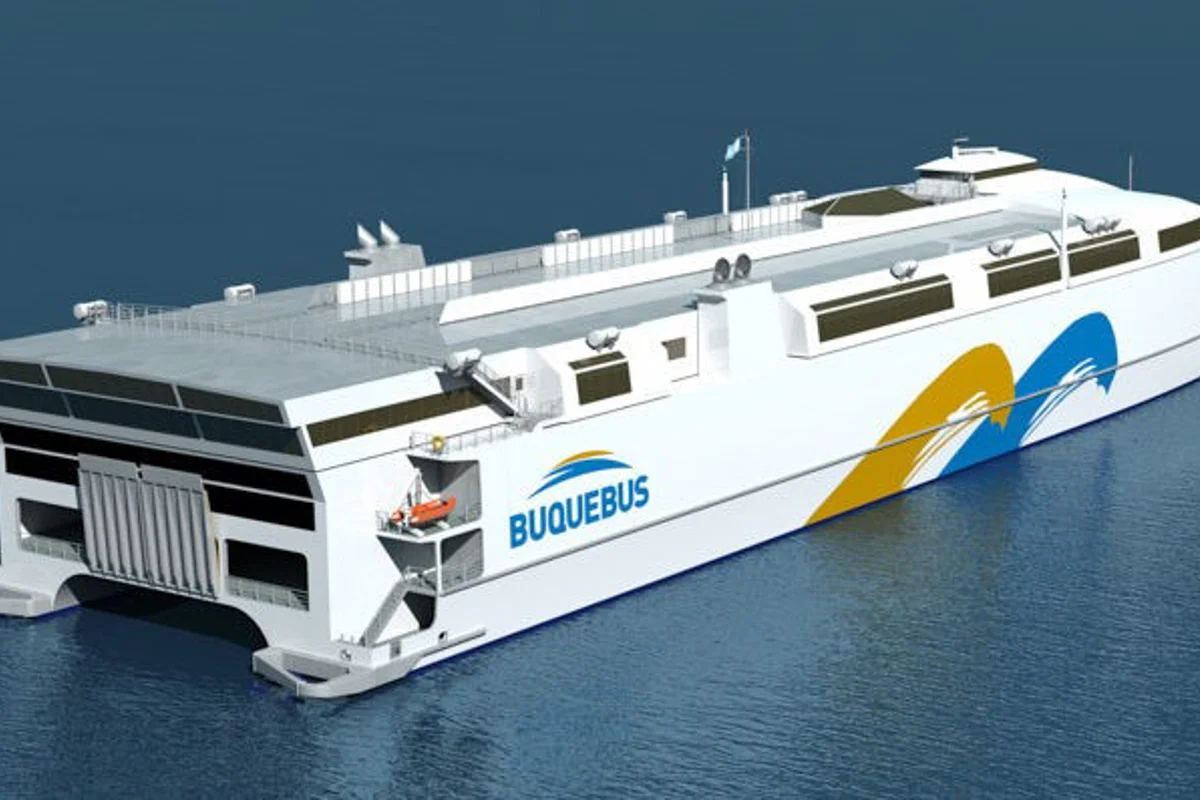
Buquebs, a South American ferry operator, is in discussions with Incat Tasmania, an Australian catamaran manufacturer, over the prospect of switching the LNG powerplant to a battery-electric system for its brand-new aluminium ferry that is now under construction at the yard.
Even though there were challenges to solve, Incat said that the ship, scheduled to be completed in 2025, would be the biggest, lightest, zero-emissions ferry operating on any route in the world once it is battery-powered.
“Zero emissions shipping is the future and Incat based in Tasmania, one of the few places on the planet which has already delivered net zero, is now poised to revolutionise the world’s shipping fleet by delivering the world’s first zero emissions, lightweight ship,” said Incat Group Chairman and Founder Robert Clifford.
It will be the largest aluminium catamaran Incat has ever produced, measuring 130 metres in length, 32 metres in width, and having the capacity to transport 2,100 passengers and 226 vehicles. The Finnish technology company Wärtsilä was hired in August 2022 to supply engines, waterjets, and a fuel storage and delivery system for the ship, which was initially planned to run on LNG.

“the customer wants this to happen, Incat wants this to happen, and whilst there are matters to be finalised, I am extremely confident that Incat can deliver this ground-breaking ship. In my experience unless we see something come in from the left field, this is a ‘done deal’,” Clifford added.
Trivium’s refillable aluminium bottle for Boticario bags the Design for a Better World Award
Next articleAluminium's top eight notable applications in the Transportation Sector:2022
Grow with
AL Circle