Why the aluminium market is tightening and why prices may stay supported into 2026
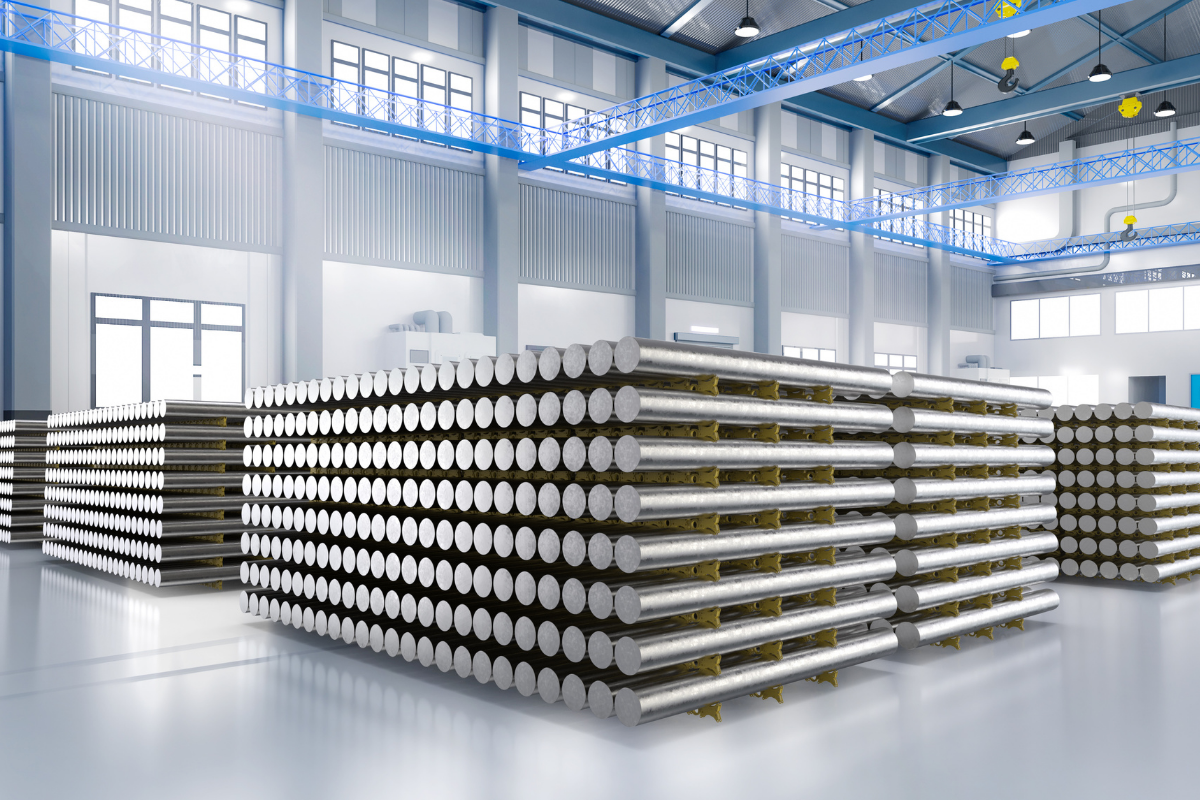
In recent years, people often explained aluminium prices using familiar demand stories like construction cycles, auto production, sentiment from China, and seasonal buying. However, as we approach 2026, a larger factor affecting price behaviour is hard to overlook: supply is less flexible than it once was.
Even in a slower-growing economy, aluminium prices can remain elevated if the market lacks enough capacity to absorb shocks. This is exactly what we are seeing now: tightness driven by a mix of structural constraints and not just one-time disruptions.
AL Circle’s upcoming Global Aluminium Industry Outlook 2026 frames this tightening as the result of multiple interconnected factors across the value chain, not one isolated event.
Structural deficits are replacing cyclical balance
It is not about whether the deficit number seems big or small. The Outlook 2026 suggests the primary aluminium market will stay in deficit through 2026. Even modest shortfalls can matter significantly when inventories are low, and supply responses are slow.
In earlier cycles, the market had some cushion. Reduced capacity could be restarted, or surplus supply could help. Today, that cushion is thinner. Restarting production is not just a simple switch; it depends on power access, costs, environmental rules, and proving bankable economics.
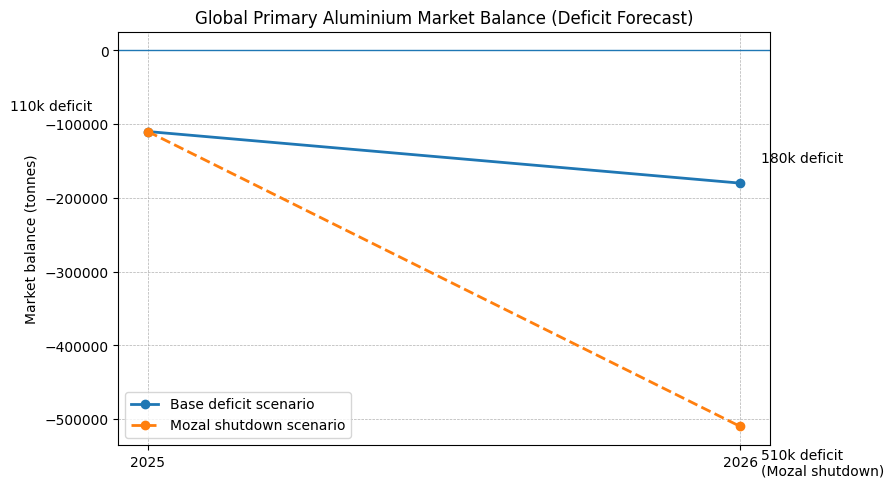
The outcome is a market that feels structurally tighter. In such a market, it takes little, a surprise outage, a logistics issue, or a policy change, to push prices higher or keep them elevated.
China’s capacity cap has redefined global supply flexibility
China remains the most influential player in aluminium supply, but its influence on the global market has changed.
As mentioned in the Outlook 2026, China has set a primary aluminium capacity cap of around 45 million tonnes. Stricter enforcement of energy and environmental regulations has weakened the market's ability to rely on China for additional supply growth.
In simple terms, global demand can no longer count on China to always "fill the gap."
That shift has real pricing implications:
- Demand growth now needs to be met by higher-cost or more energy-sensitive regions.
- Supply-side risks outside China are becoming more important in how prices develop.
- The market is becoming more sensitive to delays, restarts, and policy changes.
- Instead of a scenario where surplus capacity kept prices stable, we now have one where constraints determine the price floor.
Energy and power risks have become central to supply tightness
If there is one theme that captures the aluminium supply outlook into 2026, it is this: electricity is not just a cost anymore; it is the gatekeeper.
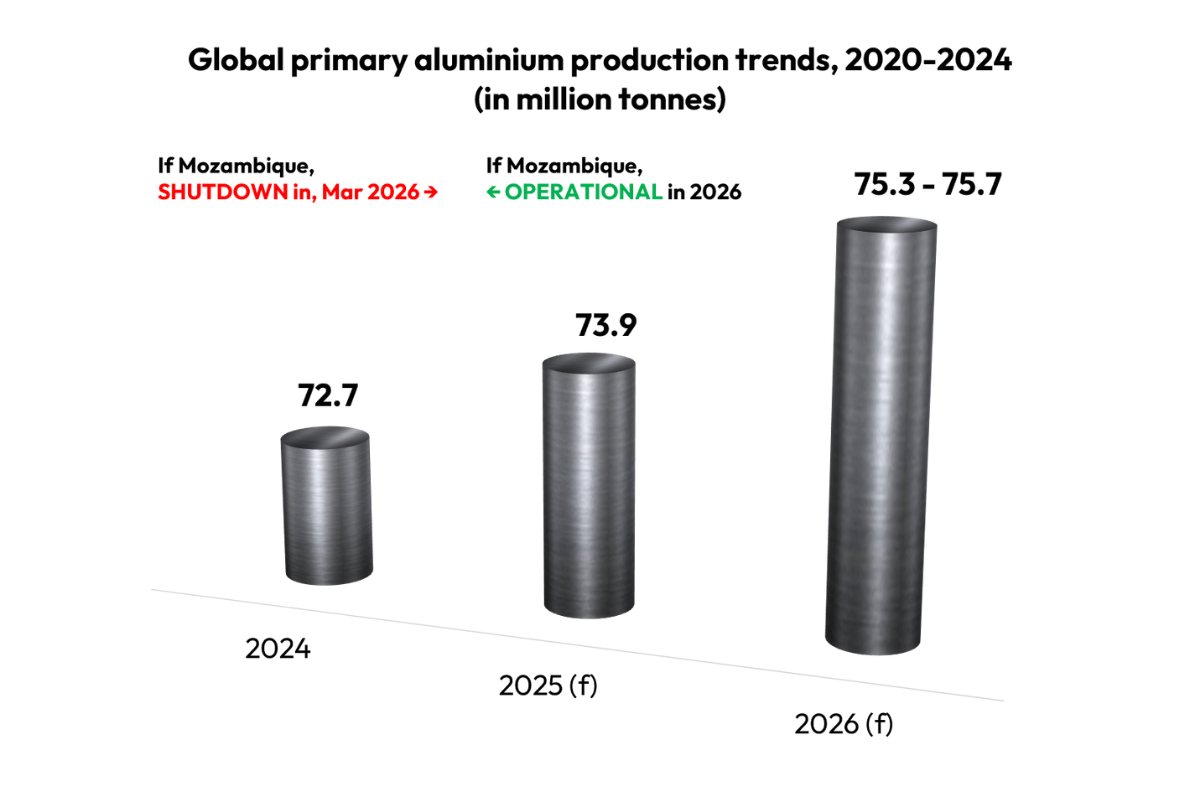
The Outlook 2026 identifies energy availability and long-term power pricing as key factors for the competitiveness of primary aluminium. This risk is real. In many regions, production is limited not by the demand for metal but by the confidence in stable, affordable power:
- In Europe, high power prices continue to challenge the feasibility of restarts.
- In Australia, uncertainty over long-term power contracts adds pressure to future production.
- In Mozambique, unresolved power supply negotiations threaten consistent production.
- In Iceland, unreliable power issues hinder dependable supply.
This situation keeps supply “below potential”. Even if nameplate capacity exists, market behaviour reflects the lack of power security, which affects prices.
Why recycling alone cannot close the supply gap
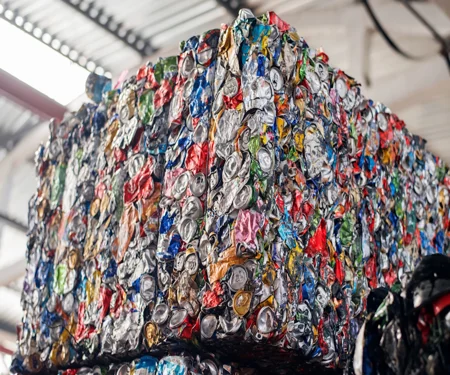
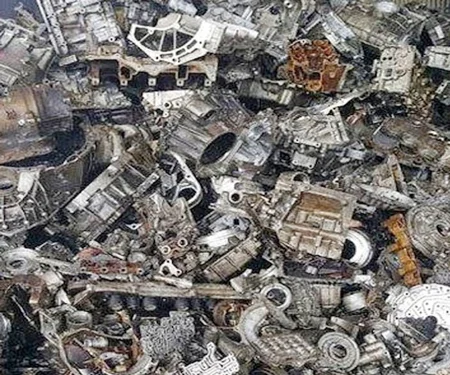
Secondary aluminium is undeniably becoming more important, and rightly so. However, the Outlook 2026 points out that recycling cannot bear the entire supply burden in the medium term, despite industry desires.
_0_0.png)
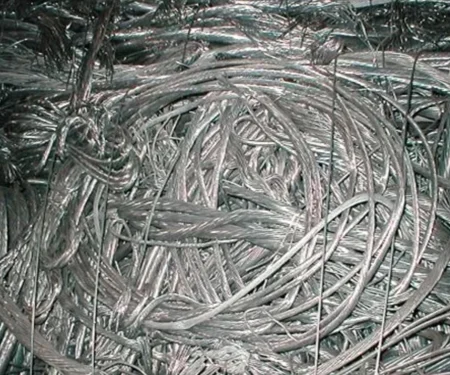
Scrap availability is inconsistent. Quality limitations are real. Alloy requirements cannot always be met with recycled materials. Additionally, scrap flows are becoming increasingly affected by trade controls and export restrictions.
While recycling is vital for reducing emissions and achieving long-term sustainability goals, primary aluminium remains essential, especially for high-quality, specific alloy needs.
In other words, recycling helps, but it does not eliminate supply tightness by itself.
What this market structure means for metal trade
For metal traders, tightening supply shifts the market from volume-driven trading to risk-oriented positioning.
When deficits continue and supply flexibility shrinks, as estimated in the Outlook 2026, price direction becomes more sensitive to disruptions like power constraints, trade measures, inventory changes, and regional price shocks.
This situation presents stronger opportunities for arbitrage, timing, and regional flow optimisation. However, it also increases the cost of being incorrect in procurement timing, exposure management, and premium movements.
In this type of market, traders need clearer visibility into factors that influence balance: triggers for deficits, restart timelines, policy changes, and scrap availability. Those who grasp these pressure points will be better prepared to protect margins and create smarter contracts.
_0_0.png)
For buyers or manufacturers, this environment requires a shift in mindset. When supply risk dominates, the focus should shift from “buying cheap” to buying securely.
The Outlook 2026 suggests an increasing need to:
- Strengthen strategies that guard against supply-side volatility.
- Secure longer-term contracts to ensure availability.
- Monitor regional premiums and trade policy developments more closely.
For producers, the questions become more strategic:
- Does restarting production make economic sense with expected power costs?
- What is the best timing for expansion, and where will it remain competitive?
- Which assets will still have advantages in a low-carbon, energy-secure world?
In both cases, success relies less on predicting the next price movement and more on understanding where supply pressures will appear first.
How the Global Aluminium Industry Outlook 2026 helps navigate pricing challenges
The challenge in today’s aluminium market is that prices are not driven by a single main factor; they are shaped by a system of constraints.
That is why the Global Aluminium Industry Outlook 2026 goes beyond simple forecasts. It provides stakeholders with a clearer framework to interpret price behaviour through:
- Scenario-based views connected to deficits, energy risks, and policy shifts.
- Sensitivity analysis that shows how minor supply changes affect market balance.
- Early-warning indicators linked to power disruptions, trade measures, and sustainability regulations.
- An interconnected perspective from upstream dynamics to downstream aluminium price impacts.
The real challenge now is not just reacting to price changes. It is the understanding what supports prices and what might break that support. The Outlook 2026 report helps the industry make better decisions under uncertainty, whether about hedging, contracting, expansion planning, or strategic sourcing.
LME cash offer climbs modestly by 0.17% to $3,180/t while opening stocks continue to fall
Next articleLME aluminium cash offer rises to $3,194/t as opening stocks dip to 494,000t
Grow with
AL Circle