Why is solar panel recycling a key concern in the evolving industrial landscape?
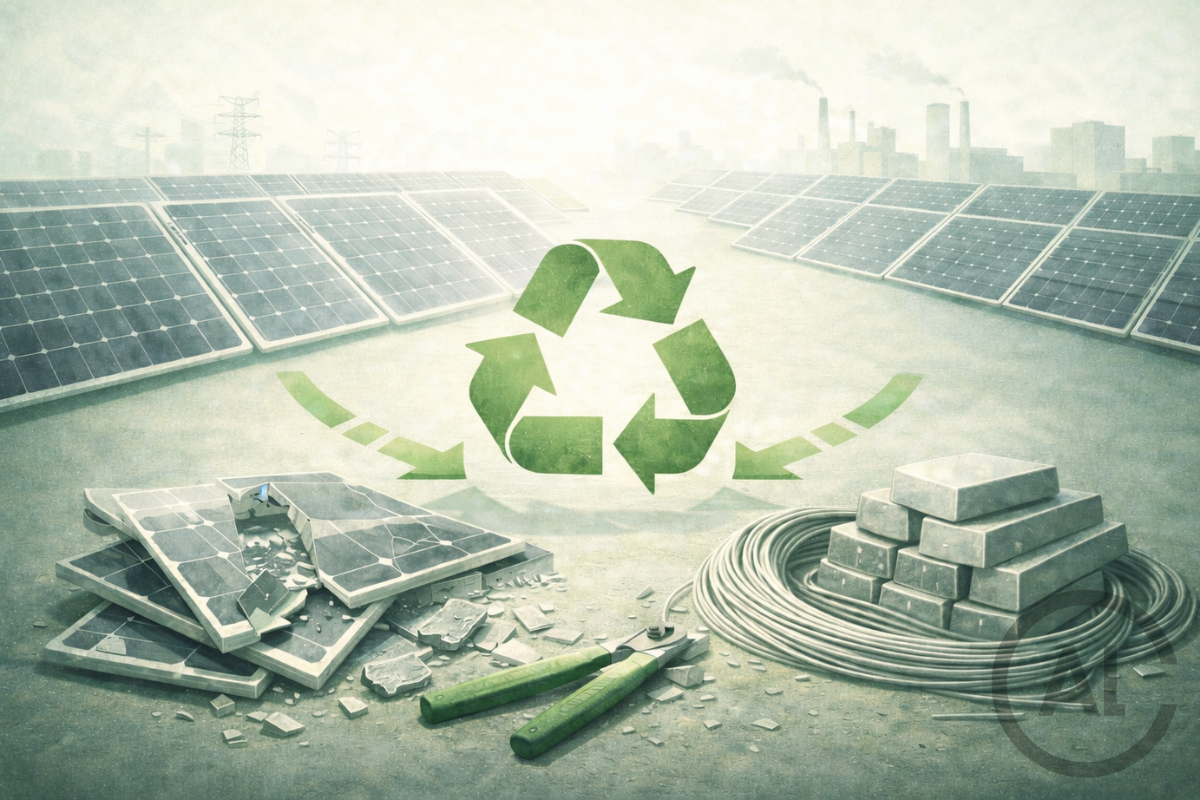
As early photovoltaic or PV solar panel installations are nearing the end of their operational lifespan, solar panel recycling is turning out to be a central concern. With global solar capacity expansion in process, the focus is shifting toward an efficient and responsible implementation of PV modules after decommissioning.
Explore- Most accurate data to drive business decisions with Global ALuminium Industry Outlook 2026 across the value chain
In the past two decades, global installation of PV solar panels has shot up. Most of these were developed to operate for 25 to 30 years. Global installed capacity in 2024 exceeded 2.2 TW, with nearly 600 GW. As these systems retire, limited recycling infrastructure could lead to a growing volume of electronic waste.
According to the International Renewable Energy Agency (IRENA), PV modules would likely generate about 1.7-8 million tonnes of waste by 2030. IRENA and other organisations have warned that in the upcoming decades, the decommissioned panels would generate global waste amounting to millions of tonnes without adequate recycling infrastructure.
Regulation and technological progress for recycling efficiency
The expansion of recycling infrastructure is creating activity across logistics, processing, engineering and research. Regulatory measures are evolving in multiple regions. The European Union has introduced solar panel recycling into electronic waste regulations. Other nations are designing extended producer responsibility policies.
Recycling efficiency is being reinforced by technological modifications, including higher material recovery rates and panel designs to enable easier dismantling. Digital tracking systems are also being introduced to improve collection and lifecycle management.
Must read: Key industry individuals share their thoughts on the trending topics

Holiday stockpiling meets chill, cast aluminium alloy's short-term highs hard to change
Next articleIs aluminium scrap quietly rewriting the global metals playbook, especially with EU scrap tension, solar PV & India's new policies?
Grow with
AL Circle