What will be the global bauxite outlook for 2026 after BMI cuts its 2025 forecast?
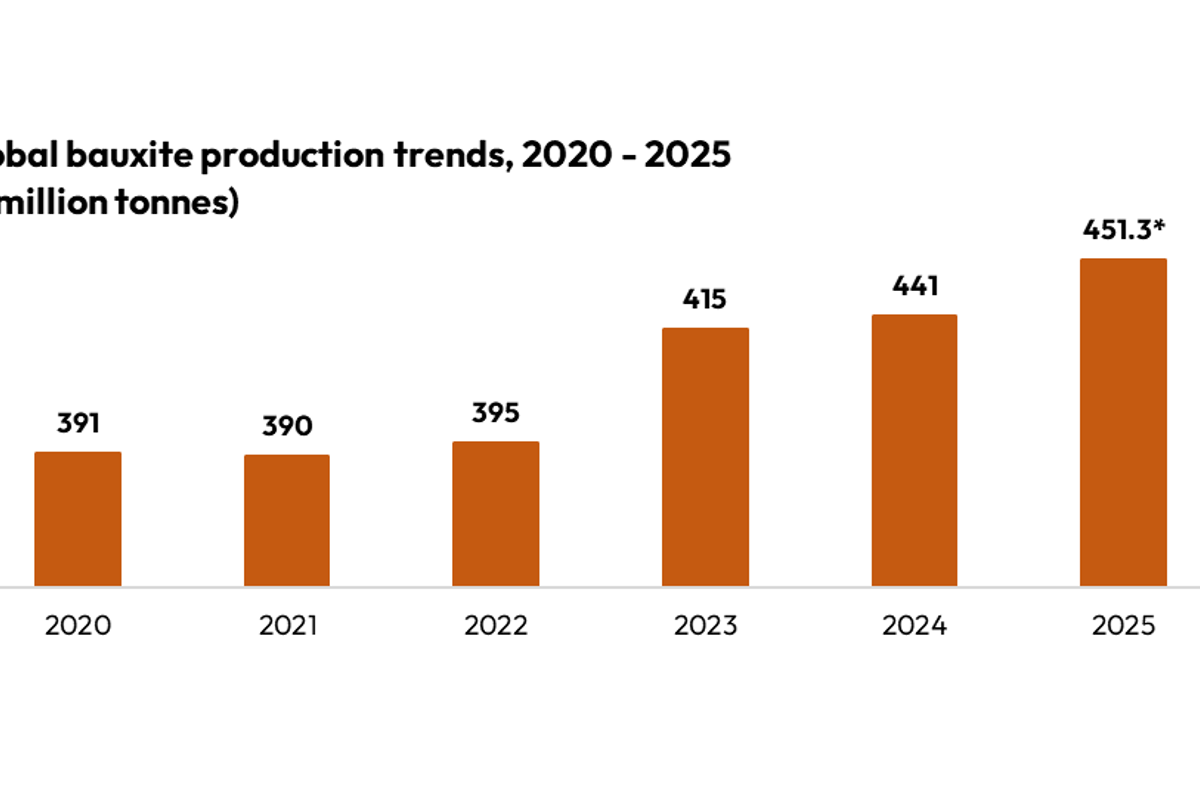
Aluminium isn’t just another industrial staple, but the Earth’s most abundant metallic element, quietly making up nearly 8 per cent of the planet’s crust. And almost all of it starts with bauxite: a humble, rust-tinged ore rich in the aluminium minerals gibbsite, boehmite and diaspore. Look closely at the map, and a pattern emerges — the world’s richest bauxite belts lie in today’s tropics or regions shaped by tropical geology, from Guinea and Australia to Vietnam, Brazil and Jamaica. The scale is staggering. The US Geological Survey estimates that, as of 2024, the world is sitting on nearly 29 billion tonnes of known bauxite reserves.
Explore- Most accurate data to drive business decisions with Global Aluminium Industry Outlook 2026
According to Fortune Business Insights, the global bauxite market size is estimated to be valued at USD 16.18 billion in 2025. According to AL Circle research, by 2030, a substantial increase is anticipated, with the market size projected to reach USD 19.6 billion at a CAGR of 2.41 per cent.
Unlock full access – sign up for FREE.
Key benefits
Winning International orders new large ore carriers as the Guinean bauxite trade surges
Next articleMetro Mining’s bauxite shipment overview in light of comparative performances: 2024 & 2025
Grow with
AL Circle