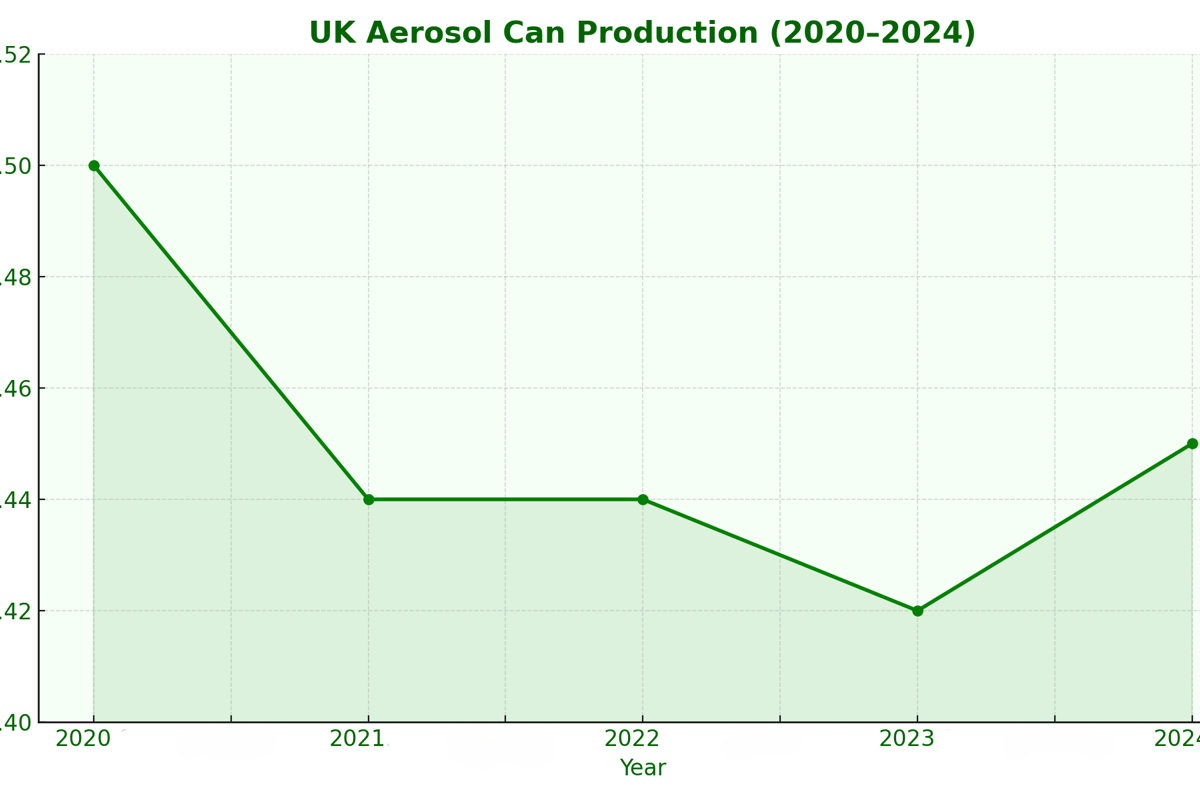
The United Kingdom aerosol industry marked a return to growth phase in 2024 after a three-years declining notion, with total production rising to 1.45 billion units, a 1.97 per cent increase over 2023. After a prolonged period of stagnation between 2021 and 2023, where production hovered around 1.44 billion units, this uptick signals renewed momentum for the sector. The figures, released by the British Aerosol Manufacturers Association (BAMA), are based on contributions from UK-based fillers and are considered a reliable snapshot of current market activity.
Alike world trend, UK’s personal care aerosols continue to dominate, accounting for approximately 75 per cent of all fillings in 2024. According to retail sales data from Kantar World Panel, this category saw a 3 per cent increase over the previous year.
Within personal care, deodorants rose by 2.9 per cent, antiperspirants by 5 per cent, and tanning and suncare aerosols surged by 22.5 per cent, the latter likely driven by rising consumer interest in skincare and outdoor leisure. For the first time in years, shaving preparations also saw growth, suggesting a shift in grooming habits and perhaps the start of a category revival.
The retail data from Kantar, which tracks aerosol sales in the UK from 2015 to 2024, reveals a gradual consumer shift from body sprays to more functional deodorants and antiperspirants. With a broader range of antiperspirants available on the market, consumers appear to be trading up for higher-performance products. This trend is mirrored in the dramatic rise in suncare aerosols, which grew from just 1,342 units in 2015 to 5,322 in 2024, reflecting increased sun safety awareness and travel activity.
Conversely, the household aerosol segment has slowed compared to 2023. A sharp drop in air freshener fillings was reported, as alternative in-home fragrance delivery formats, such as diffusers and electric devices, continue to gain favour.
Additionally, demand for furniture polish aerosols declined, a trend BAMA attributes to the rising use of manmade materials in furniture manufacturing, which typically requires less traditional care. However, some of this downturn may be statistical rather than actual, as distinct DIY and automotive aerosol products have been reclassified under different industry segments this year.
Outside of the core personal care and household categories, several smaller aerosol sectors posted significant growth. Medical aerosols increased by over 5 per cent, while insecticides surged by nearly 27 per cent. In a notable trend, oven cleaner fillings more than doubled compared to the previous year. The miscellaneous category, which includes novelty and niche products such as glitter sprays and temporary hair colours, showed strong expansion, demonstrating that consumer demand is diversifying beyond traditional applications.
On the materials front, aluminium continued to gain ground over tinplate, with the market share for aluminium cans rising to 68 per cent in 2024 from 62 per cent in 2023.
Tinplate’s share now stands at 32 per cent, down from 38 per cent the previous year. This shift reflects industry-wide trends toward lightweight, rust-resistant, and more recyclable materials, a move aligned with both sustainability goals and consumer expectations.
The UK remains a formidable exporter in the global aerosol market. BAMA’s data confirms that 70 per cent of the UK’s aerosol production in 2024 was destined for export, with 50 per cent going to EU countries, reinforcing the UK’s status as a major player in European and international aerosol trade. BAMA Chief Executive Patrick Heskins expressed optimism about the sector’s trajectory, saying, “The strong response to our survey allows us to confidently say the data reflects ongoing success, despite global market challenges.”
Taking a broader view, BAMA and Kantar’s ten-year dataset (2015–2024) offers valuable insights into long-term consumer trends. While personal care aerosols continue to thrive, haircare aerosol sales have been in steady decline, likely due to changing fashion norms that require fewer styling products. This evolution suggests the aerosol format must continue to innovate and diversify to remain relevant in a market shaped by shifting consumer habits and external pressures. For those seeking more granular insights, additional data and context are available from BAMA, which publishes annual reports and technical guidance. Kantar World Panel offers further detail on retail dynamics, while government resources such as DEFRA’s packaging waste statistics provide information on material usage and recycling rates. Industry-wide updates can also be accessed through the European Aerosol Federation (FEA).
In a nutshell, 2024 has been a turning point for the UK aerosol sector. With strong growth in personal care, rising export volumes, material innovation, and niche product success, the industry appears well-positioned to navigate future challenges and capitalise on emerging opportunities.













_md.webp)
_md.webp)