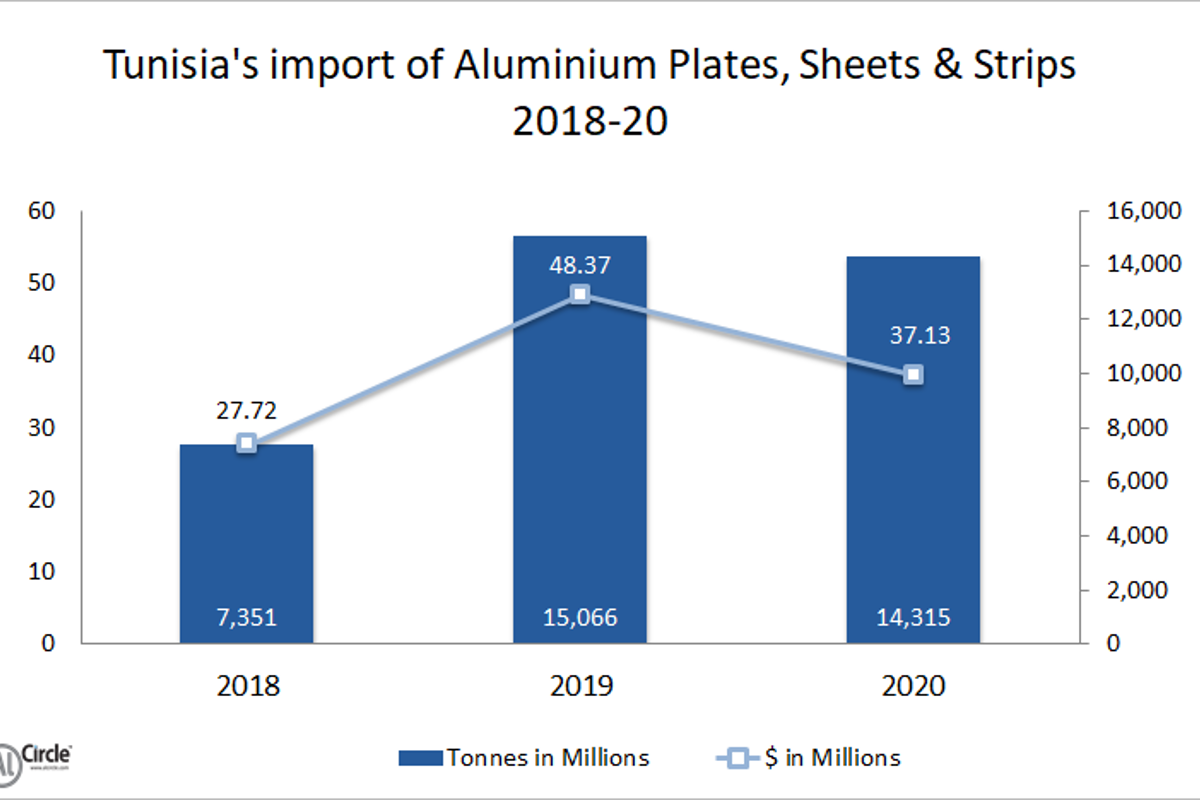
Tunisia’s import of aluminium plates, sheets and strips during 2018-20 displays a sharp rise with a marginal drop
Tunisia represents a mixed economic system, which provides a variety of private freedom, combined with centralized economic planning and government regulation. As per the World Bank, the COVID-19 pandemic has stretched into 2021, which result in socio-political unrest and Tunisia’s growth and fiscal outlook are looking weaker than before. The recovery will require more stability and a joint national effort to steer the economy to the right path.
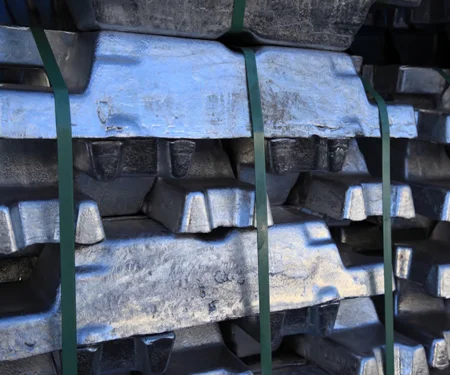
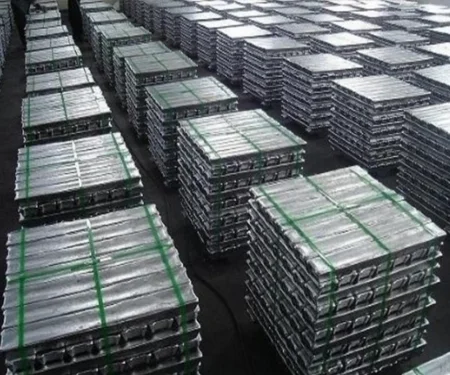
The northernmost country in Africa has recorded 22,417 tonnes import of aluminium plates, sheets and strips during 2018-19 and the amount expended for the import was $76.09 million. The import for 2020 remained at 14,315 tonnes and the expenditure stood at $37.13 million. Notwithstanding, when the import volume and expenditure for 2020 get tally with the existing two years, it denotes 36,732 tonnes and $113.22 million respectively.

Tunisia’s import of aluminium plates, sheets and strips in 2018 was registered at 7351 tonnes and the expenditure accounted was $27.72 million, whereas, in 2019 the import saw an up-rise of 104.95%, as the import volume grew to 15,066 tonnes and the expenditure also jumped to $48.37 million.
The import for 2020 was notified with de-growth by 4.98%, as the import volume fell to 14,315 tonnes and the expenditure dipped to $37.13 million.

Tunisia’s major trading destinations for the importation of aluminium plates, sheets and strips are Austria, Belgium, China, France, Germany, Hong Kong, Italy, Jordan, Poland, Norway, etc.
Hindalco Industries’ aluminium billets price up by 1.24% to INR 224,100 /t
Next articleAAI calls for immediate implementation of 5% RoDTEP for Indian Aluminium Industry to tackle COVID Crisis
Grow with
AL Circle