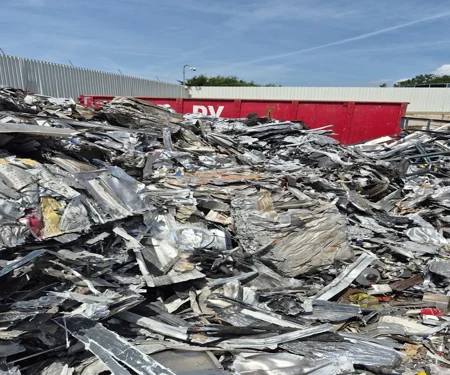
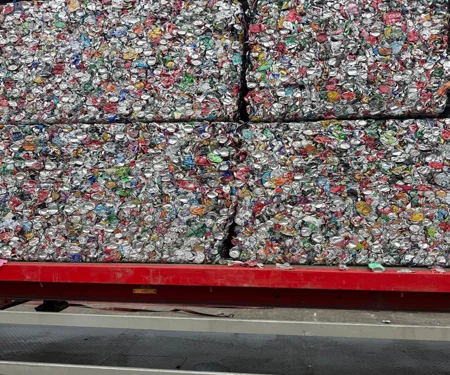
Tunisia’s export of aluminium scrap during 2019-22 illustrates a fluctuating movement

Aluminium is regarded as a sustainable metal, which signifies it can be recycled again and again with no loss of material, like aluminium cans are 100% recyclable, making them the most recyclable (and valuable) of all materials. The most common source of scrap aluminium is general-purpose items, such as beverage cans and household products. However, aluminium retrieved from aircraft is a small but rising source of scrap material.
The northernmost country in Africa, Tunisia exported 25,788 tonnes of aluminium scrap during 2019-21, incurred revenue generation of $26.47 million from the export.
In the automotive parts and equipment industry, the construction sector delivers a good amount of aluminium scrap in Tunisia. In 2019, the nation exported aluminium scrap of 10,502 tonnes, counting earnings of around $10.97 million, whereas, in 2020, the export illustrated drop by 33.26%, as the scrap export plunged to 7009 tonnes and earnings slashed to approx. $7.10 million.

Tunisia’s export of aluminium scrap in 2020 is registered with a marginal growth of 18.09%, as the export volume rose to 8277 tonnes and the earnings also recovered to $8.4 million.
The export for 2021 is estimated with a de-growth of 24.33%, as the export volume from Tunisia is anticipated to remain at 6263 tonnes, while earnings stand at $7.14 million.

The major trading destinations for Tunisia’s export of aluminium scrap are Brazil, France, Turkey, Italy, Greece, Jordan, Netherlands, India, USA, etc.
Recycled aluminium, one of the main ingredients used to make Tokyo 2020 podiums
Next articleNew aluminium cans deposit return system launched in Slovakia
Grow with
AL Circle