On April 2, 2025, President Donald Trump announced sweeping tariffs, including on aluminium, from the White House Rose Garden. The International Monetary Fund (IMF) warned on April 22 that these tariffs threaten global growth. The IMF lowered its global economic forecast due to rising trade tensions and policy unpredictability.
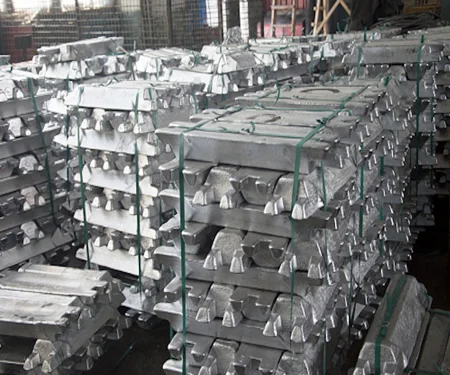
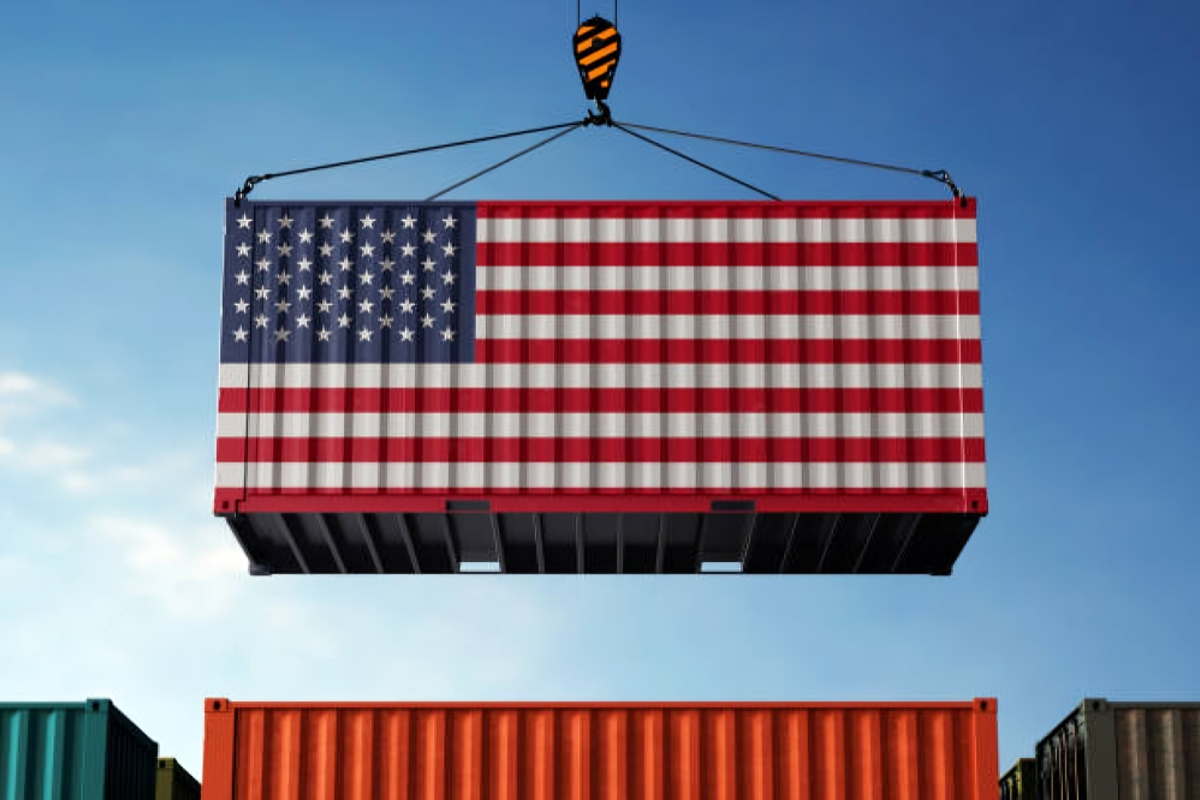
Image for representational purposes only
Trump’s baseline 10 per cent tariff on aluminium and additional 245 per cent duties on China have triggered global concern. Though some tariffs are paused, such as the “reciprocal” ones on major trade partners like the EU, Japan, South Korea and Taiwan until July for bilateral deal talks, key sectors, including aluminium and steel, remain affected. The IMF highlighted that these moves could unsettle trade flows and undercut long-term recovery.
As a result, the IMF revised global growth down to 2.8 per cent from 3.3 per cent in 2024. US growth projections also dropped to 1.8 per cent from the earlier 2.8 per cent. Markets have reacted sharply, with declines following Trump’s tariff announcement earlier this month. The IMF also expects output to be slower next year than it previously predicted.
Foreign investors are increasingly cautious about US stability amid these developments. Some are reducing exposure, weakening the US’s status as a financial safe haven. The IMF emphasised that policy instability has overtaken even tariffs as a key economic risk.
Pierre-Olivier Gourinchas, the IMF’s chief economist, stated, “We’re entering a new era as the global economic system that has operated for the last 80 years is being reset. Beyond the abrupt increase in tariffs, the surge in policy uncertainty is a major driver of the economic outlook. If sustained, the increase in trade tensions and uncertainty will slow global growth significantly.”
The eurozone’s growth is now expected at 0.8 per cent in 2024 and 1.2 per cent in 2025, down 0.2 per cent from January’s forecast. Japan’s outlook was also cut to 0.6 per cent for both years, down 0.5 per cent for 2024 and 0.2 per cent for 2025. But the IMF expects UK growth to outpace Germany, France and Italy and also forecasts the highest inflation among advanced economies at 3.1 per cent, driven by rising utility bills.
After Trump imposed a 25 per cent tariff on aluminium and steel imports, South Korea’s exports to the US dropped 14.3 per cent. Car and steel shipments fell 6.5 per cent and 8.7 per cent, respectively, in the first 20 days of April.
Investor anxiety is growing, with fears of broader retaliation by affected countries. Spain's 2025 growth forecast was raised to 2.5 per cent, up from 2.3 per cent, aided by post-flood reconstruction efforts. Canada’s 2024 growth forecast drops to 1.4 per cent from 2 amid tariff uncertainty and tensions. Mexico now faces a 0.3 per cent contraction, down from 1.4 per cent growth.
Spain, Canada and Mexico traded 81.96 million, 9.24 billion and 452.10 million dollars worth of aluminium, respectively, with the US in 2023. And that for 2024 were 92.07 million, 9.42 billion and 359.74 million dollars, respectively. However, keeping in mind the imposed tariffs, these projected aluminium trade values may face a downward revision in 2025.
China's aluminium trade with the US reached 696.45 million dollars in 2023 and rose to 766.93 million dollars in 2024. However, with the imposition of tariffs, this upward trend may slow down, potentially impacting trade volumes in 2025. As a result, China’s economic growth is now projected at 4 per cent for this year, down from the earlier IMF forecast of 4.6 per cent.
Overall, the imposed tariffs will impact the aluminium trade (along with steel, of course), which in one way or another is evidently going to impact GDP growth and reduce the economic contribution of the global aluminium industry.












_md.webp)
_md.webp)
_md.webp)