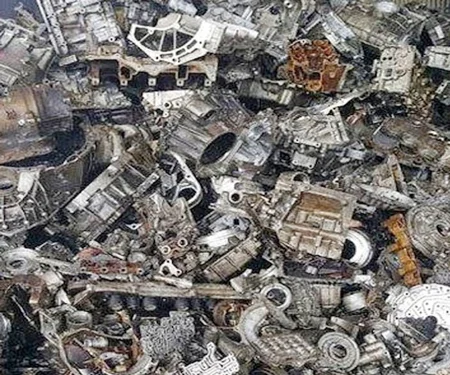
The Aluminium scrap export of Israel has been “Sky-Rocketing” during 2017-20

The economy of Israel is a highly advanced free-market, primarily knowledge-based economy. The prosperity of Israel's advanced economy allows the country to have a sophisticated welfare state, a modern infrastructure, and a high-technology sector competitively on par with Silicon Valley. Israel has the second-largest number of start-up companies in the world after the United States and the third-largest number of NASDAQ-listed companies after the U.S. and China.
The aluminium scrap export of Israel has been found sky-rocketing during 2017-19 as the total export volume was recorded at 131,205 tonnes and the revenue earned stood at $197.02 million. The projected analysis for 2020 has been recorded at 61,840 tonnes and the income might inflate to $108.33 million. When the export volume and income for 2020 have been added to the preceding three years it stands at 193,045 tonnes and $305.35 million.
In 2017 the export of Israel has been recorded at 27,368 tonnes and the income stood at $35.29 million, whereas in 2018 a growth of 86.24% has been visible, as the total export stood at 50,972 tonnes with Y-o-Y rise in volume by 23,604 tonnes and the revenue income expanded to 122.61%, as the revenue stood at $78.56 million.

The Aluminium scrap export of Israel in 2019 has again remained positive as the export stood at 52,865 tonnes and the revenue generation remained at $83.17 million. The analysis for 2020 has been showing a growth by 16.97%, as the total export might extend to 61,840 tonnes and revenue can stretch to $108.33 million.
The major trading nation of Israel in regards to aluminium scrap export are Austria, Belgium, Germany, Poland, Romania, Slovenia, Spain, Taiwan, Thailand, UK, etc.
The rapid rise reflection of Kenya’s Aluminium scrap export market during 2017-20
Next articleUS aluminium scrap exports to China grow 8.6% M-o-M in February, but down 70% Y-o-Y
Grow with
AL Circle