Soaring aluminium prices and glass bottle supply shortage leave Mexico in a beer dearth situation

The escalating prices of aluminium, and cardboard and the scarcity of glass bottles are reasons for the beer shortage in some areas of Mexico. ANPEC, a national small business organisation, reports that supply shortages are observed mainly in the Northern parts of the country, with recurring data from Mexico City, Guerrero and Guanajuato showing an incomprehensible beer crunch.
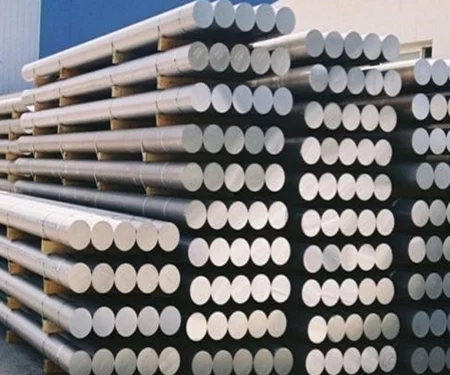
Aluminium is infinitely recyclable with a user life better than any other corrosion-free material. Its malleability attracts many businesses to surround their venture with the practical application of this non-ferrous metal. Yet primary aluminium is costly, and aluminium scrap is not that easy a find due to the long life expectancy of products that are made with aluminium. Moreover, the Russia-Ukraine crisis has pushed the entire world economy into such a tumultuous situation that the prices of commodities are rising more than ever. The metals market is not at all free from this unprecedented situation which has put the entire industry in topsy turvy. The primary aluminium price is maintained mainly by the LME and is the benchmark price accepted by traders worldwide.
Beverage makers are now switching to sustainable alternatives like aluminium than glass bottles, but if this is the situation, the shift to a green economy won’t be possible very soon. Even though aluminium is recyclable, more than half of the beverage cans produced end up in landfills leaving the recycle enthusiasts with significantly less raw material to work with.
According to sources, a scarcity in glass bottles and rising aluminium and cardboard costs are jointly disrupting the usual flow of production for the brewers, soft drinks makers and other manufacturers in Mexico. As per the sources, the first brand to run out of 1.2-litre bottles for their beverage was Dos Equis, a distributor near Mexico City.
The dark green glass used by the brand has become hard to source, the news agency said. “Aside from the shortage of aluminium and glass, there’s a shortage of malt,” said Cristina Barba Fava, director of the Mexican Independent Craft Brewers Association.
Researchers also went to question the two biggest brewers in Mexico, Grupo Modelo and Heineken México, alongside a beer industry group Cerveceros de México about beer and beverage packaging supply shortages but they denied cooperating by giving answers.
The president of ANPEC, Cuauhtémoc Rivera, explained that shortages had been aggravated owing to augmented summertime demand for beer. “Summer is when the greatest amount of beer is consumed; demand increases in some places by up to 100%,” he added.
Rivera further commented that the overall sales for the business would receive blowbacks if they did not acquire ample beer to suffice the customer demand. “Beer is a powerful driver of sales. A customer goes to the shop for beer but ends up adding snacks, cups and even charcoal” for the grill, he exaggerated. “That’s why having a sufficient supply of beer is important.”
Fact-checkers currently made a tour to an OXXO utility store in the Tlatelolco area of Mexico City and found empty refrigerators with no beer stocked. The story was the same with many supermarkets and stores in Mexico’s capital.
An OXXO employee also claimed that an abrupt hoarding of beers had begun two months ago with no intentions of ending soon. A corner store owner in the San Simón Tolnahuac neighbourhood drew the actual picture when she said that in months gone by, she had to make journeys to the distribution centres outside the district in which she works and dwells to gather all the brands she wanted to stock.
“We’ve had problems … finding big bottles of all brands, and … there has been a lack of Carta Blanca,” Isabel Contreras commented, emphasising that if she ran out of beer, she would make a huge loss in business. In addition to beverage can and bottle shortages, another nightmare for beer consumers is a price hike. Rates of different brands like Victoria, Corona, Tecate and Carta Blanca have suddenly started increasing.

If a circular economy is not built encompassing the successful storing, sorting and segregation of aluminium cans and bottles, the world will run out of packaging options, and the retail market will be the first to suffer its blow.
Novelis expands its evercycle™ portfolio to cosmetic packaging
Next articleBilfinger and Layher UK unite to install world’s first aluminium Flexbeam underdeck
Grow with
AL Circle