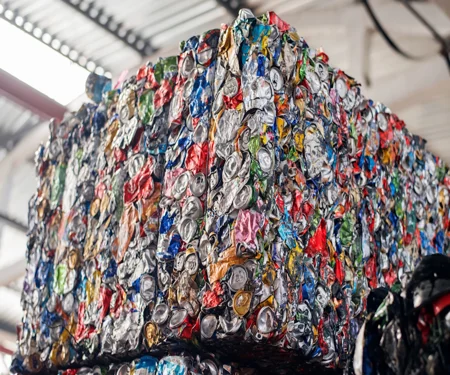
RMI illustrates the Sustainable Aluminium Finance Framework at COP28 conference in Dubai

At the COP28 conference in Dubai, UAE, RMI unveiled the Sustainable Aluminium Finance Framework, which is a game-changing climate-aligned financial module for the aluminium sector. The framework is designed to assist banks in aligning their financing decisions with their own decarbonisation targets.
It provides banks with the necessary tools to measure, benchmark, and disclose the climate alignment of their aluminium lending portfolios in line with a 1.5°C scenario. The framework was developed in collaboration with a working group of four banks, namely Citi, ING, Société Générale, and Standard Chartered.
The working group consulted with leading aluminium producers and organisations, including the International Aluminium Institute and the Aluminium Stewardship Initiative, over the course of a year to ensure consistency and transparency in both measuring and reporting progress against climate targets.
RMI’s CEO Jon Creyts stated: “This framework is a call to action, especially in sectors that are critical to our economies. Today is pivotal… this framework is not just another initiative. It is a vital tool to bring the aluminium industry in line with climate goals.”
At COP28, RMI displayed a comprehensive methodology for aluminium producers to track emissions, which will help the sector grow and decarbonise in parallel to meet the needs of a 1.5°C world. The aluminium industry, responsible for roughly 2% of GHG emissions, has a complex emissions landscape with a wide range of intensities.
However, with the increasing demand for aluminium as a crucial material for the low-carbon transition, the sector has the opportunity to switch to clean sources of power, increase rates of recycling, improve material efficiency, and deploy breakthrough technologies. All of these efforts will require financing, but the potential benefits of decarbonising aluminium are immense and will contribute to a more sustainable future.
The Senior Vice President and Treasurer – of Alcoa Corp and President – of Alcoa Canada, Louis Langlois, commented: “Aluminium is a key material in the development of the electric vehicles and renewable energy infrastructure the world will need to transition to a future focused on lower carbon emissions. That future hinges on collaboration. Thanks to RMI’s leadership and vision, the Sustainable Aluminum Finance Framework will bridge this need by making it easier for banks and aluminium producers to work closely on solutions to drive decarbonisation.”
This particular framework will enable financial institutions to evaluate the emissions of their aluminium loan portfolios and collaborate with their clients to report their emissions, finance low-carbon solutions, and support investments in new technologies. The Sustainable Aluminium Finance Framework offers several benefits, including the ability to customise benchmarks to company and portfolio baselines to account for the wide range of starting points in emissions intensity across the sector.
Additionally, the framework assesses the alignment of electricity and other emissions separately to track progress on different decarbonisation levers. It also evaluates primary and recycled aluminium processes separately to recognise improvements in primary production emissions intensity independently from the growing recycling market.
The RMI Director, Estefania Marchan, narrated: “This is a huge step forward to decarbonise aluminium production. This comprehensive and harmonised tool for banks will support finance to better engage with clients to create new economic opportunities”.
Financial institutions are encouraged to contact RMI with any questions regarding assessing the emission intensity of their aluminium loans in order to induce net-zero pathways.
The Director of Scenarios and Forecasts at International Aluminium Institute, Marlen Bertram, implied: “Transparency, accuracy, and comparability of GHG emission baseline and targets are key to building trust and confidence among all players, especially the finance sector. Designed by RMI, the Sustainable Aluminum Finance Framework is a great example of the power of collaboration. The IAI and its members have been supporting RMI in developing this tool to enable lenders to voluntarily assess and disclose the alignment of their aluminium lending portfolios against a 1.5°C climate pathway. I’m pleased that the tool aligns with IAI’s three GHG pathways: electricity decarbonisation, direct emissions and recycling. I hope the tool will help the aluminium sector to further decarbonise and invest in decarbonisation projects around the world.”
Established in 1982, RMI, most commonly known as Rocky Mountain Institute, is an autonomous non-profit organisation that endeavours to revolutionise global energy systems through market-driven solutions that align with a 1.5°C future. RMI has regional offices in Colorado, New York City, California, Washington and Beijing.
If sustainable drives in the aluminium industry intrigue you, please have a look at AL Circle's special report on the same, Sustainability in the Global Aluminium Industry.
Vedanta's journey to Net Zero: A pivotal role in climate action at COP28
Next articleChinese high-strength aluminium alloys producer Binzhou Regal joins ASI
Grow with
AL Circle