Researchers develop an inexpensive COVID-19 test device using recycled aluminium coffee capsules and 3D-printing
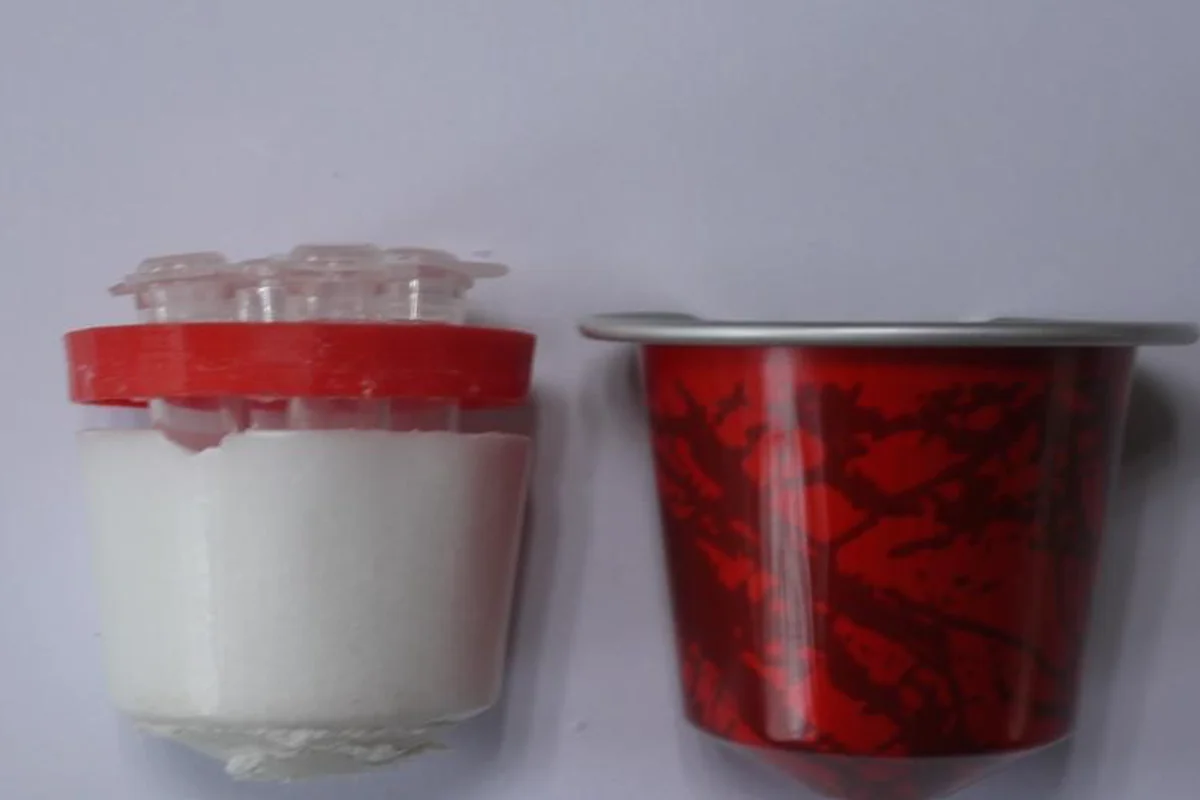
According to a recent report, a team at Wageningen University and TNO in the Netherlands has designed a device that enables reliable point-of-care tests for COVID-19 at an inexpensive cost. The device, made of empty aluminium coffee capsules recycled into miniature chemical reactors and combined with 3D-printing, also shares its usage instructions freely to maximise the COVID-19 testing and accelerate its impact in remote and low-income regions.
Vittorio Saggiomo, who led the innovation, said: “We designed a 3D-printed plastic holder that fits four Eppendorf vials to perform the tests.”
This device shows the test results in just 30 minutes, said Mr Saggiomo. It uses loop-mediated isothermal amplification (Lamp), a reaction that heats different primers and enzymes to make several copies of the virus’ genetic material. If the COVID-19 virus is present in the saliva sample, the Lamp reaction then acidifies the solution, which can be detected with a pH indicator such as phenol red, added Saggiomo.
To make the test with this device even more accessible, researchers have discovered a way to heat samples without the need to electricity.

Henry Powell Davies, a doctoral student at the University of Glasgow, UK, said ‘This approach demonstrates the versatility of 3D-printing. These innovations will make Covid testing more efficient and democratic, streamlining an otherwise very invasive procedure.”
Simon Lewis, an analytical chemist who has developed frugal forensic tests at Curtin University, Australia, said creating-point-of-care test device for developing countries and remote areas is truly a challenging job.
Namibia’s import of aluminium cans during 2018-20 illustrates strong growth with a sharp downswing
Next articleRwanda’s import of aluminium foil during 2018-20 exhibits unstable movement
Grow with
AL Circle