Recap 2019: Additional auto tariffs created concerns for auto industry; China's EV market growth plummeted
The transport sector faced some unprecedented challenges in 2019. The year started with the announcement of a delay in the imposition of additional Section 232 tariffs on automobiles and automotive parts imported by the United States, which created concerns among automakers and the automotive suppliers over higher prices of their products. China, the biggest market for electric vehicles, saw its electric vehicle (EV) sales plunge for a second consecutive year. NEV subsidies cancellation is leading electric vehicle makers to struggle in meeting sales amid increasingly strict emission standards. Nevertheless, 2019 witnessed new cars, bikes, yachts launch with aluminium in construction, an extension of the supply agreement and many more.
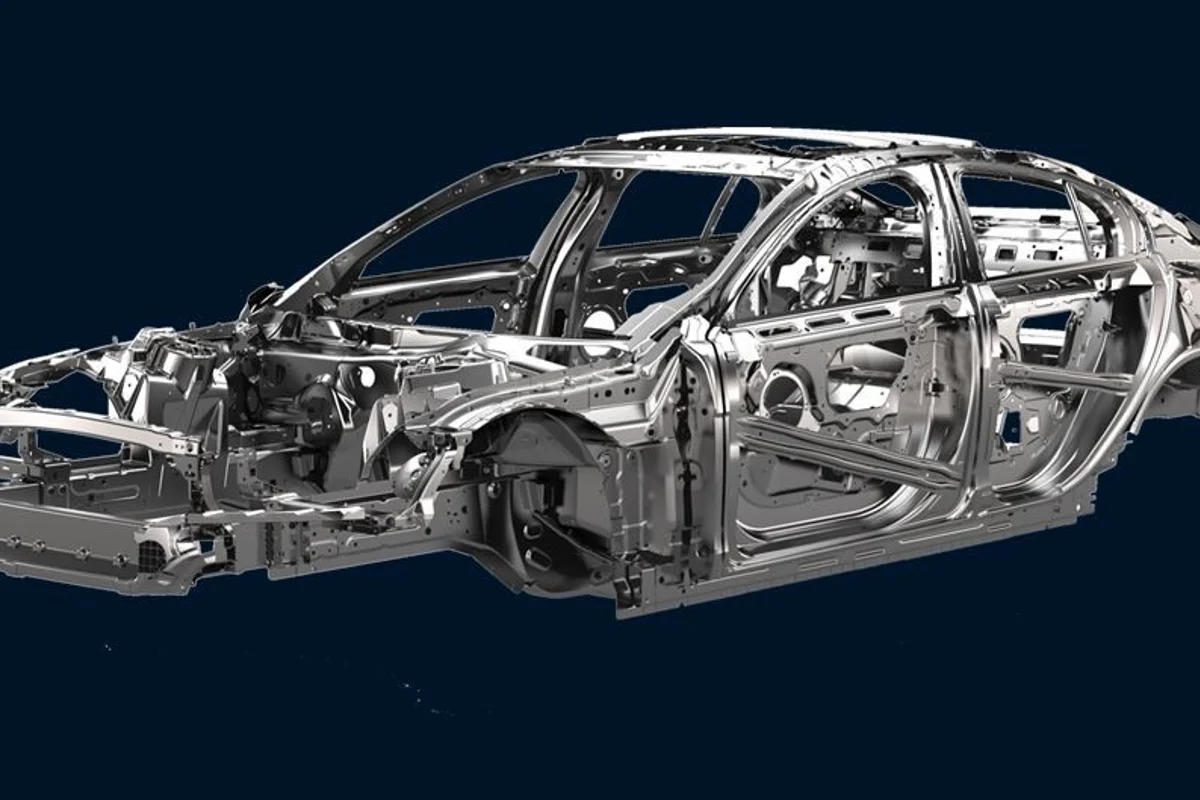
By 2040, Bloomberg New Energy Finance expects 54% of new vehicle sales will be electric vehicles. EV’s would drive aluminium demand as more and more aluminium will be used for Body-in-White applications due to its strength to weight ratio.
Let’s look back at the top transport news from our end user vertical.
Electric vehicles market in China
China, which had been seeing the biggest growth in the global auto industry in last 20 years, went through downturn leading many leading automakers to cut down production. Automakers such as General Motors, Ford and Peugeot reported double-digit percentage sales declines.
The NEV sector also experienced a sales drop, due to subsidy cuts. Overall sales of NEVs in China rose 50 per cent in H1 2019 from previous year, but the sales fell 4.7 per cent in July. NEV sales in November fell year-on-year by 41.7 per cent to 79,000 units, as reported by the China Passenger Car Association (CPCA). This marks the fifth consecutive month of decline in new energy vehicle sales since the sharp cut on NEV subsidies went into effect in late June.
Slowing economic growth and strict vehicle emission rules may bring down China’s new vehicle sales to 26 million in 2019 registering a drop of about 8 per cent YoY. This will be second consecutive yearly drop for the world’s biggest auto market.
The EV market is not likely to bounce back soon considering the slowing economy and the government’s plan to phase out the subsidy program completely by the end of 2020.
US’s decision to impose additional tariffs on automobiles
Two United States senators Doug Jones (Democrat, Alabama) and Lamar Alexander (Republican Tennessee) in January reintroduced the law that would delay the imposition of additional Section 232 tariffs on automobiles and automotive parts imported by the US. The industry fears that on the application of auto tariffs on millions of imported cars will hike the vehicles costs, and potentially lead to hundreds and thousands of job losses throughout the US economy.
U.S. President Donald Trump agreed to the Commerce Department’s decision that some imported vehicles and parts pose a national security threat to the U.S. However, the White House delayed the auto tariff decision on imported automobiles from the European Union and elsewhere for about six months to allow more time for trade negotiations with the European Union and Japan.
New electric vehicles plants
- Tesla started constructing a new manufacturing plant for its electric cars in Shanghai, China. The electric carmaker aims to produce 250,000 pure electric cars annually at first.
- China Evergrande Group plans to invest RMB 280 billion (US$40 billion) to build the two EV production centres in Shenyang and Guangzhou after signing an agreement with the governments of the two cities.
- Chery, in association with German electric vehicle producer Steatscooter, will build a production plant for manufacturing electric light commercial vehicles for postal and parcel transport use.
- The BMW group invested 400 million euros in restructuring its Dingolfing vehicle plant for the production of electric vehicles, including the highly automated BMW iNEXT.
- Bumchun Precision will construct an aluminium battery terminals manufacturing facility for electric vehicles in Hungary with an investment of EUR40.8 million (US$45.3 million).
Aircraft
Novosibirsk State Technical University scientists have reportedly tested the world’s first internal-combustion engine fully made of aluminium and weighing about 200 kg. Ilya Zverkov, Professor of the Aircraft-and Helicopter-Making Chair at the University’s Aircraft Faculty, told TASS that the test results would help the scientists to design a smaller engine. The use of aluminium in place of steel has lowered the engine’s weight by 30 per cent to 40 per cent.
Bombardier awarded Aleris with Diamond Supplier Certification during the Bombardier Supplier Symposium. Aleris was recognized for its outstanding performance as a supplier of aluminium aerospace products from Aleris manufacturing facilities in Koblenz, Germany and Zhenjiang, China.
Boeing inked a Memorandum of Understanding (MoU) with the National Industrial Development and Logistics Program (NIDLP), Saudi Arabian Industrial Investments Company (DUSSUR), and Saudi Arabian Mining Company (Ma’aden) to support the development of the aerospace industry of Saudi Arabia. This will also support the Kingdom’s goal to become a leader in aerospace grade aluminium manufacturing.
Other major highlights:
- Indian Oil Corporation Limited (IOCL) is in talks with Hindalco Industries Limited to source aluminium for its proposed one GW (gigawatt) aluminium air battery facility. This move is in tune with the government’s strategy to facilitate the adoption of electric vehicles (EVs) in India to cut the fuel import bill.
- Toyota Motor Corp. and its Chinese partner BYD Co. will develop battery-electric vehicles and batteries as the Japanese automaker is looking at building affordable EVs for the world's top vehicle market in collaboration with its Chinese partners.
- Andhra Pradesh now aims at deploying 10 lakh electric vehicles across all segments and 1 lakh charging station in the next five years.
- Emirates Global Aluminium extended its UAE-made aluminium supply agreement with BMW. The new deal will see EGA’s aluminium supplies to BMW continue until 2022.
- A government of India announcement said that anti-dumping duties on selected four-wheeler aluminium alloy wheels from China, Korea RP, and Thailand have been extended for another five years.
- MINTH Automotive Europe started building its car parts facility plant in Serbia for the production of aluminium roof base carriers, vehicle covers, aluminium door frames and car batteries.
- Geely Auto Group launched a pure EV brand Geometry, intending to boost production of new energy vehicles. The first model made from aluminium alloy and composite materials has CATL ternary lithium batteries having a capacity of 51.9 kWh and 61.9 kWh.
- National Electric Vehicle Sweden rolled out a full-electric sedan based on the old Saab 9-3 platform from its plant in the north China port city of Tianjin.
- The Yacht Club de Monaco (YCM) revealed that it was planning to construct the first Zero Emission Committee Boat. The size of the boat will be11.5-metre and will be built with aluminium due to having recyclable properties.
- ŠKODA unveiled its latest electric bike called the KLEMENT. Made from an aluminium frame, the KLEMENT boasts a sleek and stylish look.
- Novelis announced the development of its first aluminium sheet battery enclosure solution to address the growing needs of customers in the rapidly growing electric vehicle and battery markets.
- Hindalco Industries handed over India’s first all-aluminium freight trailer in Rajasthan to Kamal Exim Pvt. Ltd., a leading Jaipur-based transporter of UltraTech Cement Limited.
- U.S. trade officials rejected Tesla Inc.'s request for relief from Trump's 25 per cent tariffs on the China-made Autopilot "brain" in the Model 3 and other electric vehicles.
Outlook:
According to a recent finalized study completed by AluMag, 43% of all New Energy Vehicles (NEVs) produced in China are fitted with an aluminium tray, which forms the lower part of the EV battery housing. Out of that, 36% has extruded aluminium while 7% has a cast aluminium tray.
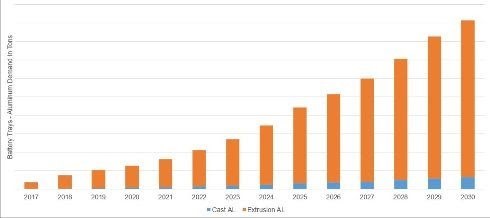
AluMag forecasts that the NEV penetration in the biggest market for electric vehicles would grow from 2.5% in 2017 to 32% in 2030. The study calculates if China delivers an estimated 10 million NEVs by 2030, aluminium extrusion & cast demand would grow with a CAGR of 28% between 2017 & 2030.
Aluminium chassis Acer Spin 5 convertible tightens belt and added stylus pen for 2020
Next articleAluminium roof rails and sporty face, the new appeal of KIA Stonic
Grow with
AL Circle