Aluminium profile exports remained at a high level in September, with a downward shift expected in the fourth quarter
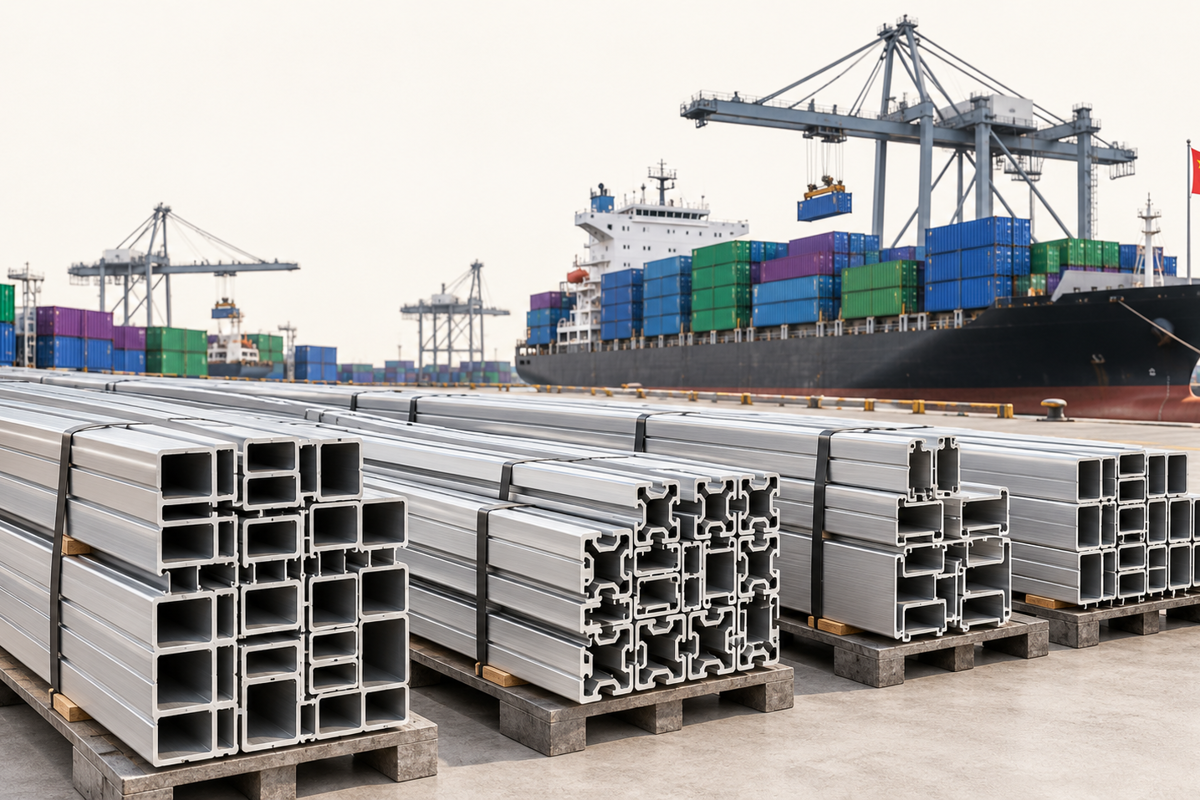
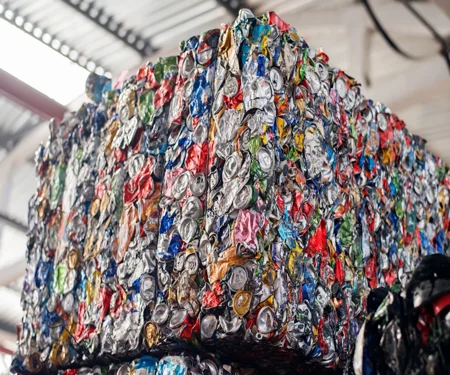
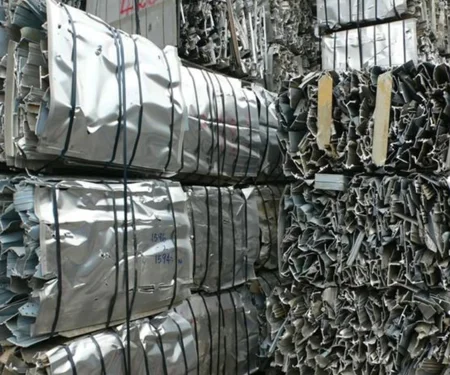
The image used in this article is generated with an AI tool and does not depict any real-time moment
According to customs data, aluminium profile exports from China in September 2026 totalled 92,700 tonnes, up 0.2 per cent month-on-month and 26.5 per cent year-on-year. Total exports for January-September reached 722,300 tonnes, up 10.7 per cent year-on-year. September exports set a new monthly high for 2026. Aluminium profile exports have moved from a recovery phase in the second quarter to a high plateau: the total volume has remained around 90,000 tonnes for three consecutive months.
By province, September was characterised by generally stable volumes, but noticeable shifts in the regional structure. Among the traditional production centres, Guangdong exported 42,600 t (45.9 per cent), an increase of 200 t, or 0.4 per cent m/m – virtually unchanged.
Shandong maintained above 12,000 t in August and September, remaining one of the most stable exporting provinces. Growth was driven by Jiangsu, Zhejiang, Shaanxi, and Guangxi: Jiangsu +1,300 t (+33.0 per cent m/m), Zhejiang +1,100 t (+46.3 per cent m/m), Shaanxi +1,100 t (+67.1 per cent m/m), Guangxi +900 t (+29.4 per cent m/m). Together, the four provinces added around 4,400 tonnes. This pattern differs from that seen in August, where Guangdong dominated and the sources of growth were relatively more dispersed.
The decline was concentrated in three areas: Hainan declined from 4,800 tonnes in August to 1,900 tonnes (-2,900 tonnes or -60.3 per cent m/m), ending a streak of three consecutive months above 2,900 tonnes. In September, exports declined in stages following factors related to the closure of the free trade port. Inner Mongolia declined from 2,000 tonnes to 1,100 tonnes (-900 tonnes, or -43.0 per cent m/m). Fujian retreated slightly from 7,600 tonnes to 7,000 tonnes (-8.9 per cent m/m).
By export destination, the total volume of deliveries to the top five countries in September amounted to 29,500 t, or 31.8 per cent of the total, slightly higher than in August (28,900 t and 31.2 per cent). While the overall volume remained virtually unchanged, the concentration increased rather than decreased, but the dynamics within the top five diverged significantly.
Malaysia — 7,300 t (7.9 per cent), -7.6 per cent m/m and +55.3 per cent y/y.
Vietnam — 7,200 t (7.7 per cent), +7.5 per cent m/m and -25.0 per cent y/y. Israel — 5,600 t, 6.0 per cent share, a decrease of 11.1 per cent m/m, while in the same period last year it was only 1,000 t. Australia — 4,800 t, 5.2 per cent share, an increase of 26.3 per cent m/m and 23.1 per cent y/y. Nigeria — 4,600 t, 5.0 per cent share, an increase of 9.5 per cent m/m and 100 per cent y/y.
Australia and Nigeria are the only two markets from the top five with positive dynamics both m/m and y/y. Malaysia and Israel declined m/m, but remained significantly above the previous year’s level. Vietnam is the only market from the top five with a decrease y/y, as the substitution effect with local aluminium profiles continues to operate.
By region: Southeast Asia — 25,700 t, a 27.7 per cent share, still the largest region, down 3.0 per cent month-on-month. Africa — 18,200 t, a 19.6 per cent share, down 2.2 per cent month-on-month.
The six Middle East countries combined — 1,900 t, a 2.1 per cent share, down 0.8 per cent month-on-month. All three main regions simultaneously showed negative month-on-month dynamics. Overall volumes this month were supported by Europe outside the EU (4,500 t, up 28.6 per cent m/m), Oceania (5,700 t, up 18.8 per cent m/m), Northeast Asia (4,300 t, up 10.3 per cent m/m), and Latin America (15,000 t, up 4.2 per cent m/m).
These four regions collectively contributed approximately 2,900 t of net growth, largely offsetting declines in the major regions. Overall, the trend of orders being dispersed from a few large markets to many small and medium-sized ones continues, with the impact of fluctuations in individual markets on overall volumes correspondingly diminishing.
By type of trade, exports within the framework of regular trade in September amounted to 79,900 tonnes, a share of 86.2 per cent, which is 1.1 percentage points lower than 87.3 per cent in August, and the absolute volume decreased by 1.1 per cent month-on-month. Exports within the framework of processing of customer-supplied raw materials amounted to 6,500 tonnes, a share of 7.0 per cent, which is 0.8 percentage points higher than 6.2 per cent in August, an increase of 13.7 per cent month-on-month.
Exports within the framework of processing of imported raw materials amounted to 4,700 tonnes, a share of 5.1 per cent, which is 0.4 percentage points lower than in August, a decrease of 8 per cent month-on-month. The share of regular trade has been declining for two months in a row, and processing serves as a marginal supplement.
September aluminium profile exports remained virtually unchanged month-on-month, although the structure has shifted compared to August: the momentum of concentrated shipments from Guangdong faded, the surge from Hainan retreated, and growth shifted to multiple sources in Jiangsu, Zhejiang, Shaanxi, and Guangxi.
In terms of supply destinations, three main markets simultaneously contracted, with Europe outside the EU, Oceania, Northeast Asia, and Latin America playing a compensating role. The continued decline in the share of regular trade, offset by processing, also indicates that the price-driven impulse for independent order taking is still weakening. According to manufacturer feedback, overall export conditions changed little in August and September.
A manufacturer from Fujian Province noted that after October, the price differential between the Chinese and overseas markets continued to narrow, and with rising shipping costs, the price advantage of aluminium profile exports has eroded, with a moderate decline in export volumes expected going forward.
A manufacturer in Henan Province also reported that after Australia issued an affirmative preliminary anti-dumping ruling against Chinese aluminium doors and windows, local customers' willingness to import Chinese aluminium extrusions has been affected, and corresponding export orders have already declined.
Overall, the increase in the accumulated indicator for January-September is mainly due to the low base of the same period last year, and demand for export orders is expected to decline. Aluminium extrusion exports in October are estimated to be between 83,000 and 90,000 tonnes, with the fourth-quarter midpoint shifting downwards compared to the third quarter to 79,000-86,000 tonnes, and the full-year total expected to be between 950,000 and 990,000 tonnes.
Note: This article has been issued by SMM and has been published by AL Circle with its original information without any modifications or edits to the core subject/data.
Grow with
AL Circle