Aluminium billet inventories fall for the fourth straight week; processing rates rebound across the board
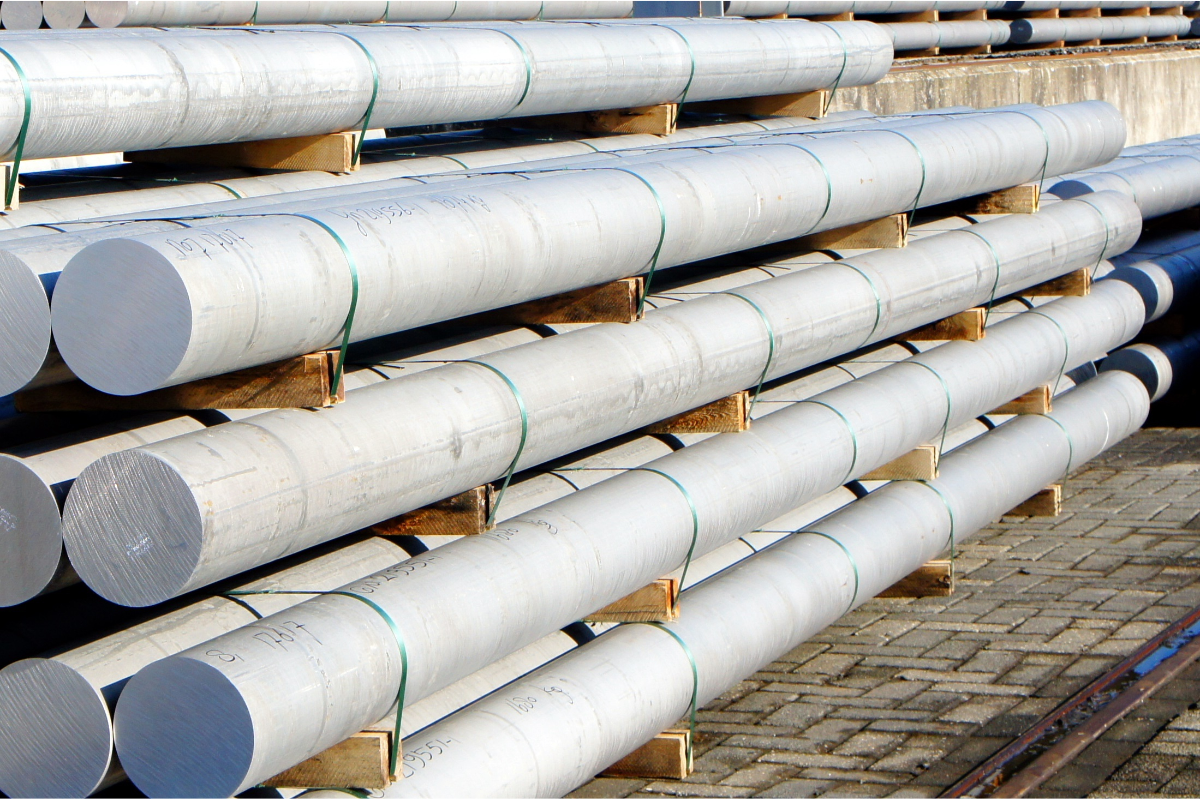
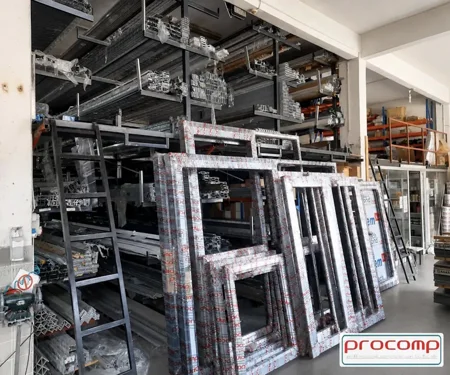
Stock image for referential purposes only
According to SMM statistics, aluminium billet inventories in China's major consumption areas stood at 126,000 tonnes on November 5, down 12,000 tonnes from last Thursday (October 29) and 5,000 tonnes from this Monday (November 2), marking the fourth consecutive weekly decline since the National Day holiday. Inventories are now about 15,000 tonnes below the same period in 2025, having fallen below last year's level. As for outflows, aluminium billet shipments totalled 52,000 tonnes between October 26 and November 1, down 4,000 tonnes from the previous week and declining for the second consecutive week. By region, Foshan accounted for the largest share of the stock reduction, with a drop of 9,000 tonnes. Huzhou and Wuxi saw moderate declines of 2,000 and 1,000 tonnes respectively, Changzhou fell slightly, and Nanchang remained unchanged. Notably, Wuxi ended its streak of consecutive stock increases and moved to a modest reduction. The continued stock reduction was driven by both supply and demand factors: on the demand side, outflows fell for the second consecutive week, with the decline widening and collection by intermediate customers slowing, although tight demand continued to absorb inventory; on the supply side, inflows slowed across all regions against a backdrop of weaker aluminium prices, with persistently low inflow volumes in Foshan and less stockpiling pressure in Wuxi, making tighter supply the main support for the stock reduction.
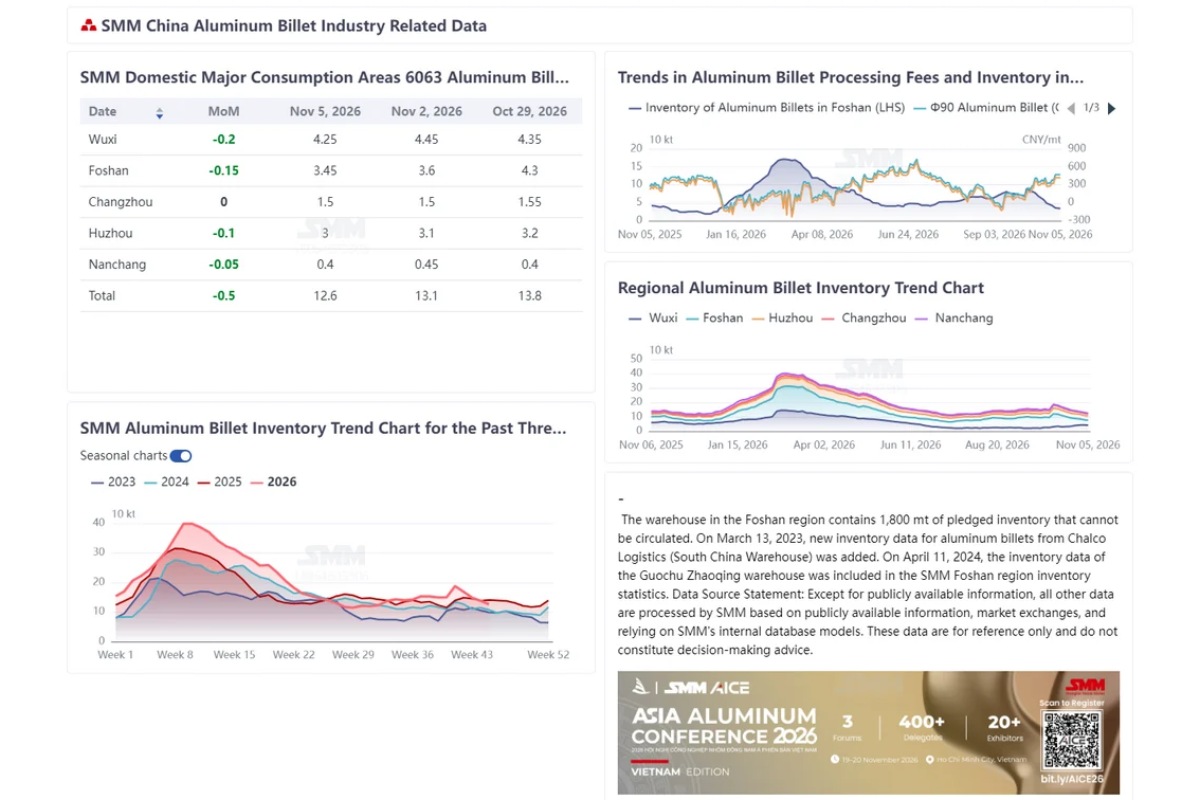
Image source: SMM
Aluminium prices fell in a volatile week: the spot price of SMM A00 aluminium dropped from RMB 23,740 per tonne last Thursday to RMB 23,380 per tonne this Thursday, a cumulative decline of about RMB 360 per tonne. Against this backdrop, processing fees rebounded across all regions. In Foshan, processing fees for φ90 billets were quoted at RMB 470 per tonne and for φ120 at RMB 420 per tonne, both up RMB 90 from last Thursday; in Wuxi, φ90 was quoted at RMB 470 per tonne and φ120 at RMB 320 per tonne, both up RMB 110. In Nanchang, φ90 reached RMB 630 per tonne and φ120 reached RMB 550 per tonne, both up RMB 230—the largest increase among the three regions. The increases were concentrated at the beginning of the week: on November 2, quotations in the three regions rose between 50 and RMB 180 per tonne in a single day, after which the upward trend slowed and prices began trading in a high range. The surge was due to two factors: first, lower aluminium prices reduced the absolute price of billets, reviving buying interest from intermediate customers and reinforcing producers' determination to maintain strong supply; second, the rapid reduction of stockpiles and slowing arrivals in Foshan and Wuxi tightened regional supply, supporting the higher prices. Processing rate trends next week will depend on aluminium price movements and the sustainability of restocking by intermediate buyers.
Note: This article has been issued by SMM and has been published by AL Circle with its original information without any modifications or edits to the core subject/data.
India's aluminium market gains momentum as demand reaches 1.735 million tonnes
Next articleChinalco International transfers 60% Jiuye Sanwei stake to Shenyang Institute
Grow with
AL Circle












_md.webp)
_md.webp)
_md.webp)