Netherlands export of Aluminium wires during 2018-20 demonstrates enterprising market

The COVID-19 outbreak disruption is weighing on the Netherlands' economy and the sovereign's fiscal position. GDP contracted 8.5% QoQ in Q2’20, after a 1.5% contraction in Q1’20. Although the economic fallout is historically very large, it is less severe than the euro zone-wide quarterly contraction of 12.1% and 3.6% in Q2’20 and Q1’20, respectively given the economy's flexibility and swift policy action.
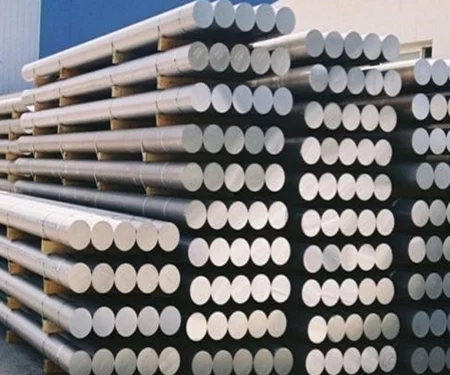
The northwestern European nation’s export of aluminium wires during 2018-19 was recorded at 106,430 tonnes and the revenue generated by the export accounted was $218.36 million. The export for 2020 is set to stand at 60,252 tonnes and the earning to remain at $116.20 million. However, when the 2020 export volume and earnings get assorted with the previous two years, it denotes 166,682 tonnes and $334.56 million respectively.
Netherlands export of aluminium wires in 2018 stood at 47,795 tonnes and the earnings remained at $99.69 million, whereas in 2019, the export volume rose to 58,635 tonnes, a growth by 22.68% and the earning climbed to $118.67 million.
The export for 2020 has been marked with growth by 2.75%, as the export volume to remain at 60,252 tonnes while earning to drop at $116.20 million.

The major trading destinations for Netherlands export of aluminium wires are Argentina, Armenia, Austria, Azerbaijan, Bahrain, Bosnia Herzegovina, Belarus, Belgium, Canada, Czech Rep., etc.
Aluminium bodied Black flirty hybrid train moves to Norway from Siedlce plant
Next articleDutch start-up Pyke rolls-out its hard seltzer in Aluminium cans
Grow with
AL Circle