NALCO and CSIR-NML collaborate on the first-ever scandium recovery initiative from red mud recycling
Advancing towards a sustainable future, CSIR-National Metallurgical Laboratory (CSIR-NML) has partnered with National Aluminium Company Ltd (NALCO) to upgrade its indigenously developed red mud recycling technology to a giant 10-tonne-per-day (TPD) pilot plant.
Explore- Most accurate data to drive business decisions with Outlook 2026 insights across the value chain
Stemming from the rising demand for scandium and the persistent need to rehabilitate red mud. The signed agreement would play a transformative role in sustainable aluminium production, enabling the extraction of alumina, iron, titania and scandium oxide from other critical minerals in bauxite residue and red mud.
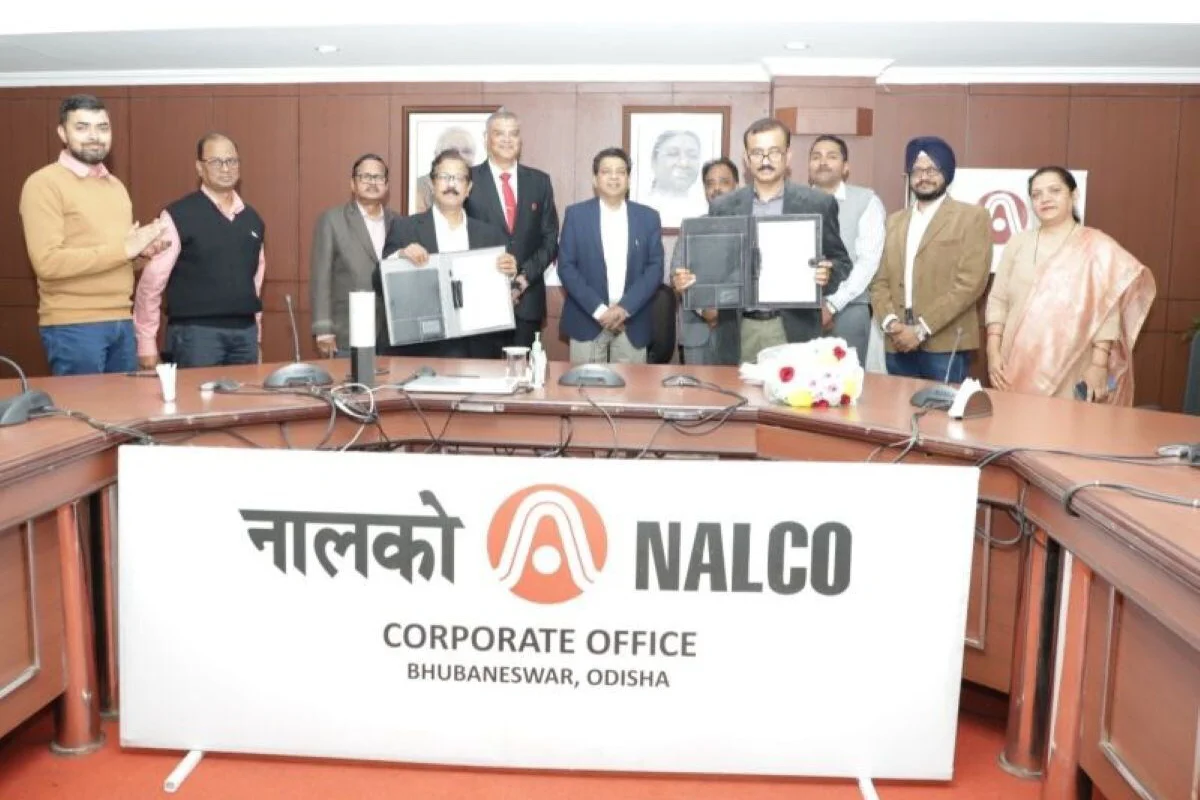
The agreement was signed on January 6, 2026, at the NALCO office in Bhubaneswar. Representatives present at the signing from NALCO B. P. Singh, Chairman and Managing Director, NALCO, along with Jagdish Arora, Technical Director, S.P. Mohapatra, Head and Vinod Verma, Manager of Research and Development. Officials from CSIR–NML included Dr S.K. Pal, Head of Business Development, accompanied by Dr Sanjay Kumar, Dr Pratima Meshram, Dr N.S. Randhawa, and Dr Abhilash.
Initially, NITI AAYOG was working on the development of the 200-kilogramme (0.22 tonnes) scale at the NML, whereby red mud was eyed as a scandium source.
As stated by NML in an earlier press release, “Worldwide, only 3 per cent weight from the 140 million tonnes of bauxite residue produced annually are utilised in cement and iron production.”
India produces over 5 million tonnes of red mud, which contains 45-70 parts per million (ppm) of scandium.
NML added that effective implementation of the CSIR-NML process would lead to recovery of alumina and iron, while simultaneously generating rare earth element (REE) concentrate, which is currently being considered the feedstock for scandium recovery.
Significantly, while holding high revenue, scandium serves multiple purposes, being used in fuel cells, aerospace, MIG aircraft, lasers, 3D printing, and garnets.
Such an initiative in India is the first of its kind, bearing great potential for NALCO to consider further progression in red mud rehabilitation to counter environmental challenges. Moreover, it would parallelly contribute to the REE (rare earth element) supply chain in India, locking its presence and importance in the global market.
It would additionally reinforce India’s efforts to realise a circular economy and strategic resource independence.
Must read: Key industry individuals share their thoughts on the trending topics

Guinea-led bauxite boom reinforces capesize freight prospects in 2026
Next articleGlobal bauxite production refused to blink in 2025, leading to an output exceeding 475 MT
Grow with
AL Circle