Mexico’s 50% tariff plan hits China, pressures India and draws US attention
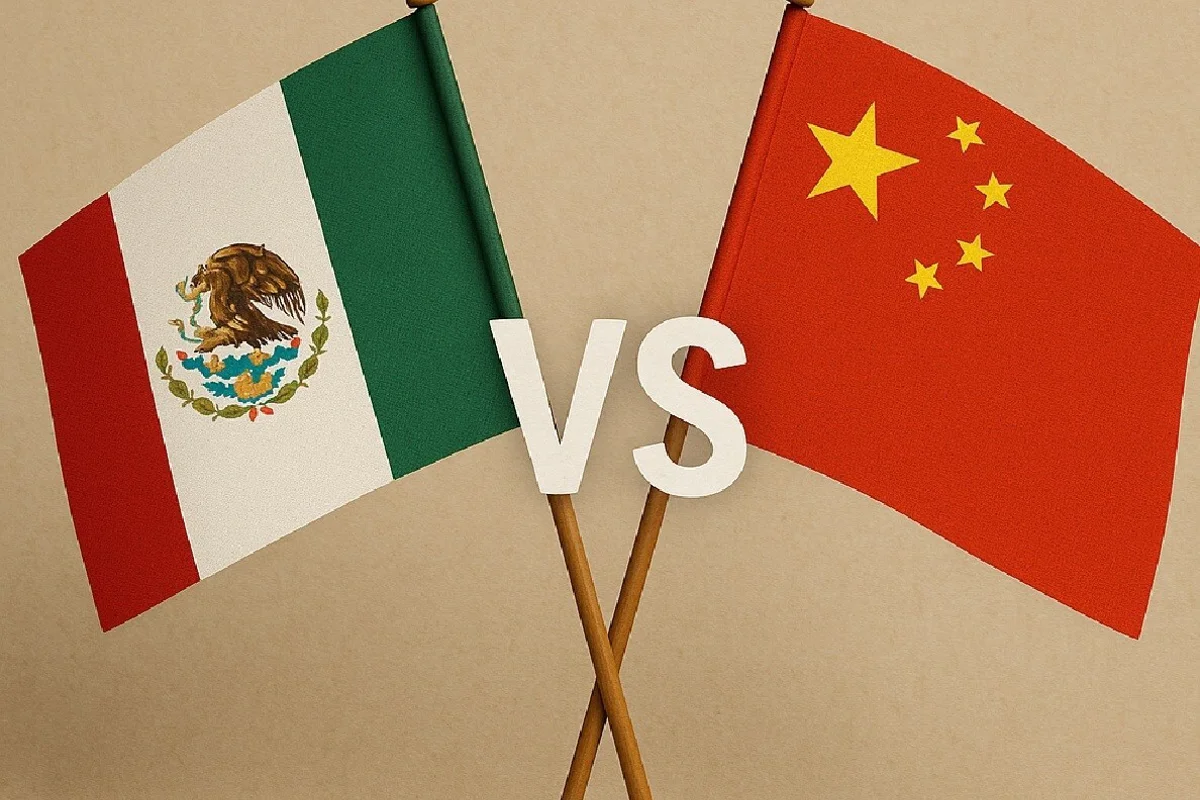
Mexico has approved a major tariff overhaul that will raise duties on imports from China and several other Asian countries by about 50 per cent targeting a broad range of goods from metals to automobiles. The Senate backed the decision on Wednesday, supporting President Claudia Sheinbaum’s plan to encourage local manufacturing. The measures, due to take effect on 1 January 2026, will affect products from China and several Asian economies including Thailand, India and Indonesia, the countries without a free trade agreement.
Lawmakers voted 76 in favour, five against and 35 abstentions, endorsing tariff increases of up to 50 per cent on imports such as autos, auto parts, clothing, plastics, textiles and steel. The proposal, earlier passed by the lower house, is a scaled-down version of a draft that stalled in the autumn, covering about 1,400 product lines, mostly in textiles, apparel, plastics, footwear and steel. Roughly two-thirds of the items face reduced duties compared with the earlier plan, though most will still see tariffs of up to 35 per cent.
Senator Emmanuel Reyes of the ruling Morena party defended the measure, saying, "These adjustments will boost Mexican products in global supply chains and protect jobs in key sectors." He added that it was "not merely a revenue-raising tool, but rather a means of guiding economic and trade policy in the interest of general welfare."
China criticises and warns of trade consequences
Beijing reacted sharply to Mexico’s decision. China’s Ministry of Commerce said it will examine the impact of the new tariff regime and cautioned that the move could “substantially undermine” the interests of its exporters. The ministry stated, "China has always opposed all forms of unilateral tariff increases and hopes Mexico will correct such unilateralist and protectionist practices as soon as possible."
Chinese officials also highlighted that the affected measures would "substantially harm the interests of trading partners, including China," while noting that an investigation into Mexico’s trade policy is underway. They urged Mexico to "correct" the decision as negotiations continue.
Meanwhile, China has been signalling broader ambitions in Latin America, aiming to expand its presence through deeper trade and innovation partnerships. Chinese automakers including BYD and MG have been increasing their footprint in Mexico, prompting US concerns that Mexico may serve as a manufacturing base to bypass American tariffs.
Pressure from Washington adds to Mexico’s trade challenges
The tariff changes come as Mexico navigates tense negotiations with the United States. President Donald Trump has threatened a series of import taxes, including 50 per cent duties on Mexican steel and aluminium, and a potential 25 per cent tariff tied to fentanyl-related enforcement demands.
Trump this week raised a fresh dispute, threatening a new 5 per cent tariff and accusing Mexico of violating an agreement that grants US farmers water access. "It is very unfair to our US Farmers who deserve this much needed water," he said on social media. The comment referred to an 80-year-old treaty governing water flows from Rio Grande tributaries, a point of contention for decades.
Washington’s broader push to limit China’s influence in Latin America continues to shape regional trade tensions, with Mexico positioned at the centre due to its supply-chain ties and role as China’s manufacturing alternative.
Indian exporters brace for impact as tariffs rise
India faces significant exposure under the new tariff regime. Mexican duties of up to 50 per cent are expected to hit about USD 1.8 in vehicle exports from major Indian manufacturers, including Volkswagen and Hyundai. Industry groups are lobbying the Indian government to address the issue, according to a letter and sources cited by Reuters.
India’s exports to Mexico also includes electrical and electronic equipment worth USD 612.38 million, machinery and boilers at USD 560.87 million, organic chemicals totaling USD 388.04 million, and aluminium valued at USD 386.03 million.
India’s wider exports to Mexico reached USD 5.63 billion in 2025, dominated by vehicles, underscoring the potential impact of Mexico’s revised tariff structure. This new tariff will create another difficult situation for India.

India: Domestic aluminium market sees weekly gains as global trends continue to support prices
Next articleMacro policy direction and low inventory support aluminium prices, potential trade friction risks limit upside room
Grow with
AL Circle