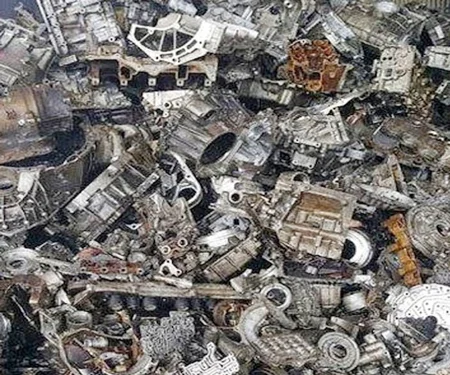
Malta’s export of aluminium scrap during 2019-21 reveals unstable movement; 31% growth estimated for 2022

The smallest economy in the eurozone, Malta demonstrates a free market economy, which is heavily dependent on trade in both goods and services, primarily with Europe. The Maltese economy is a highly industrialised, service-based economy. However, it is classified as an advanced economy by the IMF and is contemplated as a high-income nation by the World Bank and an innovation-steered economy by the World Economic Forum. The major industries that generate aluminium scrap other than used aluminium food packing are Advance Manufacturing, aviation, construction, etc.
The tenth smallest country in area, Malta exported 5423 tonnes of aluminium scrap during 2019-21, attracting $4.82 million from the export of scrap.
In 2019, the Maltese export of aluminium scrap was documented at 2287 tonnes, counting a revenue inflow of $2.23 million, whereas, in 2020, the aluminium scraps export revealed a slump by 40.35%, as the export volume dropped to 1364 tonnes, pulling down earnings to $0.99 million.

Malta’s export of aluminium scrap in 2021, illustrated a growth of 29.91%, as the export volume rose to 1772 tonnes, gearing revenue earnings to $1.6 million.
The scrap export for 2022 is evaluated with a further growth by 31.60%, as the export volume is pretended to stand at 2332 tonnes and the earnings to also incline at $2.04 million.

The major trading destinations for Malta’s export of aluminium scraps are France, Italy, India, Slovakia, Slovenia, Thailand, Turkey, the UK, etc.
Egyptian market welcomes Hydro CIRCAL, brand of recycled aluminium with highest recycling rate
Next articleUS export of aluminium scrap for January 2022 reflects M-o-M plunge by 81.95%
Grow with
AL Circle