"Little prospect of any near-term supply response" for aluminium raw materials: An analysis
So, aluminium prices are back again to the below US$2,100 per tonne mark. With demand remaining muted, this downtrend is unlikely to reverse in the near term. However, China monthly production figures (October production 2.55 million tonnes down by 2.3% YoY) suggest that aluminium supply from the country is shrinking and that will eventually drive up the prices what if not in the near term. But more than aluminium, it is the raw material prices that are grabbing attention of the analysts.
Renowned aluminium industry analyst and columnist with Reuters Andy Home recently looked into the key aluminium raw material price trends and how they are being impacted by China’s looming industrial capacity cuts. Both alumina and prebaked anode prices have jumped considerably.
“Carbon anode was already a ticking time bomb for aluminum smelters, but one over which they have little control.”
“The disruptive impact from alumina price volatility, by contrast, is to some extent a self-inflicted injury after a collective shift in pricing methodology,” Home noted.
Source: www.thomsonreuters.com
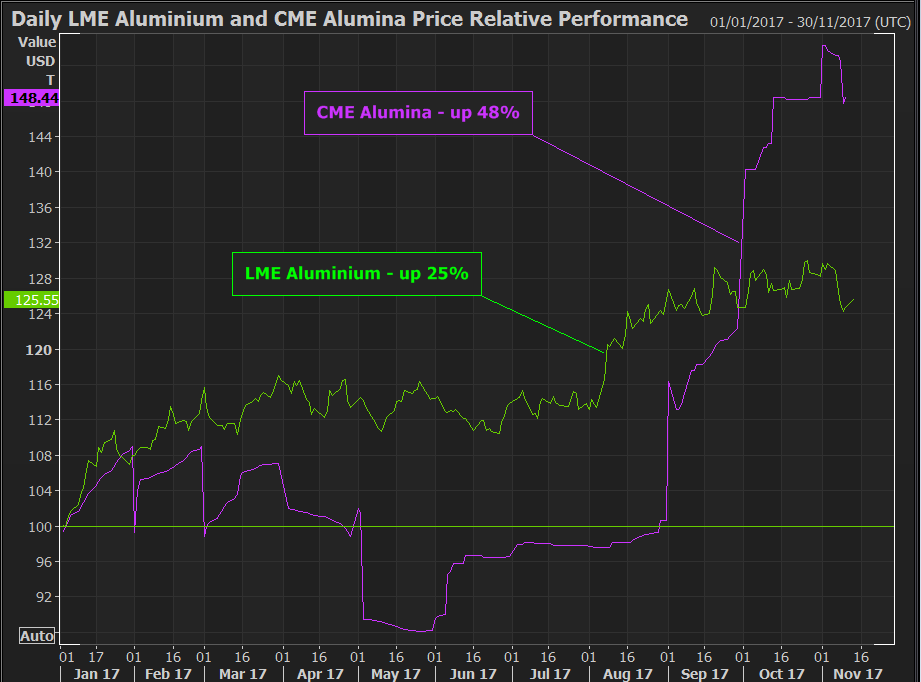
Alumina has jumped two-fold to about US$465 per tonne. It is also reacting to the potential for significant aluminium and upstream plant capacity closures in the most pollution-hit regions of China.
Until lately, alumina price volatility was not a big deal for aluminium smelters despite the mineral being one of their most important cost factors along with power. With the shift in its pricing methodology that natural hedge has gone now. Aluminium smelters have lost control over one of its key production costs.

Carbon anode market too has been tightening steadily for past few years, with analysts warning of a looming supply crunch since 2015. China, one of the world’s major producers of carbon anode, has been cutting exports in order to direct the raw material to meet rising domestic demand. “The world outside of China has been scrambling ever more desperately for replacement supply,” Home pointed out.
“There’s just not enough coke,” Robert Dickie, senior consultant at U.S. research house Harbor Aluminum Intelligence said.
A market rebalancing from the demand side will happen, but right now there is little prospect of any supply response. So, prices will keep surging making aluminium smelting costlier.
For a more in-depth analysis and outlook of the raw materials market, download AlCircle special report- Global Aluminium & Raw Material Market with Sectoral Focus on CPC, CTP, and Prebaked Anode (2016-2017) here.
A00 aluminium ingot price gains in China with the start of winter capacity cut programme; spot alumina drops across the market
Next articleLME aluminium inches higher, but will the bearish uptrend sustain?
Grow with
AL Circle






















