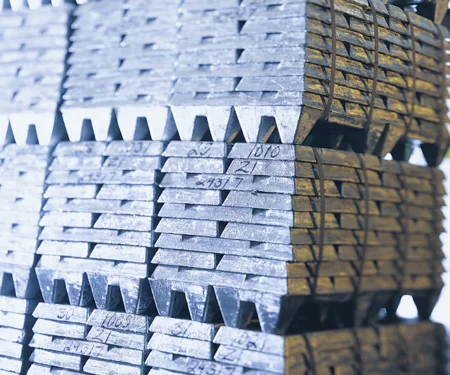
JNARDDC advances aluminium and metallurgical technologies to reduce India’s import dependence
Operating independently under the Ministry of Mines, the Jawaharlal Nehru Aluminium Research Development & Design Centre (JNARDDC) is initiating multiple initiatives for cutting down India’s reliance on imports for essential metallurgical technologies and quality infrastructure. These initiatives have been confirmed by the JNARDDC Director, Anupam Agnihotri.
The key focus for the institution has always been on the technology transfer. Agnihotri mentioned that this is because of the shared local expertise in areas like optimising smelter processes, utilising and recycling waste, recovering valuable products from industrial byproducts, developing specialised alloys and advancing metallurgical processes in the critical minerals sector.
In an online conversation with businessline, he added, historically, many advanced monitoring and control systems were imported for aluminium smelting. But the research centre took measures in creating its own indigenous cell monitoring systems, along with process instrumentation and diagnostic tools.
What makes these systems unique is that they are powered by AI and Machine Learning algorithms. This allows them to analyse real-time operational data, anticipate process deviations, minimise anode effects, optimise energy use and enhance metal recovery.
Assessing the influence of AI CRMS
Shifting from traditional monitoring to a more predictive, data-driven approach in process control marks a major leap forward for smart and self-sufficient aluminium manufacturing in the country. Apart from this, the development will enhance the national quality ecosystem through the creation of Aluminium Certified Reference Materials (Al CRMs), as affirmed by Agnihotri.
Previously, industries and testing labs were heavily reliant on imported CRMs for calibrating spectrometers and ensuring compositional accuracy. In the current scenario, with the research institute’s ISO 17034-accredited Al-CRMs, reducing the dependence on imports with assured reliable quality control right and boosted traceability and confidence in metallurgical testing across both primary and secondary aluminium sectors is deemed possible.
He further shed light upon the institute’s efforts in recovering scandium, gallium, nickel, niobium and tantalum from industrial waste and showed how to strategically source materials domestically from secondary streams. This not only strengthens our mineral security but also supports the principles of a circular economy.
To know more about the global primary aluminium industry 2026 outlook, read the report “Global ALuminium Industry Outlook 2026".
Effective sourcing of "strategic materials"
“Our interventions have quietly but steadily built India’s technological sovereignty in aluminium and critical mineral sectors,” he said.
In collaboration with UNDP, the research institute embarked on multiple national responsibilities in the realm of critical minerals since its inception, which can be traced back to 1989. These responsibilities may include running a science and technology agency called PRISM, backing innovative projects from startups and MSMEs and managing an incentive scheme to promote the recycling of critical minerals.
Additionally, the institute has served as the project management agency for pilot initiatives under NMEDT, helping to establish Centres of Excellence in collaboration with industry and supporting projects that can receive funding of up to INR 20 crore each.
Moreover, according to the institute's director, aluminium is increasingly recognised in the country as a vital resource playing a crucial role in the energy transition, infrastructure development and the growth of advanced manufacturing.
Don’t miss out- Buyers are looking for your products on our B2B platform
Rising demand from different sectors
Aluminium in the electric mobility ecosystem is used extensively in the body structures of electric vehicles, battery housings and lightweight components to boost energy efficiency and extend vehicle range. With the country increasing its domestic cell manufacturing and gigafactory capacities, there’s a growing demand for specialised aluminium products, like battery-grade foils.
Agnihotri pointed out that in the railways and transportation sectors, aluminium is becoming increasingly important in modern trainsets, metro coaches and freight systems, mainly for its features like lightweight and corrosion resistance.
Another rising sector is renewable energy, where aluminium is demanded in solar mounting structures, transmission systems and grid infrastructure. As the country moves closer to its non-fossil capacity goals, aluminium demand in power generation and transmission networks is also rising. New applications in green hydrogen systems, where specialised alloys are being investigated for use in electrolyser components and storage solutions, are also being developed.
In the defence and aerospace sectors, high-strength aluminium alloys are being utilised in mobility platforms, structural systems and space applications due to their impressive strength-to-weight ratio.
Must read: Key industry individuals share their thoughts on the trending topics
5G & data infrastructure shifting aluminium demand
Advancement of 5G and data infrastructure has led to a surge in the use of aluminium for heat dissipation systems and electronic housings. As per the institute's director, energy-efficient building envelopes and modern façades are increasingly relying on aluminium extrusions and composite panels. This rapid growth in AI and hyperscale data centres marks a significant shift in aluminium demand, moving beyond just a temporary increase.
AI-driven computing demands high-performance hardware, sophisticated cooling systems and extensive power infrastructure, making it heavily reliant on aluminium. One of the most notable effects is in thermal management, as high-density AI chips produce a lot of heat, making efficient cooling systems essential. Aluminium is a popular choice for heat sinks, cooling plates, housings and structural components because of its excellent thermal conductivity, lightweight nature and the ease with which it can be extruded into complex shapes.
Data centres, at the same time, need extensive grid connectivity, transformers, busbars, conductors, cable systems and backup power solutions. Here, aluminium creates an advantage in terms of weight-to-conductivity ratio and cost-effectiveness, making it an increasingly appealing option for large-scale electrical installations.
As India continues to develop its digital infrastructure, this trend is expected to sustain the demand for aluminium in the construction of transmission, distribution and server facilities.
Track the latest LME aluminium price seamlessly here
_0_0.png)
Indian aluminium stocks in focus as Qatalum halt sparks global supply concerns
Next articleBahrain aluminium hit by force majeure; LME aluminium prices reach a new high in 22 Years
Grow with
AL Circle