Italy’s aluminium scrap import to continue to see a growing trend this year
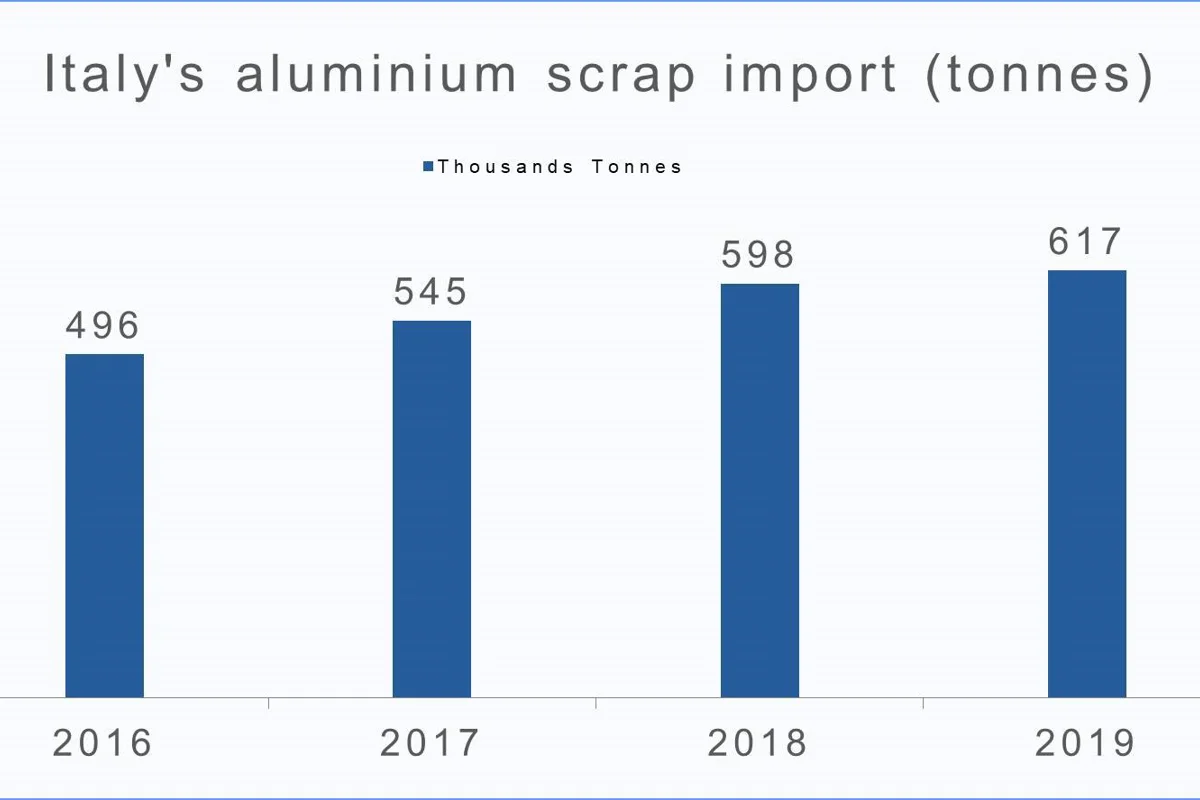
Our third-party data finds that aluminium scrap import by Italy is likely to continue to grow this year by 3.17 per cent from the previous year. In 2018, Italy’s estimated aluminium scrap import volume was at 598,353 tonnes, which in 2019 is expected to increase to 617,355 tonnes. The volume is estimated to grow in 2019, but slower than in 2018 as the growth in the latter year was up by 10 per cent year-on-year. The estimated import volume in 2017 was at 544,857 tonnes, which was again 10 per cent higher than 495,924 tonnes in 2016.
Thus, the above graph shows that aluminium scrap import by Italy has been growing year over year since 2016. After the United States, Japan, the People’s Republic of China, and Germany, Italy is emerging as the world’s largest user of aluminium. According to the data gathered and processed by Assomet and Centroal, 2017 was a year marked by growth for the Italian aluminium industry. The overall consumption of light metal in all its forms was beyond 2.1 million tonnes.
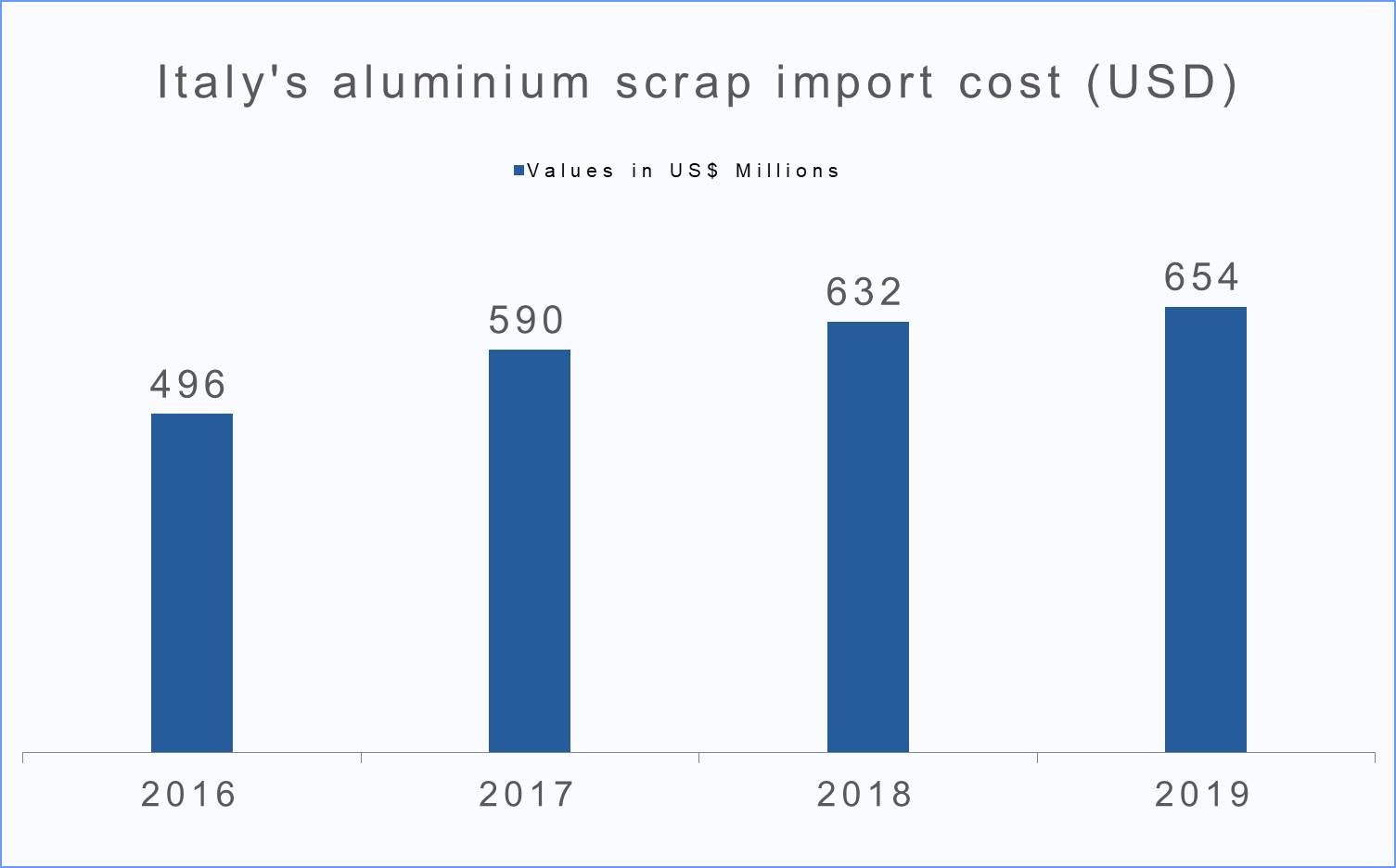
Italy’s aluminium scrap import cost is also estimated to rise in 2019, according to the available data. Compared with US$632 million in 2018, the cost this year is likely to increase to US$654 million, up 3.48 per cent. In 2017, the estimated import cost was at US$590 million after growing 19 per cent from US$496 million in 2016. These data indicate that Italy’s aluminium scrap import cost had grown 7 per cent year on year in 2018.
Some of the leading suppliers of aluminium scrap to Italy include Germany, France, Switzerland, Netherlands, Belgium, Slovakia, Poland and many more. In 2019, Italy is expected to import 165,642 tonnes from Germany at an estimated value of US$167 million. From France and Switzerland, the country would likely fetch 109,565 tonnes at US$111 million and 55,818 tonnes at US$57 million.

Nebraska Recycling Council shares recycling tips with Custer County residents
Next articleNovelis partners with 2019 Kentucky Derby for "Recycle for Good" campaign; to collect about 370,000 UBC
Grow with
AL Circle