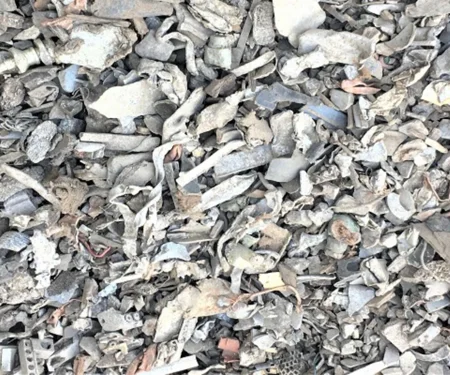
India's imported aluminium scrap prices decline amid limited activity and falling futures

The Indian imported scrap prices are witnessing a decline. It has been observed that the buyers and sellers were not actively participating in trading Indian imported scrap, resulting in lower transactions. In due course of time, the price of aluminium in futures has also decreased. This decrease in the price of future contracts may affect the current price of aluminium scrap.
Because of increased transactions and availability, commodities from the Middle East are in good supply, in demand, and cost-effective, making them a favoured alternative over those from the UK/EU. A variety of economic and commercial factors could influence this position.
The depreciation of the Indian rupee against the US dollar, with an exchange rate of 83.3 Indian rupees to 1 US dollar, has emerged as the principal catalyst behind the discernible trend of buyers submitting reduced bids in the market. This currency devaluation has significantly escalated transit charges, subsequently augmenting the overall cost burden for traders. The resulting economic landscape underscores the profound influence that exchange rate fluctuations can wield over international trade dynamics, impacting both buyers and sellers as they navigate the evolving financial terrain.
The sluggish sales of finished materials within the market have inflicted adverse consequences upon alloy manufacturers. As a direct consequence of diminished demand for these materials, these manufacturers find themselves confronted with a notable reduction in the volume of orders placed. This resultant decline in order flow carries the potential to significantly impact their business operations and production capacities, underlining the intricate interplay between market dynamics and manufacturing sectors, thereby warranting strategic adaptation and response.
In the western region, the aluminium Zorba grade scrap market exhibits notable price disparities among multiple sellers. The variation is around $30-40 per tonne. This price variation has resulted in buyer caution, as the wide range of prices offered by different sellers creates uncertainty regarding the most advantageous offer.
The market exhibits price instability, marked by substantial gaps between buyer bids and seller offers. Sellers exercise caution when it comes to selling significant quantities of their goods, given the market's volatile nature and the ongoing trend of declining prices.
Additionally, due to the market's low sales of ADC12, demand for imported silicon 553 continues to be limited.
In comparison to the previous day's closing statistics, India's aluminium scrap market showed steadiness. Tense scrap was priced at INR 156,000 per metric ton ex-Delhi (without GST), while utensil scrap was offered at INR 17,4000 per tonne. Market participants have expressed concern about a finance shortfall, while local demand has slowed, prompting providers to keep their current pricing temporarily. Market participants are closely monitoring the pricing changes implemented by main industry players. Meanwhile, LME aluminium futures have fallen by 0.55 per cent to settle at $2,168 per tonne at the time of posting. This confluence of events highlights the intricate dynamics now driving the aluminium scrap market.
Recent CIF (wc of India) transactions
- Approximately 50 tonnes of Taint Tabor (TT) HRB, with 2 per cent from Singapore, were purchased for $1,740 per tonne CIF West Coast.
- Approximately 500 tonnes of UK-origin aluminium TT C/S was sold at $1,550 per tonne CIF West Coast.
- A container of Tense mix 5-6% from the United States was traded at $1,560 per tonne CIF Mundra.
- Approximately 100 tonnes of UAE TT were sold for $1,865 per tonne CIF West Coast.
- Around 80 tonnes of Trump of Saudi origin with 8-10% attachment were sold at $1,725 per tonne CIF Busan.
- A container of Middle Eastern TT with 2 per cent was exchanged at $1,860 per tonne CIF Mundra.
- Approximately 20 tonnes of Malaysia-origin discussion trash was traded at $4,275 per tonne CIF Mundra.
Celebrating creativity and dedication with aluminium cans at the 18th annual RIFA Canstruction event
Next articleGME Recycling launched MAX 1700 Hammer Mill for aluminium and other non-ferrous metal reprocessing
Grow with
AL Circle