Iceland aluminium export grows 11 per cent in H1 2018
Aluminium smelting is the most important power-intensive industry in Iceland. Rio Tinto Alcan operates Iceland’s first aluminium smelter (ISAL) while Century Aluminium Company operates the second plant. United States-based aluminium manufacturer Alcoa also runs another plant near the town of Reyðarfjörður. With these three major smelting companies present in Iceland, aluminium is one of the main materials exported by the country, which reportedly drives its economy as well.
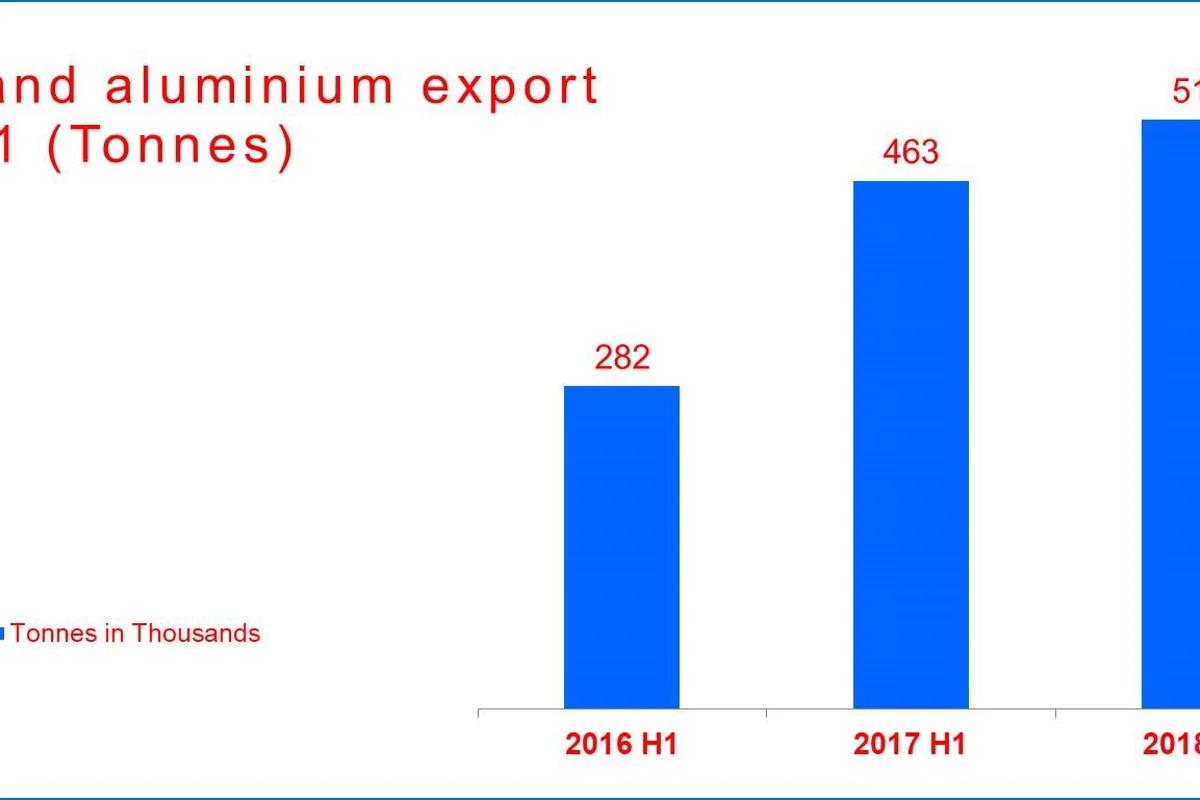
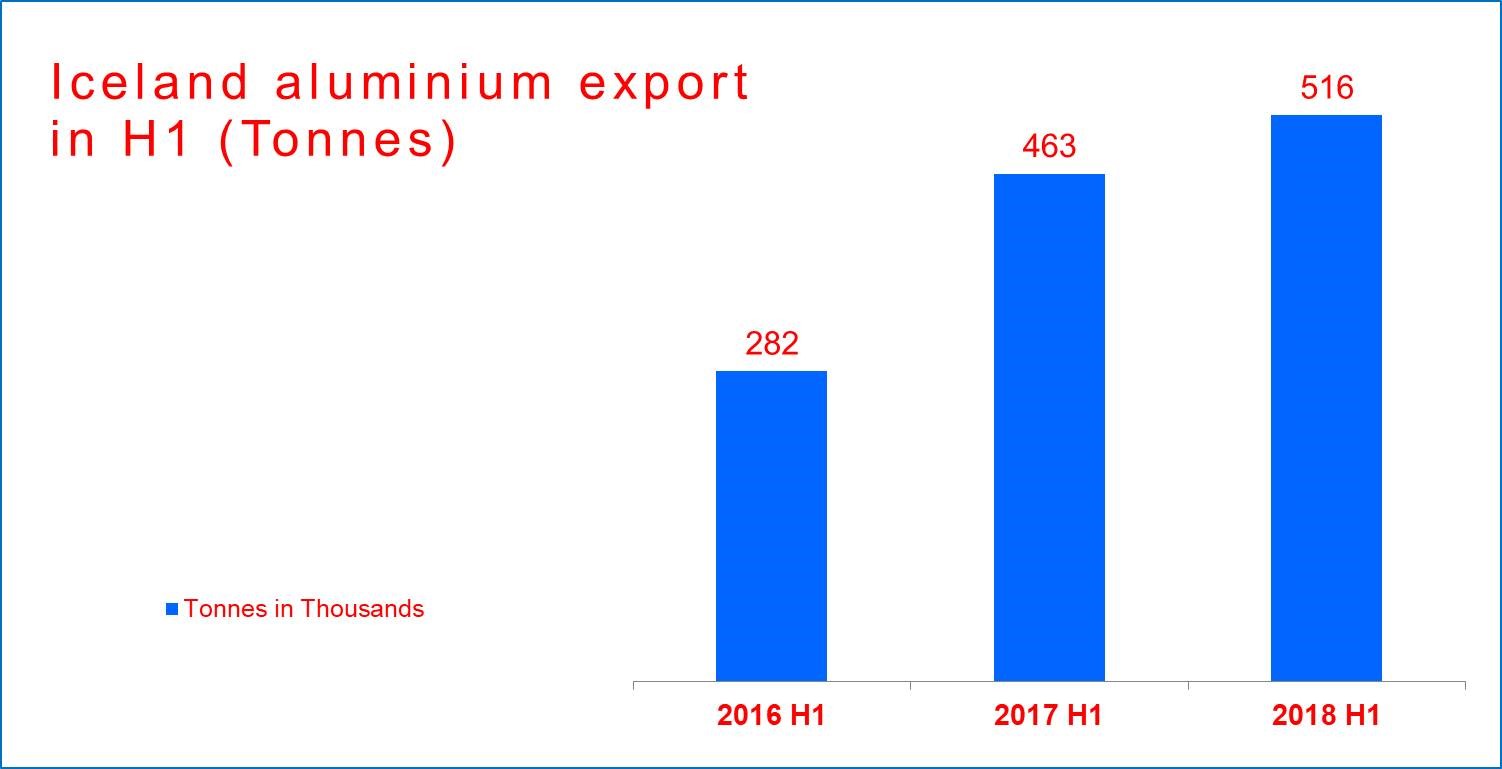
According to the global export-import data, Iceland’s aluminium (both alloyed and non-alloyed) export is seeing a year-on-year rise. In the first half of 2016, Iceland had exported 282,694 tonnes, which in the same period next year rose to 463,000 tonnes. This means the country witnessed a rise in aluminium export by 63 per cent in H1 2017. In the first half of 2018, Iceland’s aluminium export grew further to 516,408 tonnes, up 11 per cent from H1 2017 and 83 per cent from H1 2016.
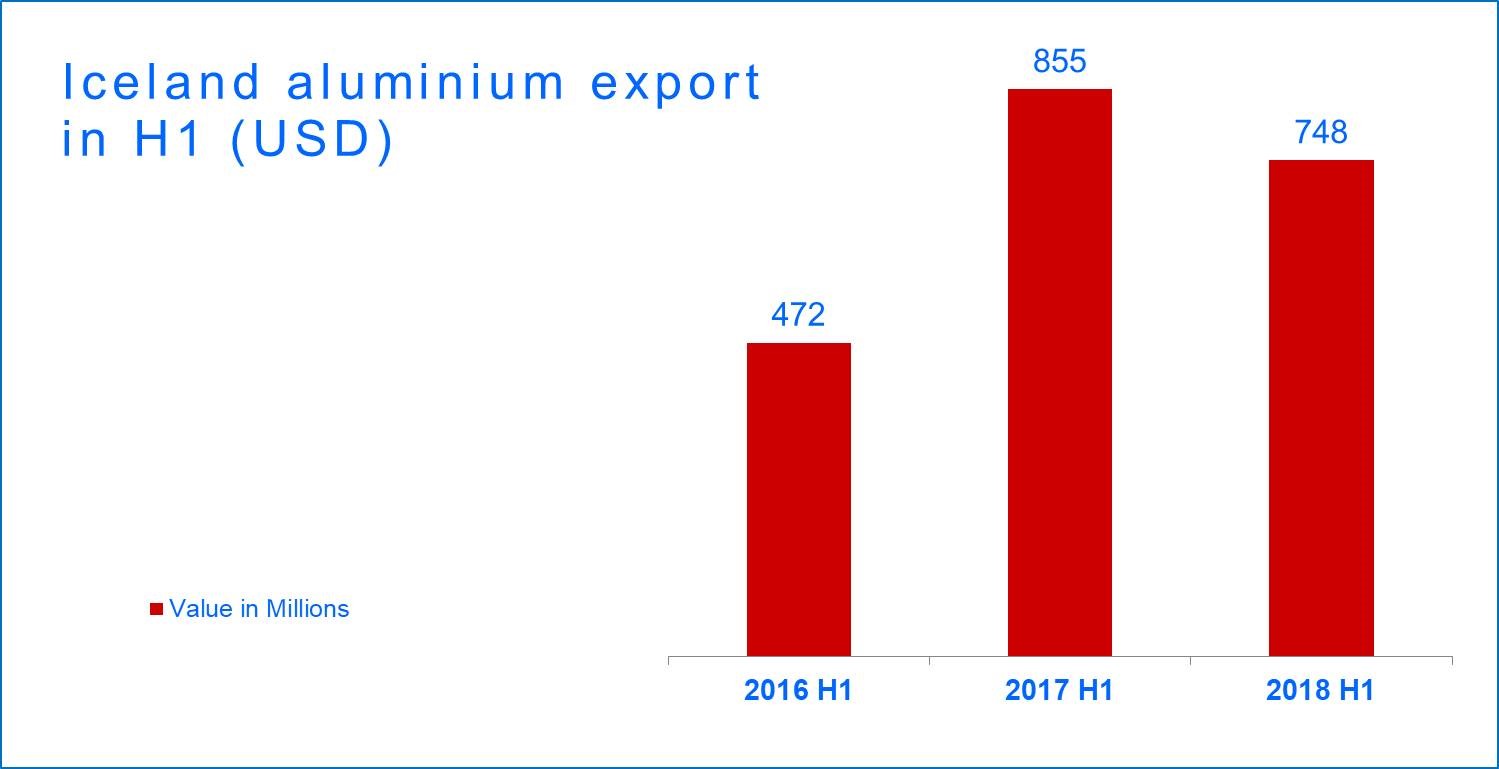
But despite a growth in volume in H1 2018, the revenue stood lower compared to the contemporary period last year. In H1 2017, Iceland’s revenue from aluminium export was at US$ 855 million, which in the successive year dropped by around 13 per cent to US$ 748 million. Nevertheless, the revenue in H1 2018 stood higher by 58 per cent than US$ 472 million in H1 2016.
For the entire year 2018, Iceland’s aluminium export volume is estimated to be at 1 million tonne and the revenue to be at US$ 1515 million. Netherlands is expected to source a maximum amount of aluminium of around 757,808 tonnes from Iceland, followed by Germany 128,726 tonnes in 2018.

LME aluminium recovered some losses at Friday night on a lower US dollar; SHFE followed the trend
Next articleRusal’s Q3 revenue rises 18.6%YoY; aluminium production stands at 2.8 million tonnes
Grow with
AL Circle


