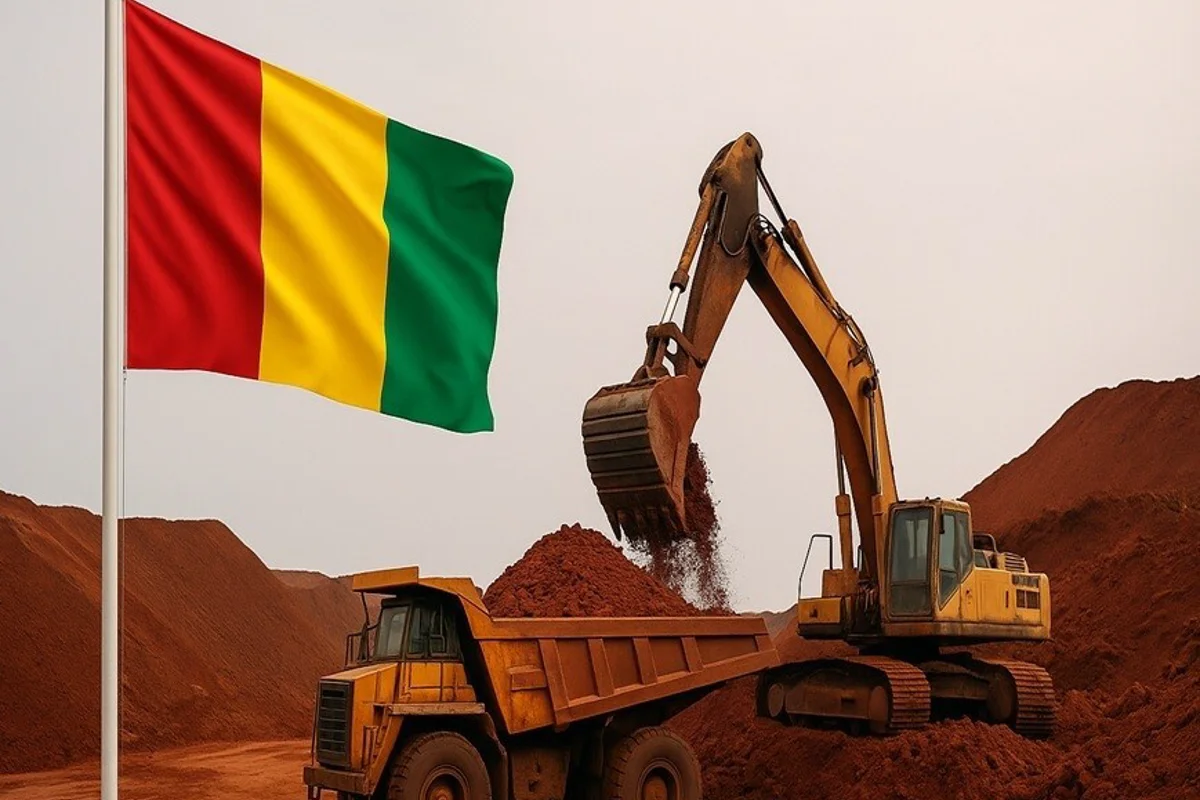
Guinea is tightening its grip on the global bauxite trade, shipping record volumes even as its own alumina refining sector lags far behind.
According to sources, Guinea mined about 123 million tonnes of bauxite in 2023, up from 103 million tonnes the year before. Exports grew even faster, jumping to 127 million tonnes—a year-on-year rise of nearly 25 per cent.
The momentum carried into 2024. Output rose to roughly 141 million tonnes, while exports reached 145 million tonnes, cementing the West African nation’s place as the world’s largest exporter. The surge has continued this year. In just the first half of 2025, Guinea shipped 99.8 million tonnes, almost as much as its entire 2022 total.
For a broader view of the global bauxite market click: A Comprehensive Analysis of Bauxite Residue - Red Mud
Refining still limited, projects underway
For all its strength in raw bauxite, Guinea remains weak in turning ore into alumina. That gap is now attracting major investment. In Boffa, China’s State Power Investment Corporation (SPIC) is building what will be the country’s largest refinery, designed to produce 1.2 million tonnes a year by 2027 and backed by a 250 MW power station.
Other projects are also in the pipeline. A refinery in Boké, backed by SMB and ALTEO, is targeting 1 million tonnes annually. Guinea Alumina Corporation (GAC) and Chalco are developing a plant geared to specialty alumina used in batteries and electronics.
Meanwhile, Nigeria’s NOSFL has announced a USD 3 billion project that aims to produce 2 million tonnes a year, with further expansion planned over five years.
Together these ventures promise to lift Guinea’s refining output, but the additions will still represent only a fraction of the country’s massive bauxite production.
Why the focus remains on exports?
Analysts say Guinea’s export-first strategy is rooted in practical and economic realities. The country produced over 140 million tonnes of bauxite in 2024, but has nowhere near the refining capacity to process it. China, by contrast, has the plants and the demand. Roughly 80 per cent of Guinea’s H1 2025 shipments close to 80 million tonnes went straight to China’s smelters.
Infrastructure also plays a role. Guinea has invested heavily in export corridors, with ports like Kamsar and Boké optimised for bulk ore loading. Refining locally would require huge capital spending and cheap energy, both of which remain in short supply. Exporting ore brings immediate state revenues, while refinery projects are left to develop gradually.
To keep shipments flowing, Guinea maintains stockpiles at mine sites and ports. This buffer allows exporters to meet contracts even when weather, transport or global demand fluctuations intervene.
Industry projections suggest Guinea could export as much as 199 million tonnes of bauxite in 2025, up sharply from 146 million tonnes last year. Expanded port facilities at Kamsar, Boké, Dapilon and Katougouma are expected to handle the extra load. With Chinese demand showing no sign of slowing, Guinea looks set to tighten its hold on the global supply chain.
For now, Guinea’s economy leans heavily on shipping raw ore. Alumina projects are advancing, but the scale is modest compared to exports. That leaves Guinea in a familiar position: the backbone of the global aluminium industry, while much of the value-added processing happens abroad.












_md.webp)