Google’s big merger plan with Aluminium OS at the forefront
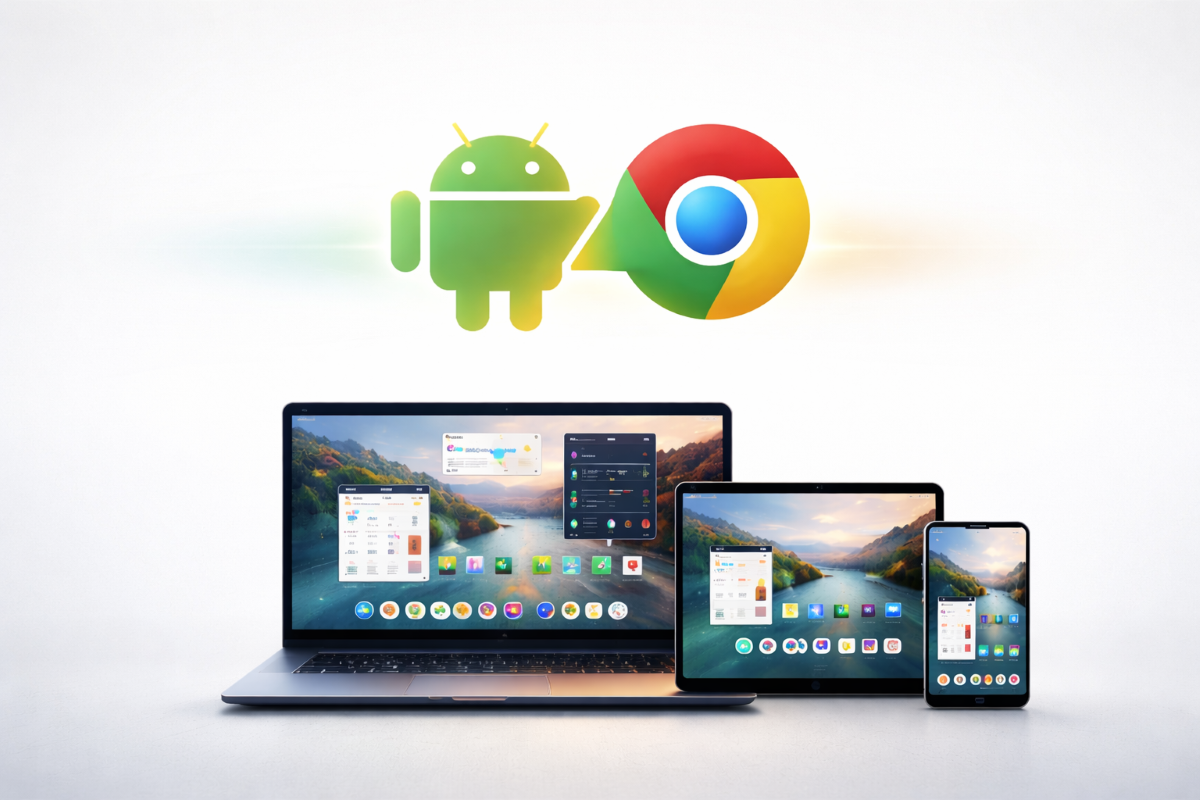
After years of trailing in the PC market, Google is gearing up for a grand comeback with the brand-new Android-based operating system. Rumoured to be named Aluminium OS, it is the outcome of merging its two platforms - Android OS and Chromebooks. Aluminium, which is used in the physical casting for many of Google’s devices, is now being incorporated into the internal codename for its next-gen OS. Not giving up to Microsoft and Apple dominance, Google is optimistic about the new OS, reportedly expected to launch in a few months, in 2026.
Explore- Most accurate data to drive business decisions with 50+ reports across the value chain
Despite the dominance of Android OS in the smartphone sector, Google has lagged in the PC race, stuck in the 3rd position under Windows OS in the 1st position and macOS in the 2nd. ChromeOS had seen a momentary sales hike, to be soon overshadowed by Microsoft.
Android OS to merge with ChromeOS
Earlier in 2025, a Google executive mentioned for the first time the company’s plans to merge the two platforms. Open discussions were held on the improvement of interoperability between ChromeOS and Android at Google I/O 2025.
Google confirmed the merger rumour at Qualcomm’s Snapdragon Summit at Hawaii, in September, 2025. Rick Osterloh, hardware chief of Google, confirmed Google’s collaboration with Qualcomm, and described this venture as “bringing Android to the PC market.” He indicated focusing on designing a shared technical foundation for PCs and desktops, bringing in the company’s AI stack, comprising the Assistant, Gemini prototypes, developer ecosystem and the apps. As he specified Android on one end of the merge, it can be conjectured that the OS will be Android at heart. “We’re really excited about this, and I think this is another way Android is going to be able to serve everyone in every computing category,” Osterloh added.
Qualcomm CEO Cristiano Amon applauded the initiative, commenting, “I’ve seen it. It’s incredible. I think it delivers on the vision of convergence between mobile and PC.”
What else is new?
Much is not yet known about the Aluminium OS. However, a recent leak of job listing for a “senior product manager in Android, laptops, and tablets” divulged interesting speculations like Google may be readying a wide range of Aluminium OS-powered form factors and devices such as detachables, tablets, laptops and boxes, which are probably mini-PCs. Three main three product tiers have been specified as “AL Entry,” “AL Premium” and “AL Mass Premium.” Moreover, aluminium was directly mentioned on the listing as “Android-based” and focused on “premium devices and experiences.”
Therefore, upcoming Aluminium OS devices are likely to include high-end models that will enter the market with multiple price points like smartphones. That marks a start distinction of this project from Chromebooks, which have always fixed a particular budget.
ChromeOS to continue
It has been made clear beforehand that ChromeOS will not disappear but co-exist. Sameer Samat, Android chief, said at the Qualcomm Snapdragon Summit that “If you think about the laptop form factor, we’ve had ChromeOS for a long time, and we’re super committed to that platform, and it’s been really successful for us.” He also mentioned that while its experience will persist, the underlying tech of ChromeOS will be revamped to Android. This will further enable Chromebooks to run alongside Aluminium OS-powered devices.
Uncertainties loom large
A loaded question emerges that since both platforms are to be merged but ChromeOS will still run independently, what are the key characteristics that would differentiate the Aluminium OS from Chrome OS? It remains unclear whether the OS will be similar to iPadOS or if the interface will resemble those of Windows or macOS.
Google has confirmed Aluminium OS to be “built with artificial intelligence at the core.” While Gemini, Google’s AI assistant, can efficiently deliver a smooth user experience, the traditional desktop approach needs to be maintained. At the same time, learning from and countering market competitiveness from Apple is also essential, as Apple is continually introducing new features from macOS to iPadOS like adding accurate windowing so iPadOS has a similar approach as macOS. These customisations, however, are being made with no plan of merging the two.
The experimental Gemini-powered Disco browser offers a glance at the Aluminium OS. It converts tabs into "GenTabs" that are interactive, proactive web apps built via prompts. It suggests an intelligent OS that understands the user and reimagines features like Virtual Desks beyond basic Android applications.
Aluminium OS is an outcome of the Android-ChromeOS merger, to emerge as an opponent of iPad and Mac, with a 2026 launch expected at Google I/O in May, fuelling high curiosity as an AI-ready desktop platform.
Must read: Key industry individuals share their thoughts on the trending topics

Ola Electric shares extend losses as founder offloads ₹234 crore worth stock
Next articleUS and Taiwan lock ‘arms’ agreement while China condemns and forewarns
Grow with
AL Circle