From the skies above, NASA is uncovering the minerals behind next-gen technologies

NASA has launched a state-of-the-art high-tech sensor, which is being used to hunt critical minerals throughout the American West. This sensor technology, called AVIRIS-5 (Airborne Visible/Infrared Imaging Spectrometer-5), is built on technology created by NASA’s Jet Propulsion Laboratory (JPL), which was first developed in the 1970s.
AVIRIS-5, whose size is about the size of a microwave, is nestled in the nose of one of NASA’s ER-2 high-altitude research aircraft. The sensor made its debut in 1986 and JPL has been working ever since to make improvements.
The sensor is one of NASA's and the US Geological Survey (USGS) joint research projects, making it one of the latest tools being used in GEMx. This project focused on searching the surfaces for critical mineral traces, which are a central element for making consumer electronics and military technology.
The GEMx is still an ongoing project. The less number of trees present in deserts makes it a feasible location to conduct mineral spectroscopy. Since 2023, both the partners of the project have successfully covered over 366 thousand square miles (or 950 thousand square kilometers) throughout the vast American West.
Various minerals that the GEMx project is trying to discover are poised with "unique chemical structures" that reflect multiple wavelengths of light. By detecting this reflected light, the sensor can uncover the "spectral fingerprints" which are specific to the critical minerals.
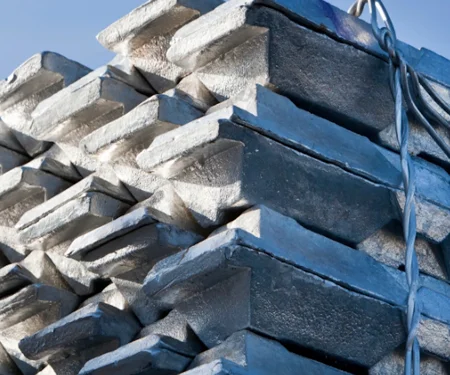
USGS describes critical minerals as holding "significant consequences for the economic or national security of the US". This group includes essential materials like aluminium, lithium, zinc, graphite, tungsten and titanium, all critical for manufacturing supply chains for technologies like semiconductors, solar energy systems and electric vehicle batteries.
In March 2025, the White House rolled out an Executive Order that focused on ramping up the production of these essential minerals "to the maximum possible extent". This was being conducted under the pressure of the American national and economic security being "now acutely threatened by our reliance upon hostile foreign powers' mineral production".
Beyond only hunting for the critical minerals, spectrometers, alike the sensor, have been crafted all these years by NASA’s Jet Propulsion Laboratory (JPL) and have also found their way onto various spacecraft. These remarkable instruments have allowed NASA scientists to enhance their knowledge of the planets in our solar system, including Mars, Mercury and even Pluto.
Explore- Most accurate data to drive business decisions with 50+ reports across the value chain.
_0_0.png)
Beijing keeps rare earths tight despite Trump deal, reviving US supply concerns
Next articleIndia accelerates rare earth magnet manufacturing under new incentive scheme
Grow with
AL Circle