Ford eyes an eyes-off driving tech, aims for $30,000 EV in 2028
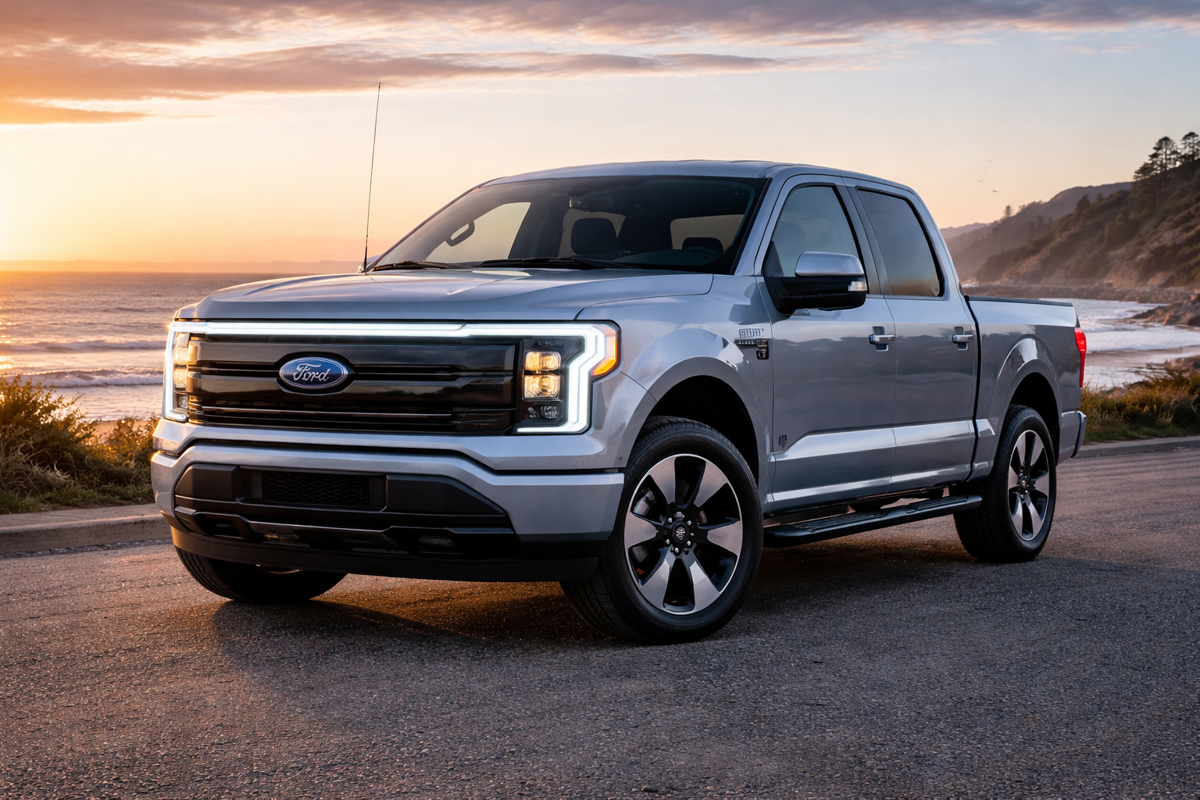
Ford Motor has declared its latest target of an eyes-off driving technology, to be implemented in a USD 30,000 EV in 2028. This announcement, made on January 7, has rendered the Michigan-based automaker a worthy contender with other EV automakers such as Tesla, Rivian Automotive, and General Motors. However, unlike the traditional rollout methods in the automotive sector, Ford would first introduce the technology in a mainstream, affordable EV instead of introducing it in a more exclusive and expensive model.
Explore- Most accurate data to drive business decisions with Outlook 2026 insights across the value chain
The announcement was made by Doug Field, Chief EV, Digital and Design Officer, at the CES technology show in Las Vegas, with other initiatives like a new vehicle software architecture and a Ford-designed AI assistant.
He stated, “It’s part of what has evolved to be a broader technology strategy of putting our best and newest technology where the volume is and where the accessibility is.”
Universal EV platform
The vehicle to first feature this new technology is expected to be designed on a next-gen “Universal EV platform”, with the earliest model expected to be a USD 30,000 midsize electric pickup truck launching in 2027. Easing manufacturing complexities, they would have 20 per cent fewer parts, in contrast to a typical vehicle. Fasteners would be fewer by 25 per cent, workstations by 40 per cent in the plant, and assembly time would be 15 per cent faster.
Field confirmed the first EV with the eyes-off mechanism would come at the starting price of the UEV platform.
The skunkworks endeavour
Learning from past slips worth billions of dollars while juggling EV shift, quality, and production concerns, Ford has to tread carefully with the UEV platform rollout, accompanied by its new technologies. After scaling back EV truck and SUV ambitions, the company shifted focus to affordable models developed by a “skunkworks” team responsible for the UEV platform.
According to Field, the skunkworks effort is a calculated “bet”, starting to pay off fairly recently. He added that Ford now has an extensive critical hardware and software setup in-house to move faster and enable its vehicles to stand out.
Ford announced an estimated investment of 5 billion in U.S. plants for vehicle and battery production and expects USD 19.5 billion in restructuring-related charges through 2027.
The eyes-off driving technology
SAE International described the eyes-off driving mechanism as “Level 3 driving automation”, superseding Ford’s current Level 2 BlueCruise system. While Level 2 demands constant driver attention, Level 3 allows drivers to take their eyes off the road as and when required.
The rollout plan is being prioritised with a focus on commoditising the technology, using in-house software and sensors to lower costs. Expansion to other models, however, may be a gradual process and guided by customer needs and vehicle readiness.
The AI assistant
Simultaneously, Ford is launching a new AI assistant to initially debut in early 2026 via Ford and Lincoln mobile apps and later in 2027 as an in-vehicle feature. It would use each vehicle’s unique identification data to offer vehicle-specific capabilities like assessing towing compatibility from a photo or estimating cargo capacity.
Field stated, “The AI companion is something we think we can make special for Ford, representative of what we’re trying to do on the customer experience side.”
An updated in-house software called the “integrated digital platform”, acting as a unified “brain”, is backing this. It combines infotainment, ADAS, audio, and networking into a single powerful module. According to Field, this architecture would deliver vehicles that feel “more consistent, more reliable, and more capable year after year,” and reinforce Ford’s push to pair affordability with advanced technology in its next generation of electric vehicles.
Must read: Key industry individuals share their thoughts on the trending topics

Yamaha launched a 350W electric cycle
Next articleRPM expands building envelope portfolio with Kalzip acquisition
Grow with
AL Circle