EV anticipation for ’26: Who’s accelerating and who’s hitting the brake?
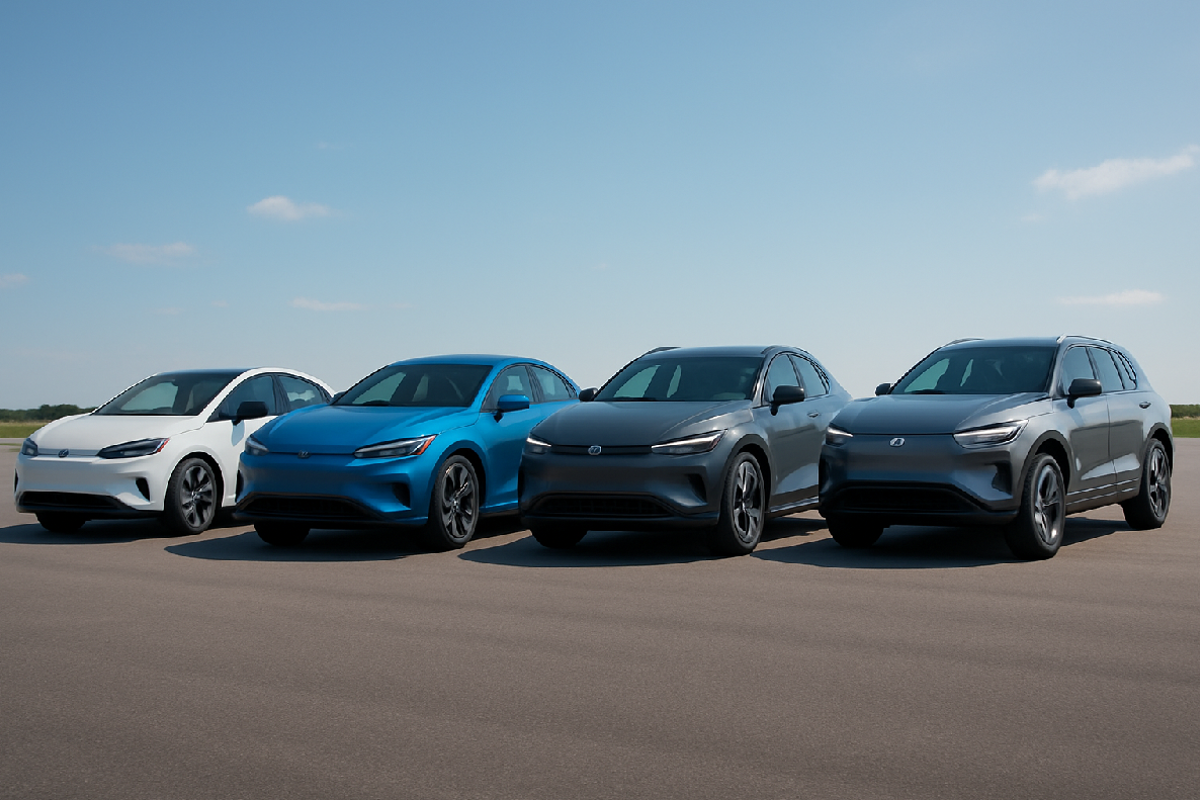
The farewell of 2025 and the fast-approaching 2026 drive home with it the anticipation for a global revolution of electric vehicles (EVs). The most influential manufacturers gear up for the revving launch of the next-gen, advanced, hi-tech, battery-electric models, while circumstantial roadblocks lead to the withdrawal of several EV names from the ’26 launch plan.
Image for representational purpose only
Explore- Most accurate data to drive business decisions with 50+ reports across the value chain
Dropping out of the race
Although these models showcased promising characteristics for a sunny joyride, the market circumstances or lack of federal and state incentives put a raincheck on the debut dates. Big brands like Nissan, Mercedes, Polestar, Porsche and Maserati hit the brakes and stay back from the launch race.
Nissan Ariya
The stylish model arrived in 2022 with a fresh look and design for the EV. However, the US sales of the car will remain paused for 2026 due to its uncertain future. Although it features a 289-mile claimed range with a polished driving experience with worthwhile initial sales figures, Ariya’s four-year run failed to make a long-lasting impact. The rising US tariffs on Japanese-built vehicles, reduced demand for EV and stiff competition with the Chinese EV manufacturers are some of the major reasons for the model’s exit.
Mercedes-Benz: EQB, EQE and EQS
Mercedes-Benz EQB entry level SUV entered the US market in 2022 and is already going to opt out of the game. The main factors behind its cold reception are probably low sales, slow charging speed, limited range and ageing underpinnings. Hence, Mercedes will not be adding this model to the 2026 EV lineup.
Moreover, it has been confirmed that the EV flagship duo of EQE and EQS sedans will not be returning in 2026, the US market already putting an end to the production of the same. They were unable to make the benchmarks that Mercedes-Benz had set for them. The traditional Mercedes customers were not appealed to the jellybean design of these models. The apparently catchy Hyperscreen seemed like a gimmick rather than a true selling point. The badge strategy too was a point of confusion to the buyers. Accompanied with a similar icy attitude as exhibited towards the Mercedes-Benz EQB as well as the steep tariffs on imported automotives, the journey of the EV line comes to an end.
Polestar 2
Despite being a capable and efficient sedan, Polestar 2 is compelled to make an exit from the US market due to its steep tariff conditions. Since its launch in 2020, it has been a worthy contender of Tesla Model 3, improving its features along the way. These include last year’s upgrade of a bigger battery, faster charging timespan, 320-mile range and a rear-drive layout. However, being a Chinese-built product, it is falling under massive burdens of tariffs, which makes competitive pricing an impossibility and ultimately resulting in its departure from the market.
Porsche ‘K1’
Porsche’s new flagship SUV was expected to debut in 2026 or 2027 and be positioned above the Porsche Cayenne Electric that features the latest EV technology. But unfortunately, although Cayenne will be unveiled in 2026, the debut electric version of the three-row flagship SUV codenamed K1, has been postponed indefinitely. Despite Porsche’s promise of releasing its internal combustion and plug-in hybrid versions in the near future, the unexpected withdrawal of K1 sets a damper on the 2026 EV lineup.
Maserati MC20 Folgore
Maserati had set an ambitious goal with the project of MC20 Folgore supercar. Although initially scheduled to debut along with marque’s Folgore line of performance EVs, after reconsidering market preference for internal combustion engines, Maserati has halted the electrification of its supercar before it could reach production. After updating it earlier this year, MC20 continues to be powered by the existing 3.0-liter twin-turbo V6. Instead of being electrified, it will keep running on this engine for the time being.
Don't miss out- Buyers are looking for your products on our B2B platform
Feeling deflated? Do not despair! A fresh set of EVs is waiting to pull into the lineup, prepared to make a dazzling impact on the 2026 electric automotive industry.
Lined up for launch
The top EV models that debut in 2026 are promising major advancements in performance, charging technology, range capabilities, and design philosophy. The noteworthy brands are – Ferrari, Porsche, Volvo, BMW and Honda. Fasten your seatbelts and take a gander at the newest EV models expected to bring about a paradigm shift in the competitive EV landscape in a global context:
Ferrari Elettrica
The fruit of two decades of researching Formula1 racing, the Italian automaker is ready to flaunt its fully electric car. The battery is built into the floor of the car, designed to run only on electricity. It has an 800-volt system which allows fast charging and efficient running. The energy is transmitted from the battery to the electric motors on the axles, known as e-axle motors. Its design is expected to make Ferrari Elettrica a powerful model, with over 1,000 brake horsepower (bhp) as the traditional Ferrari automobiles but with a modern engine.
Porsche Cayenne Electric
Despite the withdrawal of K1 from the lineup, Porsche is ardently looking forward to the launch of this all-electric model. Positioned above the Macan EV and to sell alongside its ICE-powered version from 2026 it is expected to enter the market in both SUV and Coupe-SUV variants. The car bears a distinctive, muscular profile and a pure-EV architecture, which should enable rear and all-wheel drive variants along with a high-performance Turbo model that can push over 1,000 bhp.
Volvo EX60
Volvo is all set to reveal its newest model, the prototype to be built on its new modular SPA3 architecture. An all-electric automobile, it debuts globally on January 31, 2026. Being the electric version of the existing XC60, it bears resemblance and carries a silhouette of minimalism and a bold road presence. It will also use a Superset tech stack as it is going to combine dynamic components of both hardware and software to design multiple cars. This is likely to set the foundation stone for future electric Volvo automobiles.
BMW iX3
Currently the most important brand under the brand, BMW iX3 will be featuring the Neue Klasse EV platform built specifically for electric cars and the company’s new design style that will apply to all upcoming automobiles. It is designed for efficient running and fast charging with an 800-volt system. It also includes BMW’s latest sixth-generation eDrive technology of new electric motors powered by high-density electric batteries. It can store more energy in a smaller space. So far BMW has unveiled the iX3 50 xDrive variant only. It is scheduled to go on sale at around USD 60,000. Its dual electric motors will send a combined 463 bhp and 645 Nm to all four wheels, reaching 100 kmph from a standstill within 4.7 seconds. The iX3 has been claimed to offer 644 km on the EPA cycle and approximately 800 km on the WLTP cycle.
Honda 0 Alpha
Honda prepares to globally debut its most affordable next-gen electric automobile by 2027. It marks the beginning of the 0 Series including the 0 Series Saloon and the 0 Series SUV. The 0 Alpha unveils the “Thin, Light, and Wise” design including clean lines and a wide stance. Featuring a futuristic front fascia with soft edges, a U-shaped LED light bar at the rear, the design is topped with a glass roof that stretches across the cabin, giving an open-air-like ambience.
It is said to feature artificial intelligence with sensors and driver monitoring systems to generate improved human-like decisions. It is also expected to fast charge from 15 per cent to 80 per cent in about 10–15 minutes and the battery can retain 90 per cent of its capacity even after a decade-long run.
Collaboration of EV and aluminium
Addressing the difficulty of high electricity consumption, aluminium brings into the picture a sustainable approach to the EV stylising and transformation. Being a lightweight metal that is even lighter than steel, it enables the cars to have a lightweight framework with high strength-to-weight ratio. It improves the driving range extension and general performance with optimal thermal conductivity, preventing overheating and extending the battery life. Moreover, it makes the structures stronger and more durable, which ensures safety without adding heavy bulk. While increasing the longevity of the essential components of the EV, the 100 per cent recyclable aluminium consumes far less energy, with the promise for a greener EV future.
Eagerly awaiting 2026, these EVs are going to go big. Which one will be your pick?
Must read: Key industry individuals share their thoughts on the trending topics

Unlock full access – sign up for FREE.
Key benefits
Hubei introduces world’s first one-piece large aluminium frame installed in BYD vehicles
Next articleAAR Gujarat clarifies 5% GST on aluminium-based imitation zari thread
Grow with
AL Circle













_md.webp)
_md.webp)







