EU and US align to challenge China’s dominance over critical minerals
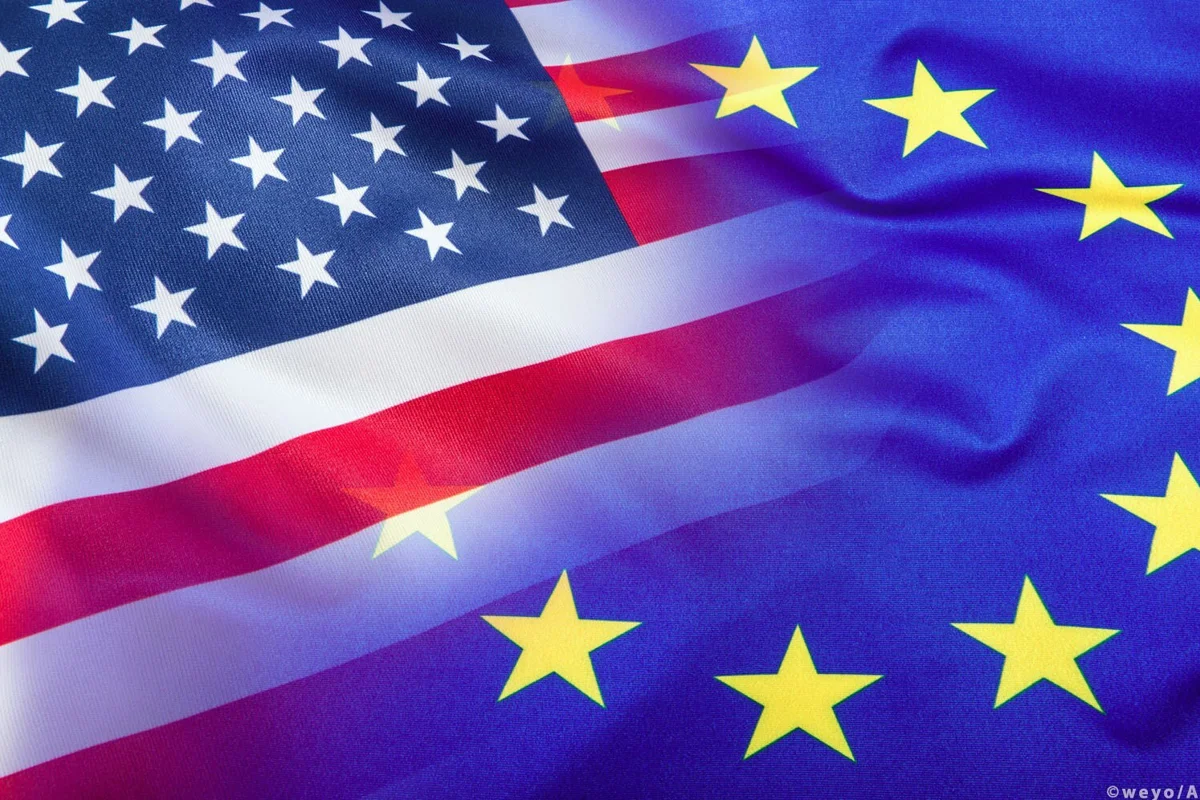
The world’s largest bilateral trade and investment partnership between the European Union (EU) and the United States (US) is about to include materials vital for most modern technologies.
Among several geopolitical tensions, shrinking working age population (decline of 49 million by 2050) and financial undulations, the EU is looking forward to the proposed MoU with the US (the proposed EU US trade deal) to break China’s grip (90 per cent of the market) on mining in growing space for defence, electronics and sustainable technologies, with its projected GDP growth of 1.4 per cent in 2026 and 1.5 per cent in 2027, focusing on the nourishment of European Single Market to boost competitiveness against global rivalries.
The proposed EU US trade deal is to be held to also reduce the dominance of China in the critical mineral supply-chain market. The EU wants to reduce the Chinese mastery in regulating and operating the coercive market of raw materials that includes lithium, graphite, cobalt, manganese and rare earth elements (REE). The EU’s strategy aims to protect the European industry and trading revenue from unfair competition and economic dependency on the East, securing geopolitical autonomy in the recent global landscape.
To know more about the global primary aluminium industry 2026 outlook, book the report “Global ALuminium Industry Outlook 2026"
With this objective in the EU’s recent trading patterns, there is no more reliable partner than us, sharing concerns regarding China’s dominance, seen as a ‘systematic rival’. Nearly 30 per cent of global trade is represented by the partnership of these giant blocs, particularly in energy security, AI and now in critical minerals. The US is looking forward to assembling dozens of ministers and officials from allied nations to discuss their calculated policies, besides planning to launch a critical mineral stockpile to cover the manufacturers and investors from production disruptions.
With Ursula Von Der Leyen, President of the European Commission, stating Ukraine belongs to the EU, Russian attacks on the nation on February 2-3, 2026, will continue to disrupt the energy and food market, and will be a topic for discussion on the forthcoming trade talks. This dismisses the embargo proposed by US President Donald Trump to facilitate the peace negotiations.
Investigations overseen by the US Senate Budget Committee regarding a Switzerland-based global investment bank, Credit Suisse, uncovered significant ties to Nazi-era officials and industrialists with approx. 890 accounts are set to break the European financial reputation ahead of the talks.
In contrast, American businessman and entrepreneur Elon Musk was summoned after a raid on the offices of X in Paris by a French prosecutor, on the allegations of misusing the media platform to distribute child sexual abuse materials. The Information Commissioner's Office has launched scrutiny against xAI regarding the use of its chatbot Gro for generating non-consensual imagery of individuals, a situation that poses an overwhelming challenge for the EU and the US’s upcoming Memorandum of Understanding.
Amidst rising tensions between Iran and the US, impacting through energy price volatility and supply risks in the Middle East, Turkey is attempting to negotiate the US military threat, which is to be attended by US envoy Steve Witkoff, Jared Kushner and Abbas Araghchi, Iranian Foreign Minister. The ongoing facade raises costs for the EU economies rather than disrupting direct trade flow.
On the other hand, African trade with the EU, driven by infrastructure projects like the Lobito Corridor, will shift to local industrialisation from resource extraction trades, minimising reliance on China. This allows the EU to diversify its supply chains for commodities like gold and copper, helping to generate external revenue for countries like South Africa, Zambia, Guinea, Uganda, Ethiopia, the Democratic Republic of Congo, Ghana, and Rwanda.
Tightening of the corporate credit standards by the Euro-zone banks at the end of 2025 creates doubts about financial expenditurein the European market, where the net percentage of banks reporting strict standards for companies was 7 per cent (December 31, 2025) until the European central bank set the interest rate this week, bringing relief to the investors.
Don't miss out- Buyers are looking for your products on our B2B platform

VBX expands Wuudagu bauxite resource with high-grade additions from new plateaus
Next articleCanyon Resources enters early-stage mining operations at Minim Martap Project in Cameroon
Grow with
AL Circle