EAFA alliance steps in to aid, helps boost European aluminium circular packaging
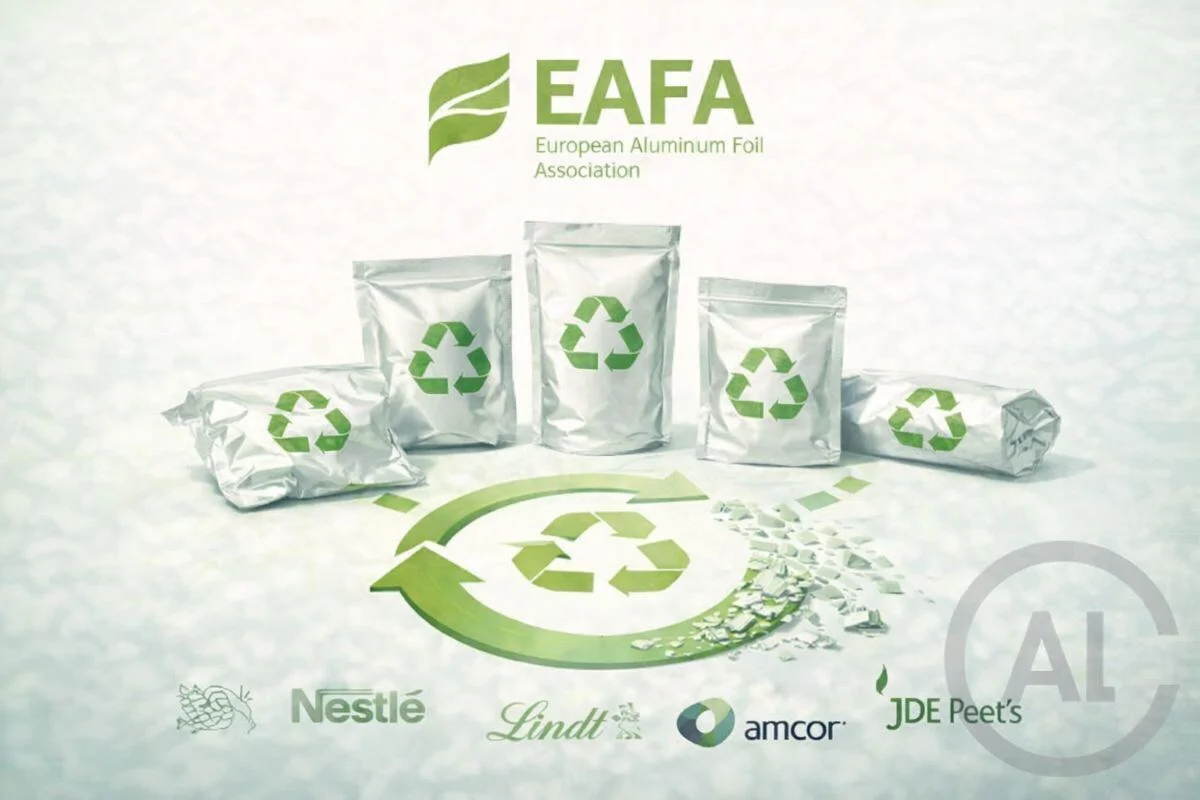
European Aluminium Foil Association (EAFA), a new European industry alliance, has been formed to support the circular economy for aluminium packaging, especially for formats that waste management systems have overlooked. While aluminium is highly recyclable, EAFA reports only 60 per cent being recycled. Smaller packaging items such as coffee capsules, chocolate and cheese foils, dairy lids and other lightweight aluminium containers lost in collection and sorting processes, pose the main challenge, undermining recycling performance across the continent.
Explore- Most accurate data to drive business decisions with Global Aluminium Industry Outlook 2026 across the value chain
Headed by the EAFA, partnered with Flexible Packaging Europe, the alliance was formed on January 1, 2026. It integrates 16 companies across the aluminium and packaging value chain, including Nestlé Nespresso, Lindt & Sprüngli, Amcor, and JDE Peet’s. They have a shared vision, i.e., establishing necessary conditions for these smaller aluminium formats to be effectively collected, sorted and recycled at high quality and scale across Europe.
Executive Director of EAFA, Guido Aufdemkamp, emphasised the need for collaborative action, stating, “We need to join forces in the value chain to make progress, particularly with small aluminium packaging in order to achieve the PPWR targets.”
The initiative is closely tied to the EU’s Packaging and Packaging Waste Regulation (PPWR), which sets ambitious design, reuse and recycling requirements for all packaging on the Union market and is due to become fully mandatory in 2026.
Recycling problems and the alliance’s role
Although large sorting facilities have the technical capability to separate aluminium from mixed waste, their deployment remains inconsistent across regions, meaning significant volumes of small aluminium packaging are still incinerated or only partially recovered via bottom ash treatment, approaches that do not meet future regulatory standards.
By harnessing the expansion of deposit-return schemes for beverage cans, the alliance aims to free up sorting infrastructure capacity to better handle other aluminium formats. “This alliance provides a shared foundation to improve collection, sorting and recycling in a targeted way,” mentioned Aufdemkamp. Stakeholders plan to identify waste management bottlenecks, conduct targeted studies and implement practical measures to improve recycling performance.
Participation from major brands and material producers indicates a shared industry commitment to a more circular aluminium value chain in Europe, where even smaller packaging types can be captured and re-entered into high-quality secondary recycling streams. Aufdemkamp reiterated, “Together, we will identify the respective bottlenecks in waste management which hinder a good recycling performance and conduct relevant studies supporting practical implementation of measures.”
Don't miss out- Buyers are looking for your products on our B2B platform

Aluminium packaging firm i2r expands its team with three key appointments
Next articleRe: Water invests £2m in new UK site to accelerate growth
Grow with
AL Circle