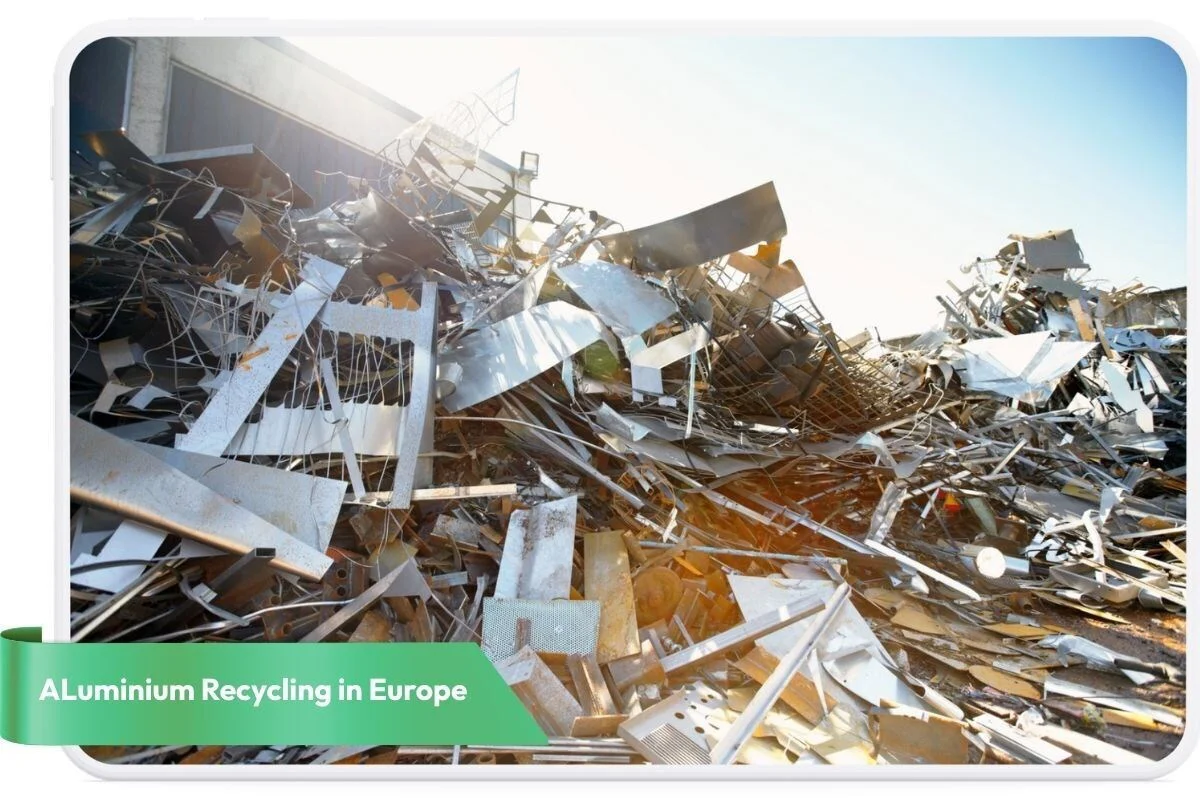
The European Union is one of the largest generators and collectors of aluminium scrap in the world, with over 80 per cent recycling rate. The demand is also robust, with an average annual volume of 8 million tonnes. Yet, the European Union exports 1.2 to 1.3 million tonnes of scrap during a year, which reflects 15 per cent of the volume collected domestically. In Q1 2026, the European Union exported 328,134 tonnes of aluminium scrap, - 69 per cent of which were destined to the Asian countries, according to Eurostat data.
India tops the list with reduced import volume
India remained the largest importer of aluminium scrap from the European Union during the first quarter of 2026, even though their imports declined sequentially. From January to March 2026, India imported 88,205 tonnes of aluminium scrap, down by 7.27 per cent from 95,122 tonnes during the corresponding period of the previous year.
Even though the country has a robust secondary aluminium installed capacity of over 2 million tonnes a year, accounting for about one-third of its total smelting capacity of 6.5 million tonnes per year, it still remains heavily dependent on Western countries for its scrap since domestic collection has not matured yet. That said, the Ministry of Mines is actively working to map out recyclers, track flows and close gaps between suppliers and buyers through its Aluminium Recycling Portal. The country has a largely unorganised recycling sector, with several small traders handling material. While large names like Hindalco, Gravita, and Runaya lead the way, many smaller family-run businesses actively import material, remelt the scrap and sell the finished products either in the domestic market or to China or Japan.
Thailand follows the suit
Its reputation as a large aluminium recycler has grown over the past few years. Thailand’s aluminium imports have grown steadily since the COVID-19 pandemic, with its name at the top of the importers list for many regions like Europe and the USA in the past two years. In Q1 2026, Thailand imported 45,051 tonnes of aluminium scrap from Europe, falling 1 per cent from 45,704 tonnes in Q1 2025. The country imported a staggering 790,058 tonnes in 2024, making it the largest global importer of the material.
The country is dependent on imported aluminium scrap because of its much lower installed capacity, estimated at less than 500,000 tonnes per year. The reality is that Thailand is a transshipping hub for countries like China and Japan. Many times, Thai recyclers buy scrap, process and prepare it, only for it to be sold to countries with a larger recycling capacity. Thailand displaced Malaysia from the transshipping role, considering its proximity to the Strait of Malacca. In doing so, Thai recyclers make a profit on the material they bought from Europe or Australia.
To know more about the European recycling trends and forecast, explore our report: World Recycled ALuminium Market Analysis Industry forecast to 2032
China’s aluminium scrap imports grow 16%
China’s aluminium scrap imports from Europe stood at 40,538 tonnes, climbing 16 per cent from 12,141 tonnes in Q1 2025. China is the world leader in aluminium recycling, with an installed capacity of over 15.8 million tonnes per year, accounting for 40 per cent of global secondary aluminium production.
Interestingly, China also imports secondary ingots from neighbouring countries like India, Thailand and Japan, revealing the true volume of aluminium it consumes despite producing two-thirds of the world’s primary aluminium as well. The country has a large presence in the global recycling sector, bidding for material from several countries like Europe, Canada, the USA, Australia and some South American countries as well. While it is definitely one of the largest aluminium consumers, it also exports the finished products (ingots, billets) to other countries in the region.
Hong Kong with an 18 per cent growth in volume
The nation imported 30,269 tonnes of aluminium scrap from Europe in Q1 2026, marking an 18 per cent increase from 25,650 tonnes a year earlier. Hong Kong remains an inconsequential importer, considering that it has almost no secondary smelting capacity. However, like Thailand, it is a well-known transhipment hub, where material is prepared, processed and re-exported. This is especially true for grades like Zorba and Twitch, where material is manually cleaned and polished before being sold to buyers in China and Japan. Hong Kong remains a strong trader of both aluminium and copper scrap in Southeast Asia, owing to its strong capital and liquidity, which some other importers may not possess. Many traders in the international market consider it a financial intermediary for Chinese secondary smelters. It also benefits from the Freeport status with minimal documentation and bureaucracy.
Read all the latest developments in Europe’s aluminium recycling industry: Click here
Pakistan, the fifth largest importer
This is an Asian country without a primary aluminium smelter. Hence, it is easy to understand why it depends on the secondary aluminium supply chain to meet domestic demand. In Q1 2026, Pakistan imported 22,459 tonnes of aluminium scrap from Europe. It stood as the first highest importer despite a drop of 15 per cent in import volume from 26,342 tonnes.
In the domestic market, the Pakistani aluminium recycling sector consists of informal foundries run by micro, small and medium enterprises (MSMEs), which have a combined installed capacity of about 300,000 tonnes per year. The country’s domestic consumption remains relatively low, with a lot of secondary aluminium being diverted to production hubs like Gujranwala. Here, aluminium is used to make utensils, which are then exported to neighbouring countries.
Where is the scrap exported from the EU?
The European Union has three large aluminium scrap collection hubs that outpace all other member countries. They are Germany, Spain, Belgium, France, and Italy. According to Eurostat data, these countries together exported 82,883 tonnes in March 2026, up by 10.73 per cent from 74,817 tonnes, contributing 72.3 per cent of the European Union’s aluminium scrap exports. The export system is largely based on pricing differences between domestic and international players. The price arbitrage between Europe and Asia (India, China and Thailand) may prompt exporters to ship material overseas even if the domestic market is tight.
On the growing aluminium scrap exports from the European Union, the European Commission is examining the introduction of export duties or other trade measures on aluminium scrap. Associations representing the recycling and waste management industries remain firmly opposed to the plans, but the European aluminium industry considers trade measures justified and supports their introduction, considering that aluminium scrap should be treated as a strategic raw material in the domestic market for decarbonisation. In a recent interview with AL Circle, Emanuele Manigrassi, Director Climate & Energy at European Aluminium, explicitly shared his believe that “trade measure should help ensure that more aluminium scrap remains available on the EU market and that recyclers can access sufficient feedstock at competitive prices.”
Note: This is exclusive coverage by AL Circle and may not be reproduced, republished or shared without prior permission.













_md.webp)