Copper might face serious competition from aluminium, over price rise issue: Wood Mackenzie
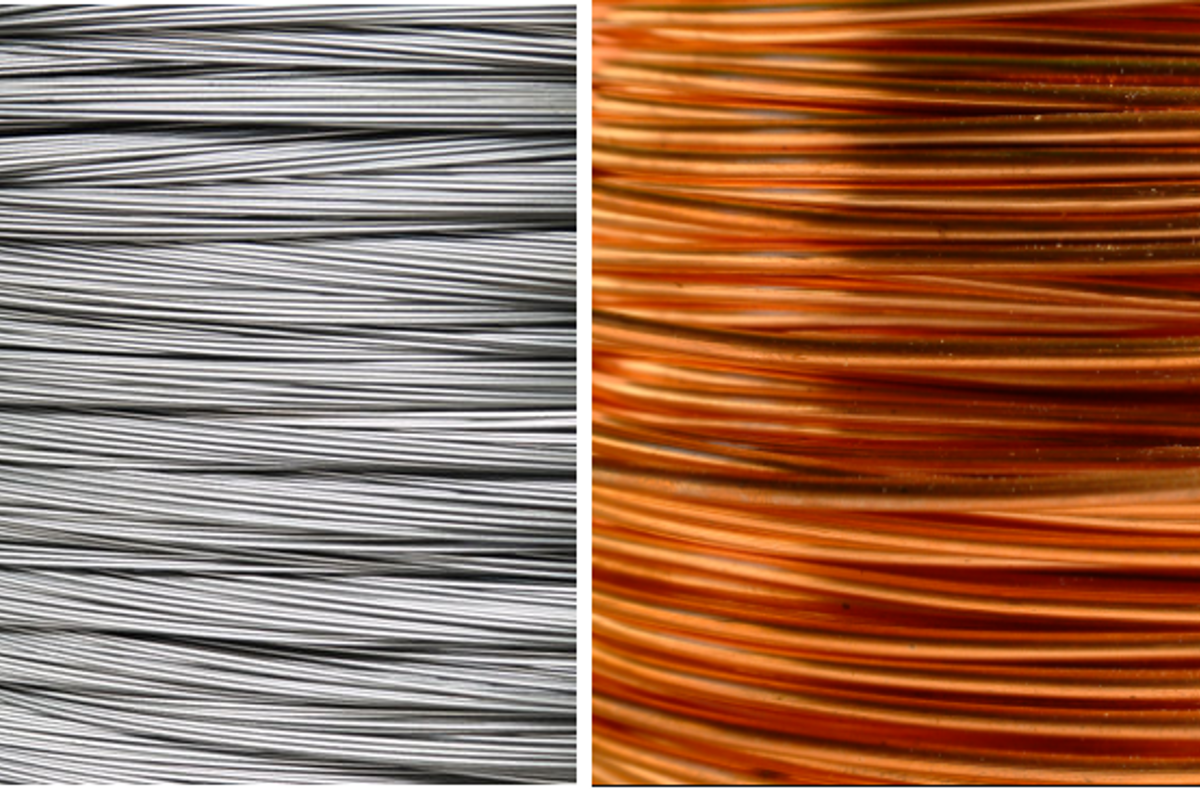
The trusted source of commercial intelligence for the world's natural resources sector, Wood Mackenzie’s analysis has indicated that a long-term rise in price for copper is likely to counter serious contention from aluminium.
The American multinational investment bank and financial services, Bank of America has asserted, if inventories dry up, copper could surpass $US20,000 ($25,856) per tonne by 2024.
Julian Kettle, Senior Vice President and Vice-Chair for Metals and Mining, Wood Mackenzie, said: “If copper prices reach this level, demand for high volume applications that require electricity could see a surge in demand for aluminium, which is cheaper than the red metal.”
Kettle added: “Too many forecasts ignore the fact that aluminium is a serious competitor to copper in a number of high volume applications, including high- and mid-voltage power cable, busbars, transformer windings and motor windings.”
“Even if what we believe are fanciful forecasts of US$15,000-$20,000 per tonne for copper prove prescient, without commensurate aluminium prices of US$5,000-7,000 per tonne copper would see massive demand destruction, which would be accompanied after some time lag by supply growth.”
The metal characteristic affirms aluminium is 40% conductive than copper but is only 30% of the density of copper.
“This means that an aluminium cable is around 52% of the weight of a copper cable with the same conductivity, a property offering handling and installation benefits,” Kettle said.
In May 2021, the London Metal Exchange (LME) recorded the price of copper highest at $10,361 ($13,200) per tonne, whereas, the American multinational investment bank, Goldman Sachs forecasted that copper might reach $15,000 per tonne by 2025.
As per the views of Kettle, copper projects should be developed to meet energy transition requirements. While, in a long term, the inclined copper prices could substitute aluminium as the preferred metal for electrical conductivity.
“While copper is the metal with the best technical characteristics, once economics are brought into the equation its superiority is far less clear cut. In fact, given its lower cost, aluminium wins out against copper under virtually any realistic long-term price scenario,” Kettle said.

“Cost-push in copper could lead to price pull in aluminium such that copper prices could sustainably be maintained at US$10,000 per tonne when aluminium is at US$3,300 per tonne.”
Julian Kettle also commented that, if prices escalate to $15,000-$20,000, the clean energy transition may forsake.
“Prices getting anywhere near these levels would send a strong signal to the market that the industry cannot meet the challenge of the energy transition, with the result that alternatives would be sought.”
Primary aluminium inventories in China extend decline to 1.02 MT as purchase increases on price plunge
Next articleLME aluminium price inched down by $10.50/t to close at $2392/t; SHFE fell for the third day in a row to $2893/t
Grow with
AL Circle