Chinese economy indicates a slowdown for Asia-Pacific's metal exporters
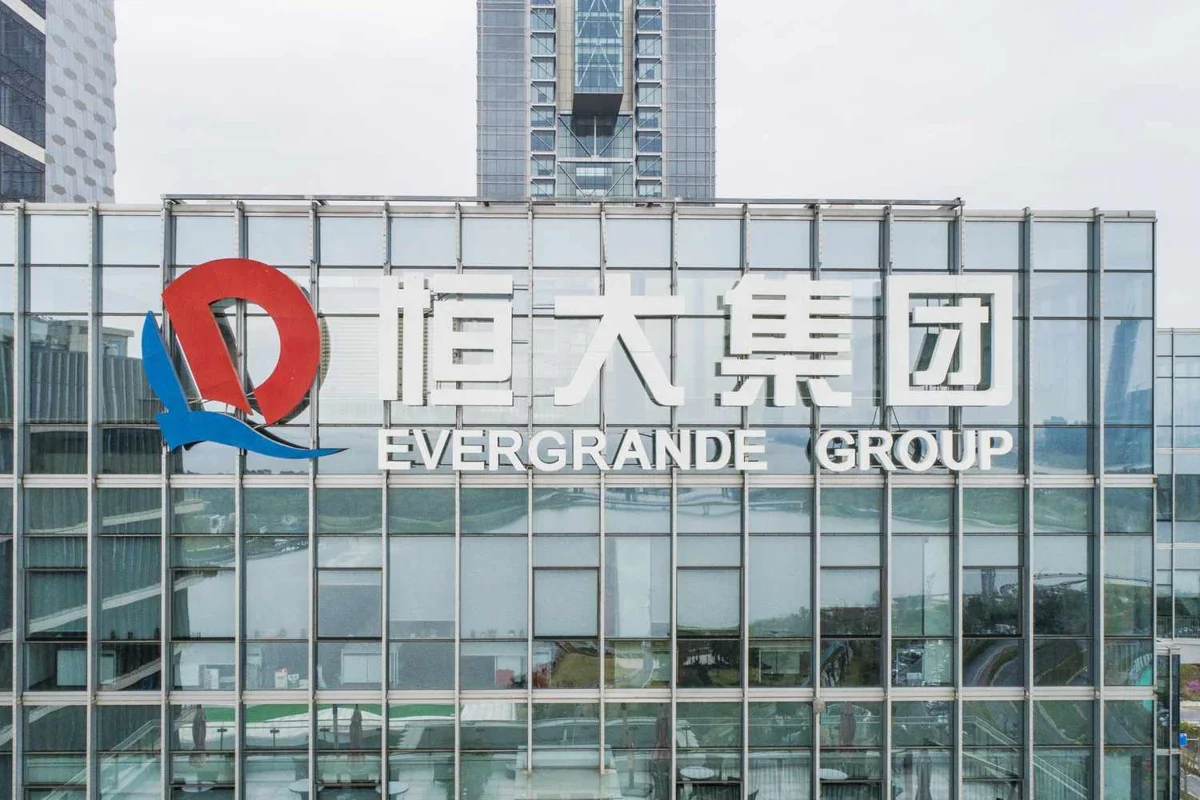
The aftermath of Evergrande's collapse has sparked worries about China's property market, potentially leading to reduced demand for raw materials from the region's top metal producer and putting pressure on suppliers throughout the Asia-Pacific region.
The Evergrande Group
Evergrande Group, established in 1996, encompasses various sectors, including Evergrande Real Estate, Evergrande New Energy Auto, Evergrande Property Services, and Ocean Flower Island, offering its clientele a comprehensive range of premium services.
With a portfolio spanning over 1,300 projects across more than 280 cities in China, Evergrande Real Estate Group is committed to crafting top-tier and economically feasible residential communities. Upholding the ethos of "dedicated service and genuine partnership" for over two decades, Evergrande Property Services Group is a prominent leader in property management in China. Managing approximately 3,000 projects nationwide, with a collective area exceeding 509 million square meters and contracts covering over 812 million square meters, the group extends professional and holistic property services to around 3.3 million property owners in China.
China's dominance in metal demand
As reported in the South China Morning Post, more than half the global demand for metals used in production, such as aluminium, steel, and copper, is attributed to China. The property sector and infrastructure are among the primary segments driving this demand.
Rose Xiaowei Luo, a Professor from Graduate Business School INSEAD in France, said, "The real estate industry will probably take some time to recover. Consumer confidence is relatively low, and the demand for housing will not re-bounce soon. Thus, the import demand for construction-related mineral commodities will likely be reduced."
This poses a significant challenge for Asian nations such as Indonesia, the Philippines, and Australia, which rely heavily on exporting commodities like iron ore, bauxite, and nickel to China.
What rating agencies, analysts and associations are saying
A world's leading international rating agency has stated that the Evergrande decision has heightened the likelihood of further liquidation cases among financially troubled developers, potentially impacting homebuyers' purchasing decisions.
An equity analyst from Sydney remarked that the most significant repercussion of China's property market upheaval on commodities is expected to be felt in iron ore, the primary component in steel production, due to China's prominent position. China currently represents approximately 70 per cent of the worldwide demand for seaborne iron ore trade.
Last year, China maintained its steel production at over 1 billion tonnes, consistent with its 2022 output. This figure dwarfed India's second-largest producer at around 140 million tonnes, approximately one-seventh of China's production.
The Australian analyst also stated that despite China's economy experiencing a slower growth rate than its historical standards, it remains robust compared to many Western nations. The bolstered renewable energy and electric vehicle production further contributes to sustained Chinese demand for various commodities.
According to government data, China experienced a 5.2 per cent increase in its economy last year compared to the previous year, with similar growth of 5.2 per cent in the fourth quarter. Despite this, the world's second-largest economy has rebounded sluggishly after three years of pandemic-related restrictions. Manufacturing activity in the last month showed slight improvement from December, suggesting a subdued beginning.
The World Bank stated
According to the World Bank's projections, it was indicated a 5 per cent decline in metal prices for 2024, following a nearly 10 per cent decrease in 2023 on a year-on-year basis. It is anticipated that prices will stabilize in 2025 on a year-on-year basis. Noteworthy risks to these forecasts encompass the possibility of weaker-than-anticipated demand from both China and advanced economies, as well as potential disruptions to production. Additionally, an escalation of the ongoing conflict in the Middle East could introduce uncertainties in trade, thereby impacting prices.
Henan Mingtai Aluminium launches into 2024 with remarkable sales growth
Next articleRising demand spurs growth in India's foundry industry across multiple sectors
Grow with
AL Circle