China’s tension with India will upsurge India’s domestic production, including Aluminium

“The scaling tensions with China create an accelerated expectation of India’s attempt slow down its import dependency from its neighbour of North and shift the required demand to the local manufacturing” – as per industry experts.
Even though China has cropped up to be India’s biggest trading partner with imports accounting for close to 16% of the total. As per experts opinion, any obstruction will have a comparatively brief impact on the domestic industry.
The disarray engendered to raw material supplies from China due to COVID-19 has prepared local companies to deal with such events.
Vinnie Mehta, Director General of Automotive Component Manufacturers Association of India (ACMA), which represents auto parts companies said: “The COVID-19 situation has underlined the need to enhance deep localisation of components and most of the companies are working on that front. If the ongoing border standoff impacts trade relations, then it might hasten that process as companies will rush to reduce dependency on imports. In the short term though, there will be some hiccups since companies import critical parts directly or indirectly from China."
The Prime Minister of India, Narendra Modi, on 12th May’20, called for building a self-reliant India, citing its experience in managing local demand without having to rely on imports in a major way during the lockdown.
However, the government hasn’t said so clearly. Although experts attributed a geopolitical angle to Prime Minister’s proclamation as India was already in the midst of a tense standoff with China.
India has tried to slow down its trade deficit with China for years, but it went misfired and is still majorly dependent on the country for various supplies. Whereas a mammoth category of Indian industry has become highly dependent on China for raw materials and semi-finished products industry experts said that in certain segments there is a vice-versa of this trend, with Indian manufacturers becoming more cost-effective than their Chinese rivals.

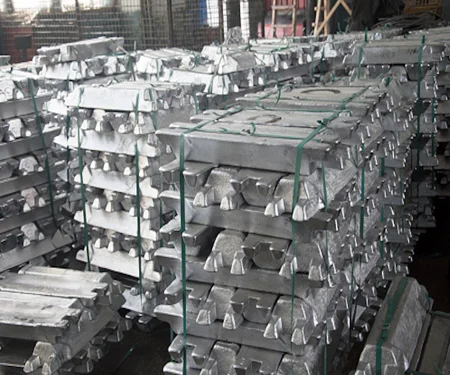
Kishore Rajpurohit, Vice President, Material Recycling Association of India said: “For example, India used to import aluminium coils and sheets from China but now we can meet this through domestic production. Instead, we’re now exporting 20,000 tonnes of alloy to China every month. We’re the cheaper source for alloy in the market, compared with the US and Europe. I do hope that these border tensions don’t escalate and impact bilateral trade."
Belgium-based startup creating a new metal 3D printing technology using aluminium
Next articleAlcoa: Onset for a formal consultation process with Spanish works council regarding San Ciprián Aluminum Smelter
Grow with
AL Circle