Adv
LANGUAGES
English
Hindi
Spanish
French
German
Chinese_Simplified
Chinese_Traditional
Japanese
Russian
Arabic
Portuguese
Bengali
Italian
Dutch
Greek
Korean
Turkish
Vietnamese
Hebrew
Polish
Ukrainian
Indonesian
Thai
Swedish
Romanian
Hungarian
Czech
Finnish
Danish
Filipino
Malay
Swahili
Tamil
Telugu
Gujarati
Marathi
Kannada
Malayalam
Punjabi
Urdu
19 JUNE 2026 AL CIRCLE

China’s rare earth export control exposes global supply-chain vulnerability, pushes G7 to confront single-source dependence
EDITED BY : DEBANJALI SENGUPTA 11MINS READ

China’s rare earth export control exposes global supply-chain vulnerability, pushes G7 to confront single-source dependence

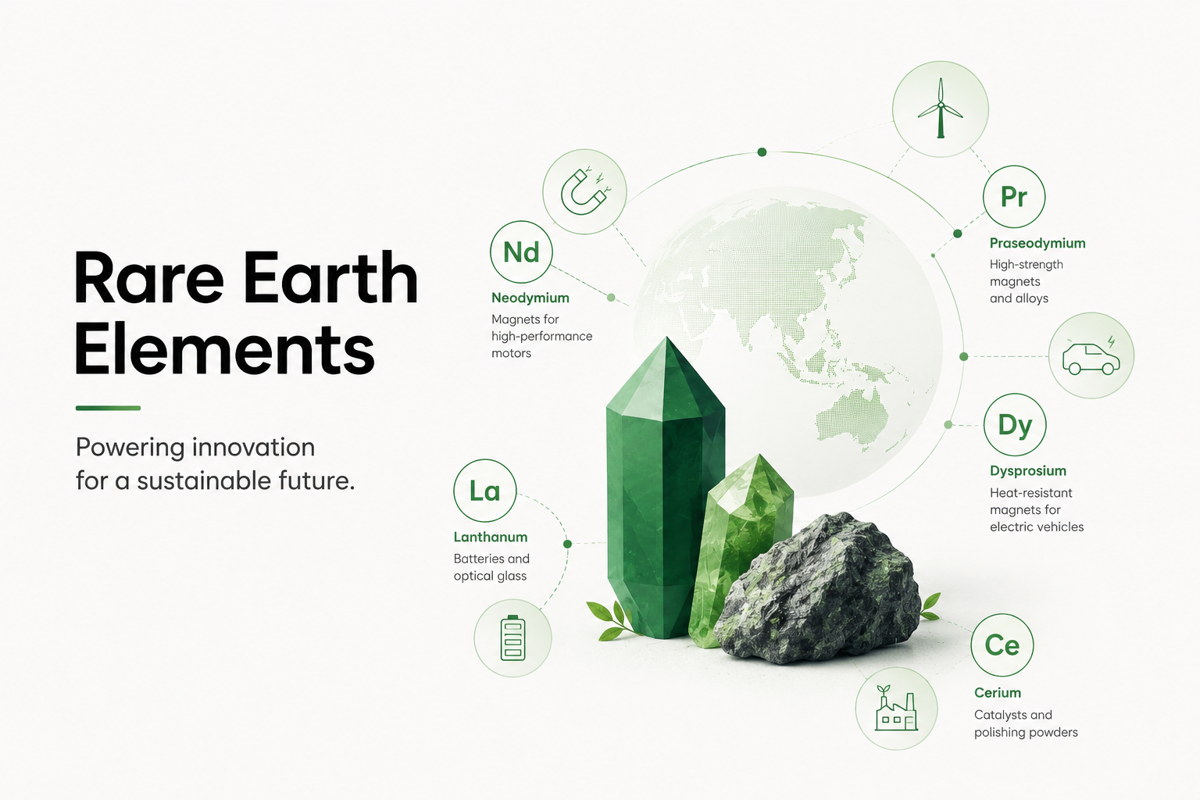
Rare earth elements were formed billions of years ago through cosmic processes, but their importance has never been more immediate. Once treated as a niche mineral group, rare earths now sit at the centre of the global contest for its strategic value in developing technology, clean energy, defence capability, and industrial security. And in this contest, the winner is not who owns the maximum reserves, but who is efficient in processing, refining, and turning into usable industrial inputs.

{alcircleadd}

And this is where China holds its strongest advantage

China has the world’s highest identified rare earth reserves, estimated at around 44 million tonnes. But there are also the countries like Vietnam, Brazil, Canada, Russia, India, Australia, and the United States who have notable reserves of 22 million tonnes, 21 million tonnes, 15.2 million tonnes, 12 million tonnes, 6.9 million tonnes, 5.7 million tonnes, and 2.3 million tonnes, respectively. If China individually accounts for 44 to 49 per cent, Brazil and Vietnam together also account for 32-38 per cent of the world’s identified reserves.

China’s rare earth export control exposes global supply-chain vulnerability, pushes G7 to confront single-source dependence

Then, how does China stand out? The real strength is not its geology, but its processing capability, refining capacity, separation technology and magnet manufacturing.  China’s role is not only limited to direct rare earth exports, rather its influence comes from the growing share of indirect or embedded within intermediate component like rare earth magnets or finished consumer products like electric vehicle motors, smartphones, and military technology.  And the consumers from China are United States, Japan, South Korea, Netherlands, and Vietnam.

A tonne of exported rare earth compounds is visible in trade data, but rare earths embedded inside a motor, turbine or high-performance magnet are difficult to track. According to the World Integrated Trade Solution, China’s rare earth compound exports stood at 35,304 tonnes in 2024 worth USD 377 million. The United States being the highest importer, secured 12,517 tonnes of rare earth valued at USD 104 million. Japan followed with 7,933 tonnes of imports at USD 134 miiilion. Vietnam, South Korea, and Netherland’s import values were USD 26.75 million, USD 26.26 million, and USD 20.78 million, respectively.

In 2025, China’s rare earth exports surged further even after Beijing began shipment restrictions of several medium to heavy elements from April, reaching 62,585 tonnes, showed the General Administration of Customs data. This apparent contradiction is important to understand. China says it is not banning exports but controlling. It is using export controls to manage access, delay approvals, screen buyers and create uncertainty.

Last updated on : 19 JUNE 2026

Adv
Adv
Adv
Adv
Adv
Adv
Adv
EDITED BY : DEBANJALI SENGUPTA 11MINS READ

Responses

Adv
Adv
Adv
Loading...
Adv
Adv
Adv
Loading...
Reports VIEW ALL
Loading...
Loading...
Business Leads VIEW ON AL BIZ
Loading...
Adv
Adv
Would you like to be
featured with us?
Loading...

AL Circle: Aluminium Ecosystem App

A proud
ASI member
© 2026 AL Circle. All rights reserved. AL Circle is not responsible for content from external sources.