China leads, but single refineries don’t! Here are the leading producers of Global High-Purity Alumina industry
With diverse industrial applications extending beyond aluminium production, the global alumina market is experiencing strong growth, valued at over USD 50 billion in 2024. It is expected to rise to over USD 85 billion by 2033.
To know more about the global primary aluminium industry 2026 outlook, book the report “Global ALuminium Industry Outlook 2026"
Countries with abundant bauxite resources and alumina refining capacity have strategic advantages in industries like transportation, construction, packaging, and defence. Besides the growth of the automotive, aerospace and energy sectors, the semiconductor revolution has a massive impact on shifting tendencies towards demands of high-purity materials. High purity materials, typically having a purity level of more than equal to 99.99 per cent with superior performance, stability and minimal contamination, are essential for advanced technologies.
This alters the typical patterns of approaches towards chemical processing and refining, while maintaining quality production. This leads to the now expanding demand of High Purity Alumina (HPA), a high-value and non-metallurgical alumina with >99.99 per cent purity, featuring extreme heat resistance, electrical insulation, and hardness. It is essential for producing synthetic sapphire, LED lights, lithium-ion battery separators, and semiconductor materials.
Demand growth for HPA is primarily driven by semiconductor manufacturing as widespread adoption, integration and impactof digital technologies across all aspects of society and the global economy significantly increase processing requirements. HPA is essential for thermal management and electrical insulation in semiconductor components, directly translating into higher consumption of ultra-pure alumina.
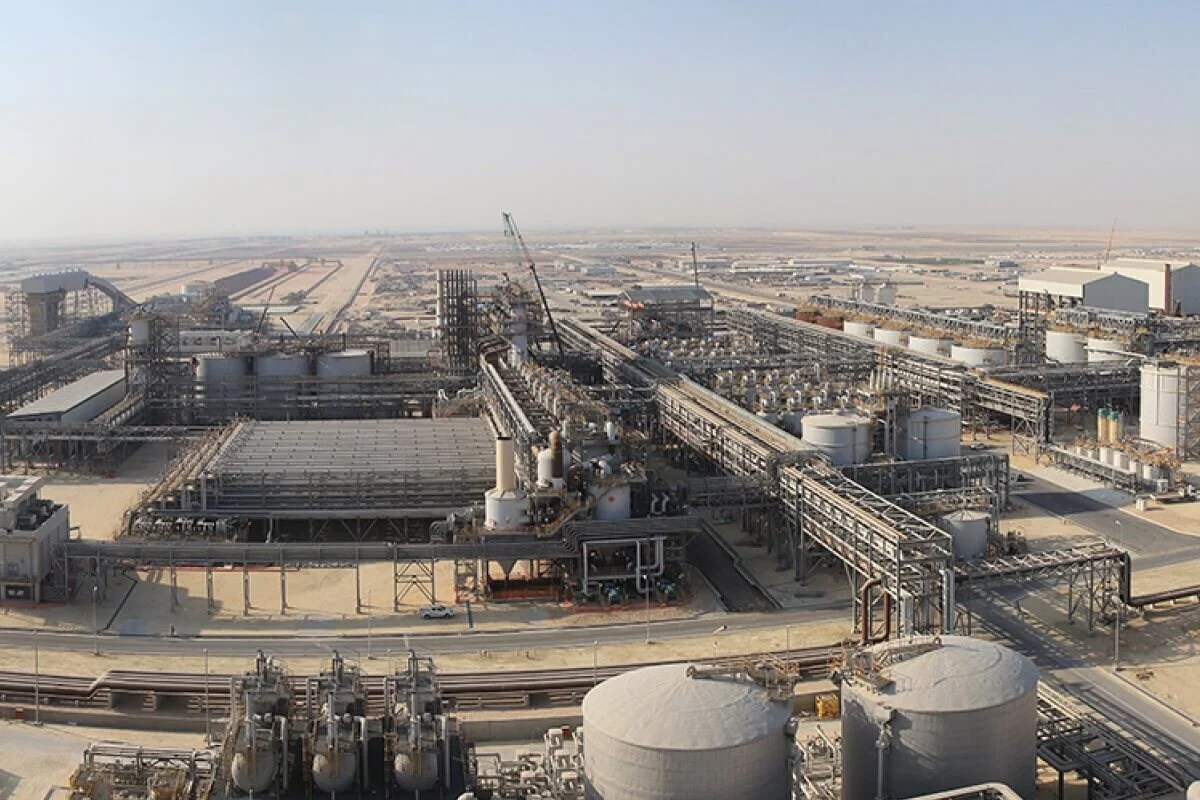
Measured by million tonnes per year, Brazil leads in the alumina refinery capacity represented by Hydro Alunorte (around 6.5), followed by Australia. The facilities are namely, Worsley Alumina (5.3), Alcoa Pinjarra (4.2), Queensland Alumina Limited (approx. 4) and RioTinto Yarwun (3.4).
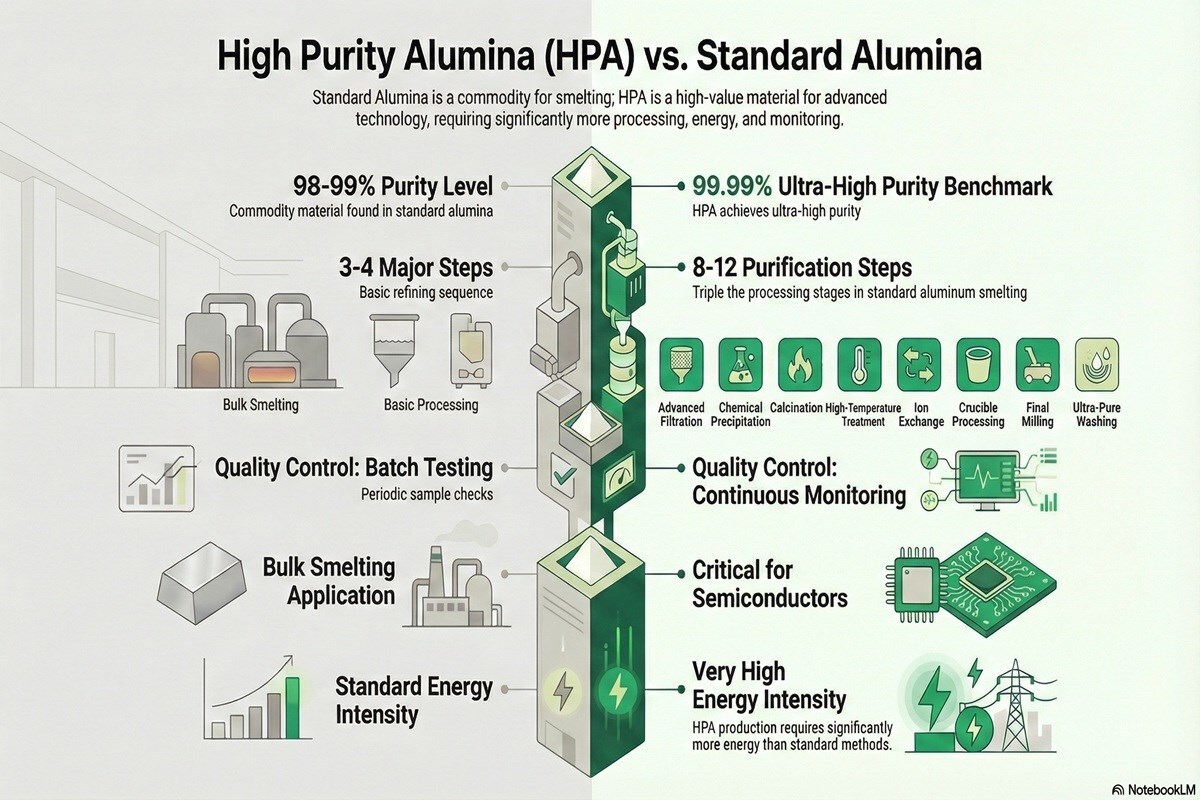
Standard aluminaand HPA mainly differin terms of purity, properties and applications. Standard alumina with a purity of about 98-99 per cent, produced through Bayer's Process, used in basic industrial applications, is relatively inexpensive and a bulk commodity, whereas HPA with 99-99.99 per cent purity, passed through additional stages, specially focused on crystallisation processes and strenuous arrangements ensuring quality assurance constantly.
Instruments for fractional crystallisation to isolate the highly pure materials, along with advanced filtration systems needed to trace contaminants, are essential for production and constant monitoring of the quality. This is where publicly listed Australian company Alpha HPA comes in, commercialising the world’s first application of solvent extraction technologyfor auminium purification.
Enabling the production of ultra purity aluinium, serving advanced technology sectors such as LEDs, semiconductors, synthetic sapphire, etc., with a significantly lower carbon footprint, the facility benefits fromstrong industrial integration by sourcing key inputs locally and returning byproducts asfeedstock to neighbouring industries. Strategic linkages with Orica and Rio Tinto Yarwun have brought advantages of common port facilities, closed-loop material flows, and 100 per cent energy usage whilereducing environmental impacts.
China, being the world’s dominant alumina refining country with 60-61per cent of global output in 2024-25, with annual production exceeding 85 million tonnes, standsbehind brazil and Australia with a typical single unit production of around 3 million tonnes pr year. Zhongzhou Aluminium, owned by Chinalc,o is leading among this asian nation capable of producing 3.05 million tonnes annually. China’s government is prioritising domestic alumina refining capacity expansion to enhance strategic mineral security with a guaranteed supply chain.
Operating since 1995, Hydro Alunorte in Para, Brazil, is recognised as the world's largest single-site alumina refinery (6.3 million tonnes per annum), having the advantage of processing bauxite from Paragominas mine having around 1billion tonnes of reserves. With the help of evolved environmental regulations, large-scale industrial operations are under effective supervision of the Brazilian Institute of Environment and Renewable Natural Resources (IBAMA) and the National Department of Mineral Production (DNMP).
Must read: Key industry individuals share their thoughts on the trending topics
Besides Brazil, Australia has emerged as a leading global centre of alumina refining due to the tactical geographic distribution across Western Australia and Queensland, with access to the major deposits of bauxite concentrated in DarlingRange and Weipa, with well-developed port infrastructure enhancing export efficiency. Worsely Alumina (5.3illion tonnes) is the largest in terms of capacity in Western Australia. Industrial clustering in the Gladstone regionfurther strengthens this advantage with shared logistics, labour concentration and synchronised supply chains. Being an island nation in the Asia-Pacific region, Australia has access to the vast markets of SoutheastAsia, South Korea, and Taiwan.
Gladstone becoming an advanced manufacturing hub creates possibilities of a high technology conurbation with opportunities for research and development strategies for spin off innovationsrelated to manufacturing, with the help of chemical process engineering, quality control analytics, process automation, etc.
Tim Ayres, Minister for Industry and Innovation, Australian Government, indicated their aim to grow regional projects with the USD 75 million investment through the National Reconstruction Fund, encouraging a strategic approach towards accelerating private investment in advanced manufacturing. Though the HPA industry requires fare share of risk assessment frameworks due to ever-evolving market demand, The Alpha HPA isan example of a confident private investor backed by the government, accepting constant revenue.
Accelerating advances in artificial intelligence, high-performance computing and semiconductor usage in modern technologies are indicating the upcoming dominant role of HPA, evident in regions of Asia, where countries like India are expanding domestic semiconductor ecosystems. The projected demand for semiconductors in 2030 is expected to rise at 52 per cent with 8.2 per cent annual growth. Overall HPA market is expected to experience rapid growth with projections suggesting 16-20 per cent growth through 2030-2035, driven by booming demand for LED lighting, lithium-ion battery separators, etc., with a value rising to USD 15 billion.
Don’t miss out- Buyers are looking for your products on our B2B platform

WEEKLY: Output cuts trim China alumina prices while stocks stay high
Next articleImpact Minerals’ quarterly report marks a success-driven approach in the annual 2025 landscape
Grow with
AL Circle